GarmentCare Guide

Start with airing and surface care
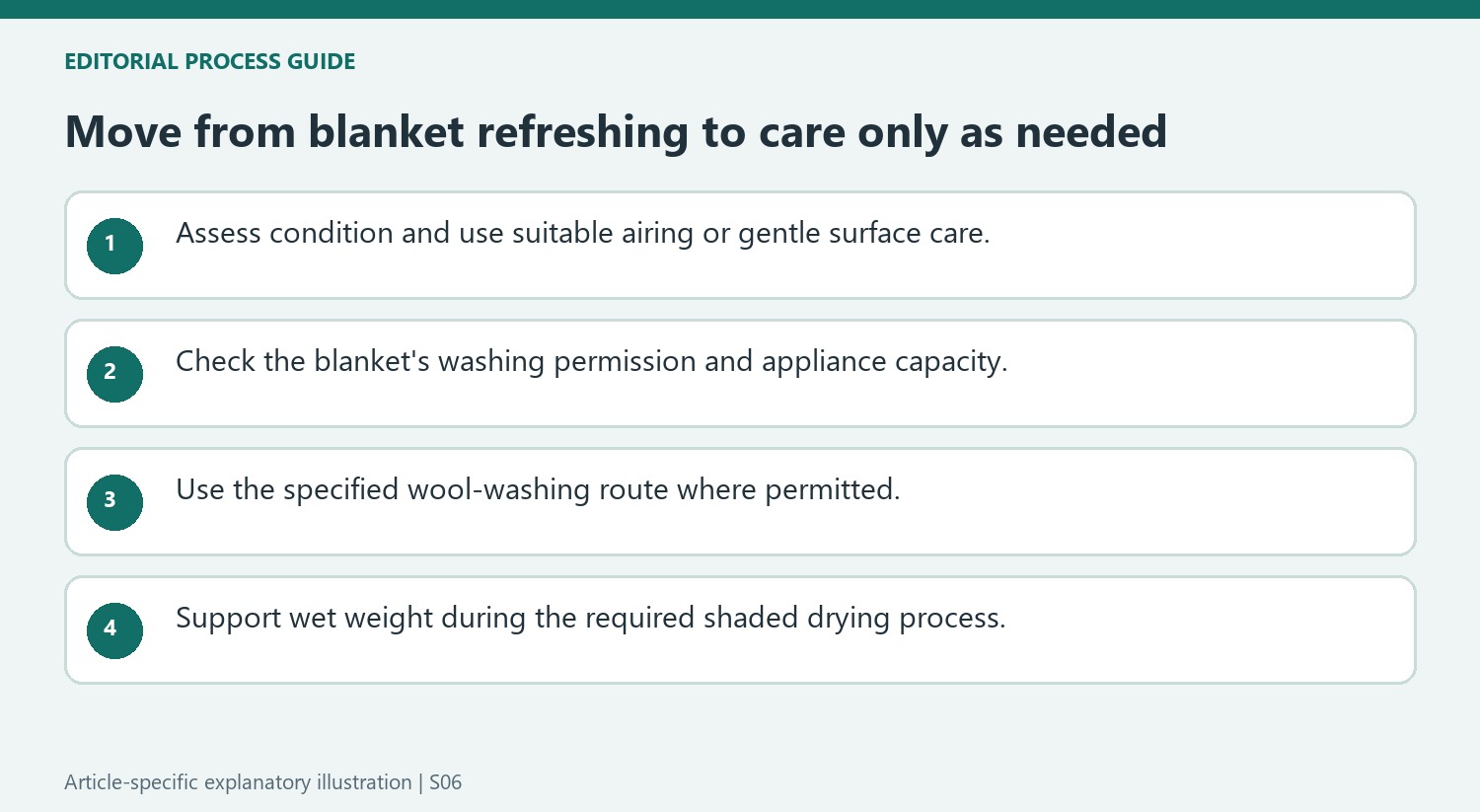
Woolmark's wool blanket guide begins with ventilation rather than a full laundry cycle. Shaking the blanket and placing it where air can circulate can help refresh it and loosen dust. For an appropriate blanket surface, the source also describes laying it flat and using a soft-bristle garment brush along the grain. These are distinct steps for routine care, rather than substitutes for cleaning a heavily soiled item. They provide a way to assess the blanket's condition and address light surface accumulation before deciding whether more extensive treatment is needed.
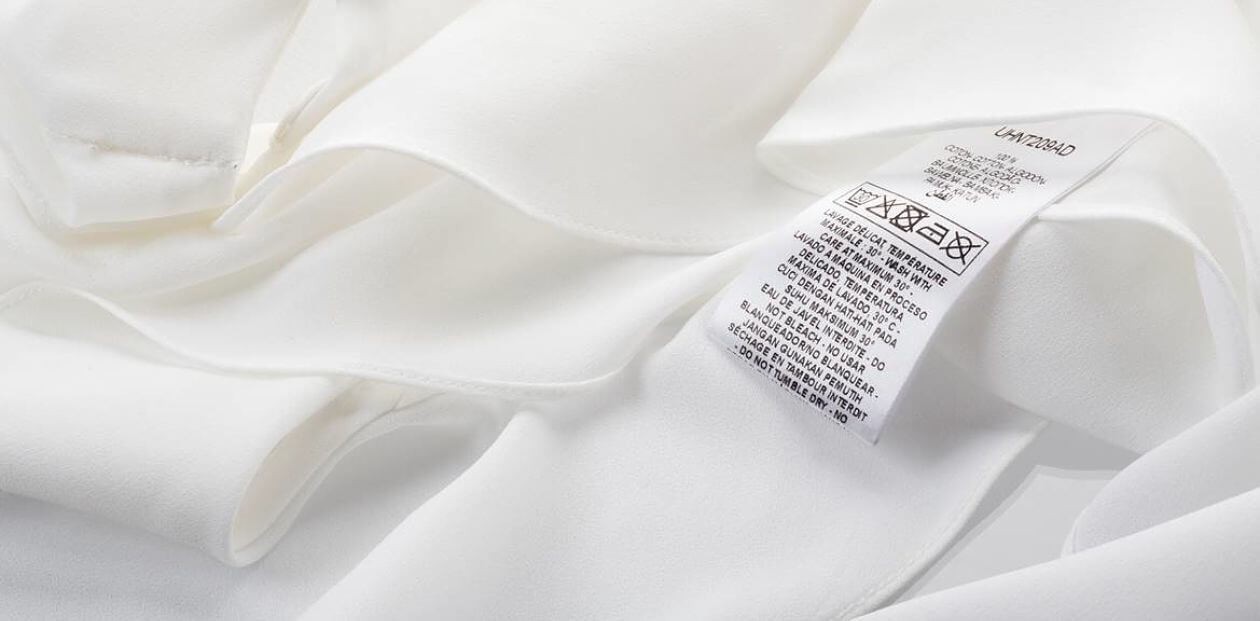
Use the blanket's label for washing
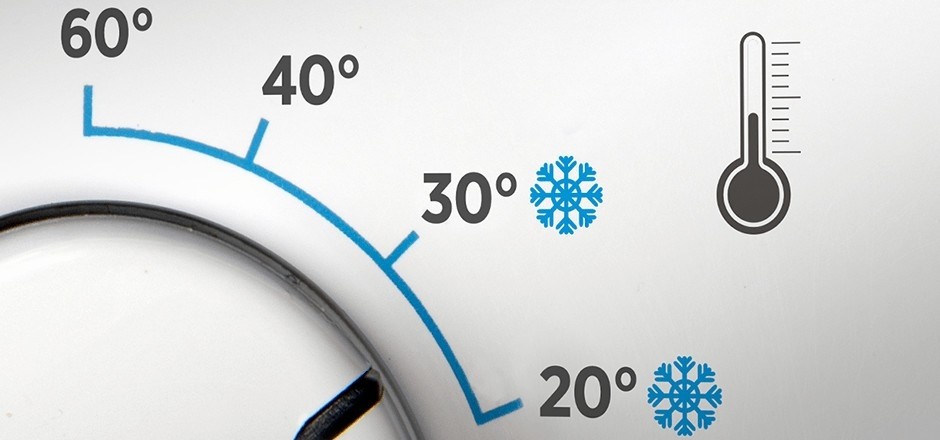
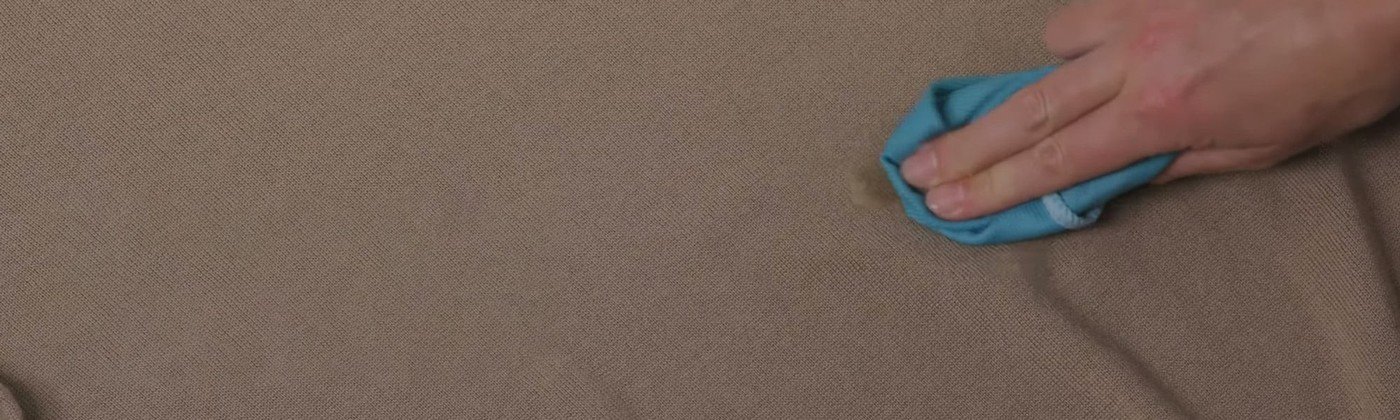
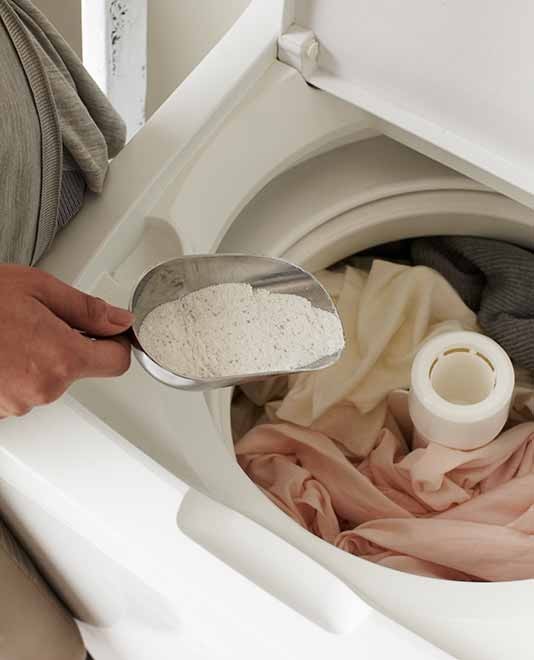
For liquid spills, the guide recommends prompt attention with a suitable mild detergent and gentle blotting instead of scrubbing. More substantial washing remains conditional on the care instructions. A blanket labeled as machine washable can use the appropriate gentle wool program, cold water and a specified wool detergent, following any more detailed directions supplied with it. Size and construction also matter when interpreting those instructions. The ability to wash a small wool garment in a particular machine does not establish that the same appliance can properly handle a large wet blanket.
Support its weight during drying and storage
The source advises supporting a blanket across a clothesline rather than leaving its wet weight concentrated at a narrow point. Keep it away from direct sunlight, and do not substitute a dryer for the instructed natural drying method. Woolmark also recommends a cool, dark storage place with an airtight container or bag. Those storage steps should follow appropriate cleaning and complete drying. Planning support and storage in advance helps treat a large wool item as more than an oversized sweater. The blanket's own directions remain the reference for the entire sequence, from refreshing to putting it away.
Airing addresses a different level of soiling
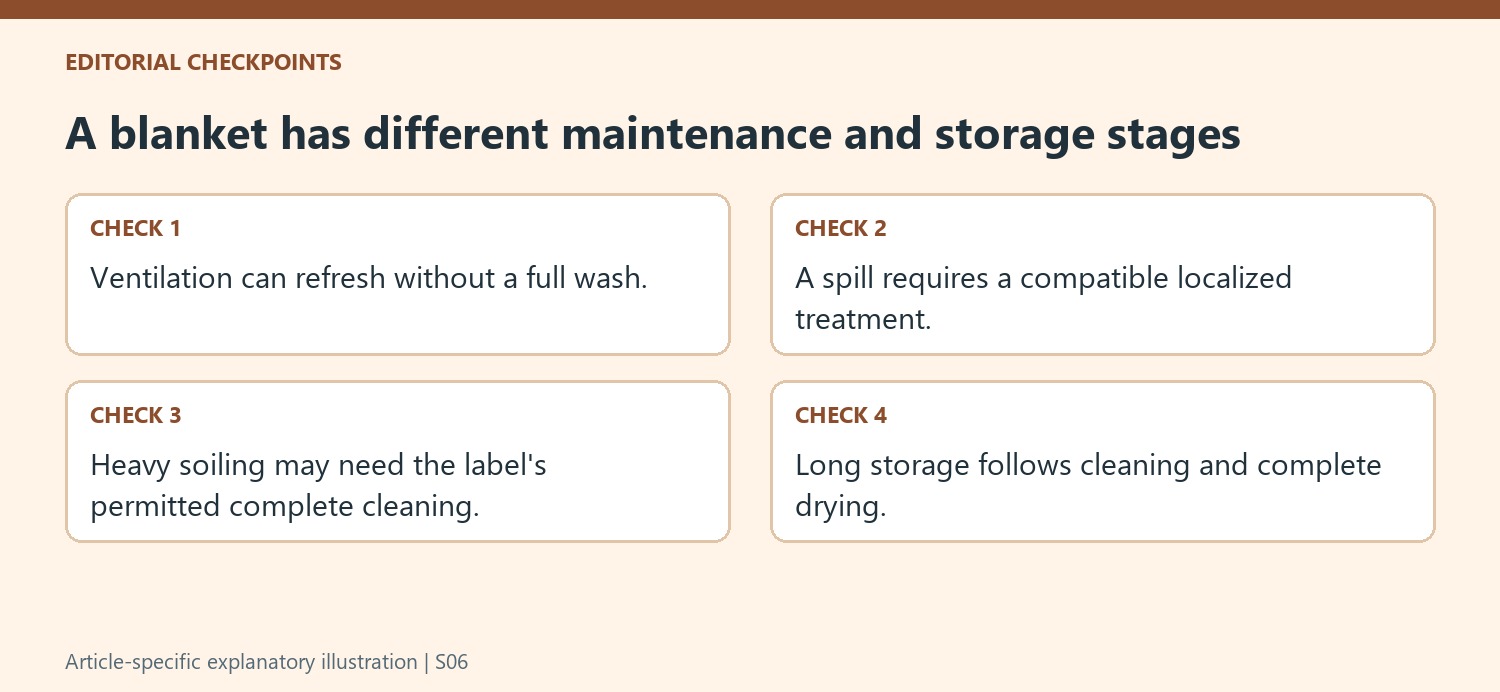
The guide starts with shaking and ventilation, which can loosen dust and refresh a blanket between more extensive cleaning sessions. This is useful because the decision to wash should follow the item's condition and care claim rather than a fixed habit alone. Airing does not remove every spill or make a heavily soiled blanket clean. A suitable surface may also be brushed gently with the soft-bristle approach described by the source, working along the grain. Keep those routine maintenance actions distinct from stain treatment and full washing. The blanket's construction and instructions determine which are appropriate, especially where the surface differs from a smooth woven blanket used in a general demonstration.
A large wet blanket needs its own capacity decision
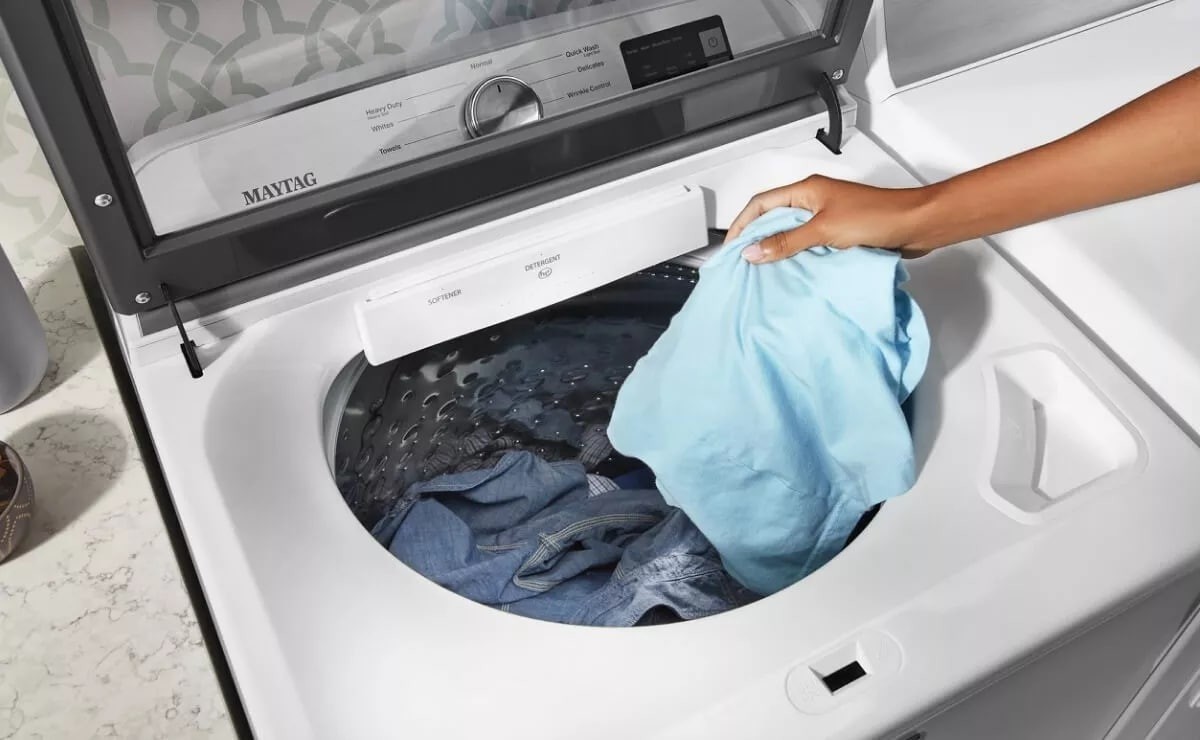
Machine-washing permission on the label is important, but the actual appliance also needs to be suitable for the blanket. A large wet item is not simply a heavier version of a small sweater load. Follow the machine's capacity and loading guidance as well as the blanket's own directions. For an approved route, Woolmark identifies a gentle wool cycle, cold water, and specified wool detergent. Those conditions work together. A small domestic machine that handles a wool garment well does not thereby become suitable for every blanket size. Decide the complete route before wetting the item so the cleaning stage can be followed by an appropriate and adequately supported drying arrangement.
Distribute weight when moving from washing to drying
The source recommends hanging the blanket flat across a clothesline so its wet weight is supported rather than concentrated narrowly. It also advises keeping the blanket out of direct sunlight and avoiding a substitute dryer treatment for the instructed route. The exact product label remains the reference if it supplies more specific care. Prepare the drying space before starting, since a large damp article can be awkward to handle while an arrangement is improvised. Long-term packing then follows cleaning and complete drying, with the guide recommending cool, dark storage in an airtight container or bag. Supporting the item through each stage is part of treating a blanket according to its own scale and construction.
References
- How to wash and dry wool blankets. The Woolmark Company.