GarmentCare Guide

A campaign aimed at habitual treatment
Woolmark's account of the AEG Care Label Project focuses on the way everyday habits influence clothing care. The partnership introduced the Don't Overwash message and a Modern Care Guide, encouraging people to reconsider routines inherited from older washing practices. Its themes include washing less, lower temperatures and assumptions surrounding dry-clean-only care. The practical idea is to make a deliberate decision about treatment rather than laundering an item automatically after every wear. That campaign message remains distinct from the permission printed on a particular garment's label.
Technology can expand options for specific products
The project involved emerging European designers and demonstrations linked to AEG appliances and updated care approaches. Woolmark's article discusses how certain modern machines and suitable cycles can make caring for some wool garments more straightforward. This does not establish that every wool item can be machine washed or tumble dried. Garment construction, its stated care claim and the appliance instructions still need to agree. The relevant change is an opportunity to check what a specific product actually permits, rather than assuming that wool always requires the same professional or manual treatment.

Use the message as a prompt to assess need
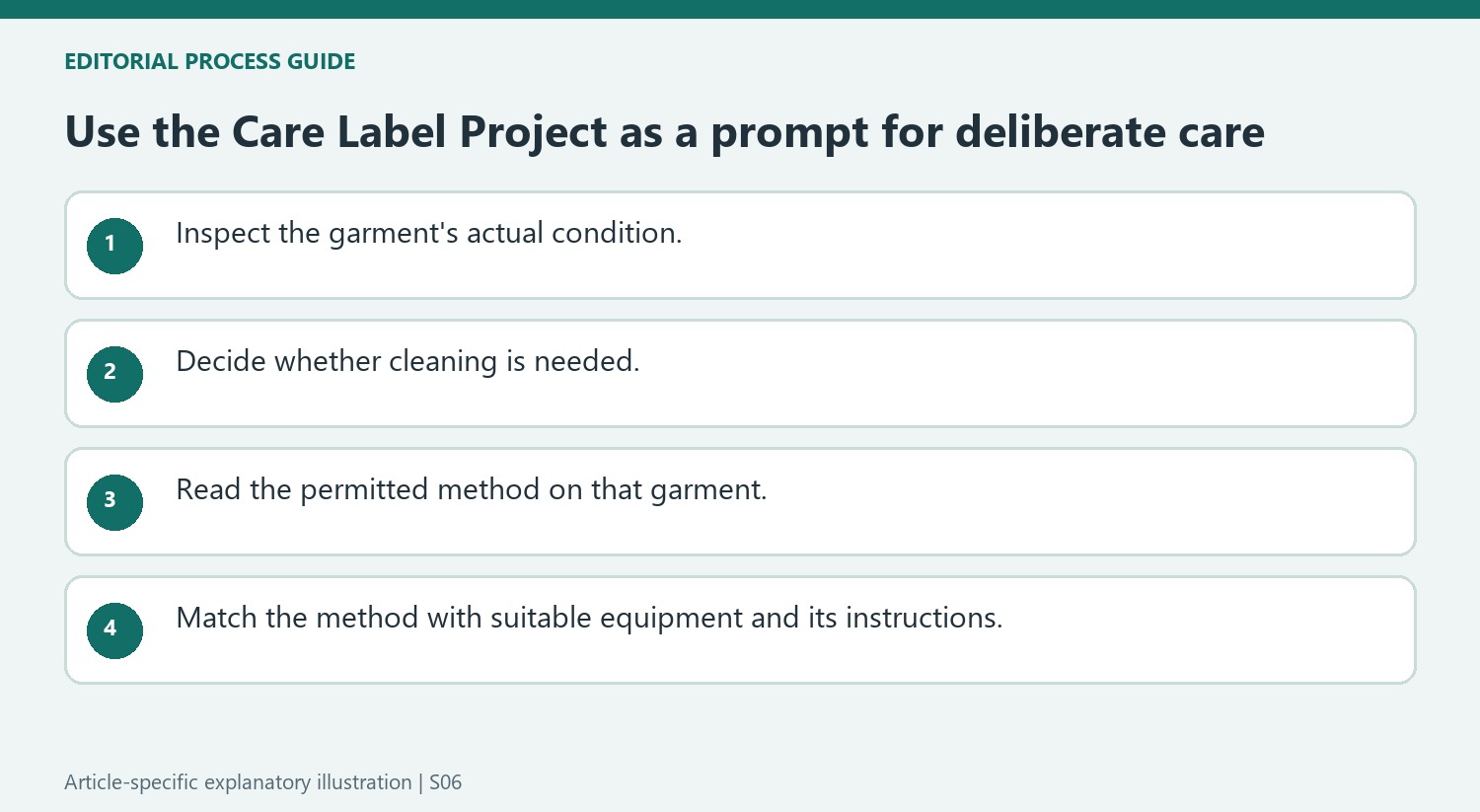
The source connects the campaign to wool's tendency to resist odors and creasing, characteristics that can reduce how often some items need laundering. Assess the actual condition of a garment and consult its care guidance before choosing the next step. If cleaning is needed, select a permitted method rather than treating washing less as permission to ignore soil or stains. The campaign's contribution is a more considered routine: look at the item, identify what treatment it needs and follow the suitable instructions. That makes care decisions responsive to the garment instead of driven entirely by habit.
Separate a campaign prompt from a care permission
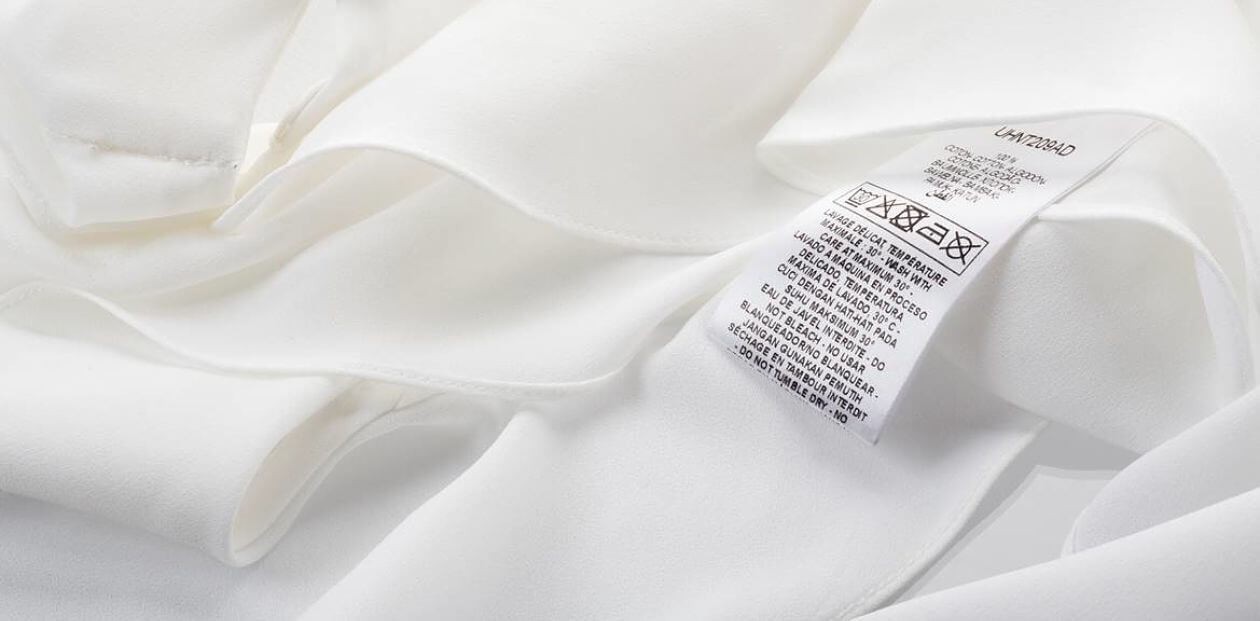
The Don't Overwash message encourages a decision about need, while the sewn-in label describes the treatments permitted for an actual garment. These two kinds of guidance work together but do not replace one another. A piece may benefit from less automatic laundering without becoming suitable for a washing method its maker excludes. The source's emphasis on newer appliance technology is similarly conditional on matching the machine and cycle to the item. This distinction makes the campaign practical rather than a blanket instruction. Examine the garment's condition, decide whether cleaning is needed, and then use an allowed route. The aim is to reconsider habit while keeping product-specific information central to the chosen treatment.
Designer participation illustrates a targeted project
Woolmark describes fourteen emerging European designers participating in the initiative and testing garments in relation to AEG's updated approaches and appliances. Those demonstrations belong to the campaign's actual setting. They are not evidence that every vintage wool coat, embellished knit, or differently finished garment can enter the same machine program. The useful lesson is that assumptions about a fiber can be investigated for specific products with appropriate testing. A consumer can apply that lesson by reading current instructions and checking what a particular item permits. The project opens a conversation about care possibilities while the garment's own specification remains the reference for deciding how its materials and construction should be handled.
Assess condition instead of counting wears alone
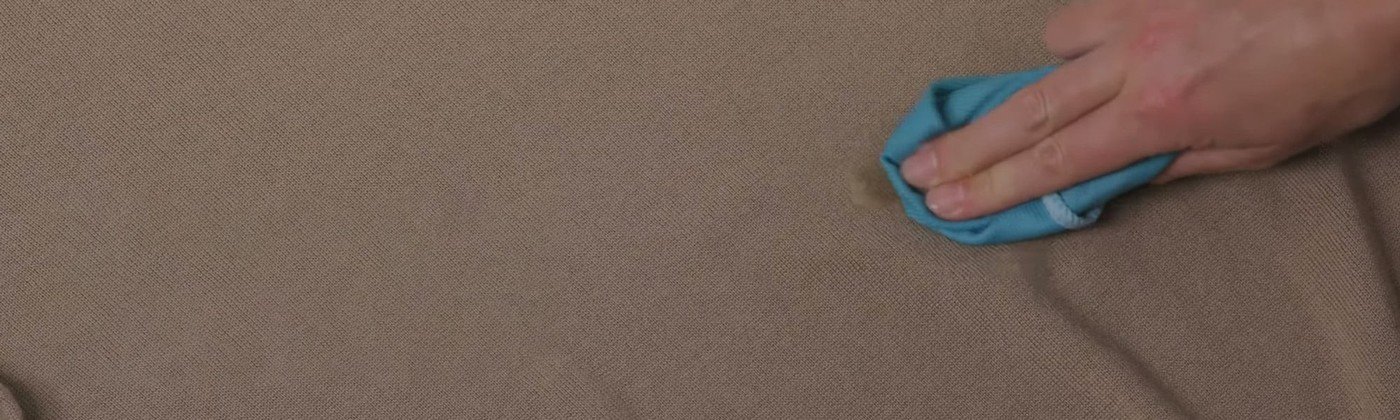
Woolmark connects less frequent laundering with wool's resistance to odors and creasing. That provides a reason to inspect the garment rather than place it in a wash automatically after every outing. Visible soil or a spill still needs attention through a suitable care method. Washing less is therefore an assessment habit, not an instruction to leave a dirty item untreated. Consider what has happened to the garment and consult its guidance before choosing the next step. A more deliberate routine can distinguish an article that remains presentable from one that needs cleaning. This keeps the campaign's general aim connected with the actual state of the clothes in the wardrobe.
References
- The AEG Care Label Project.. The Woolmark Company; The Woolmark Company.