GarmentCare Guide
Wool does not have one universal wash rule
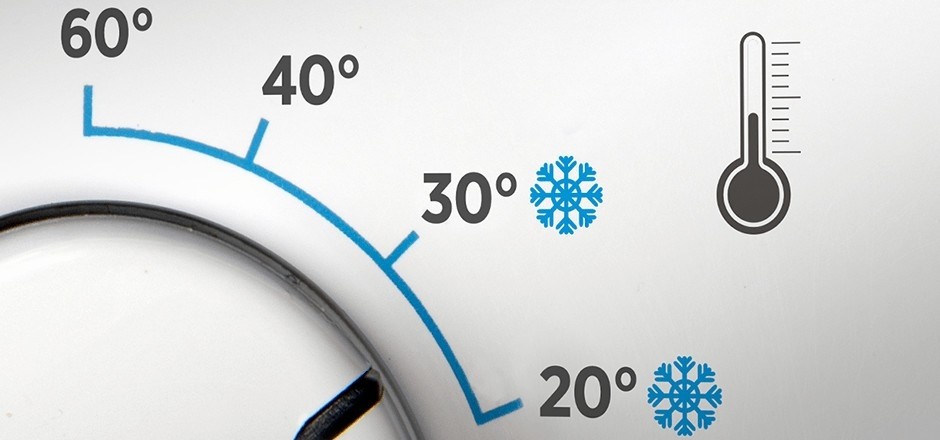
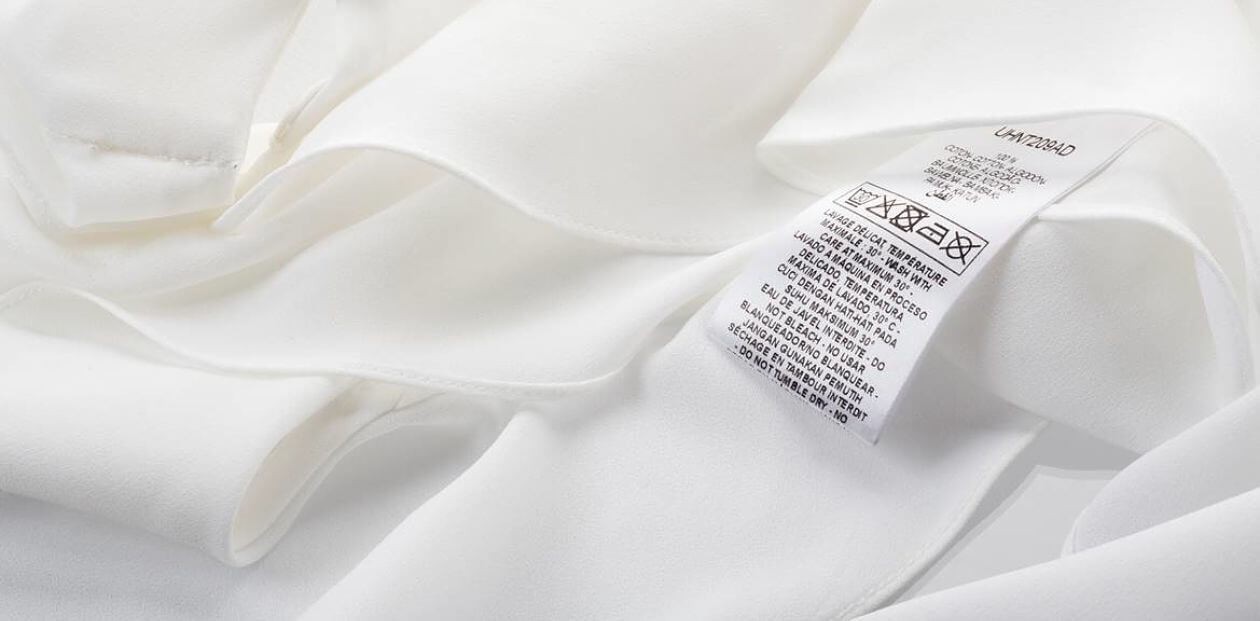
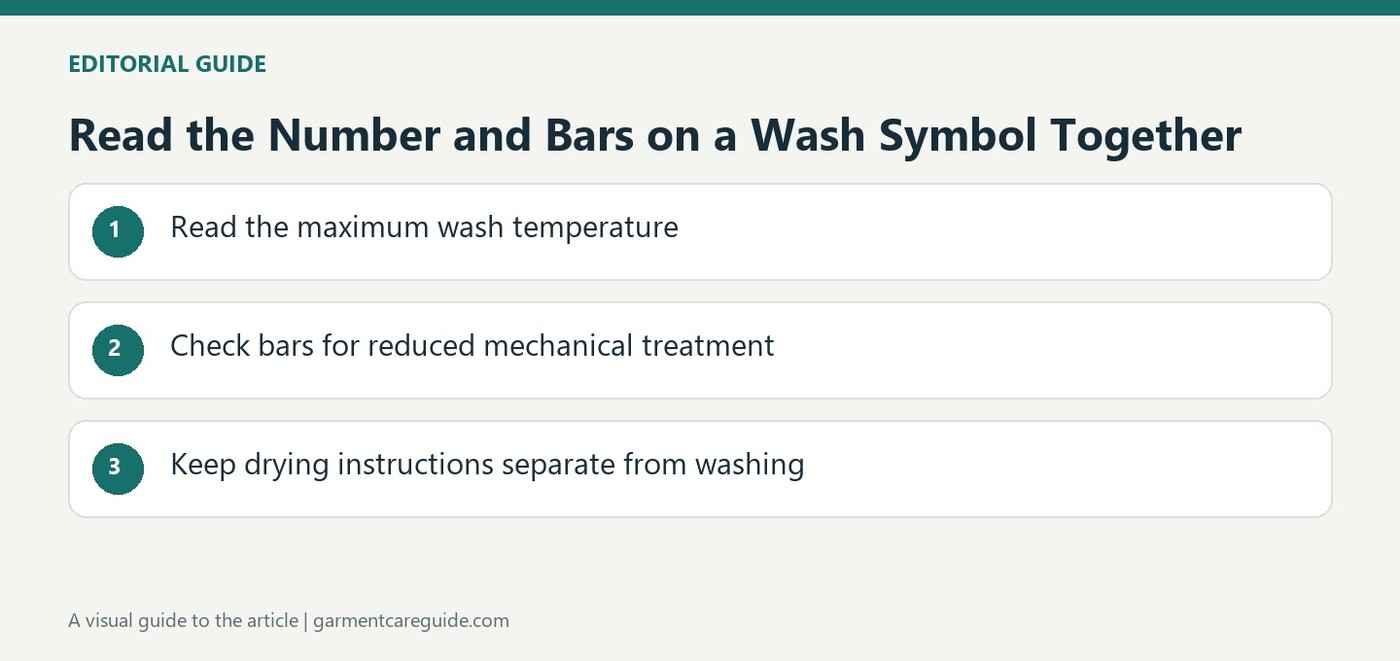
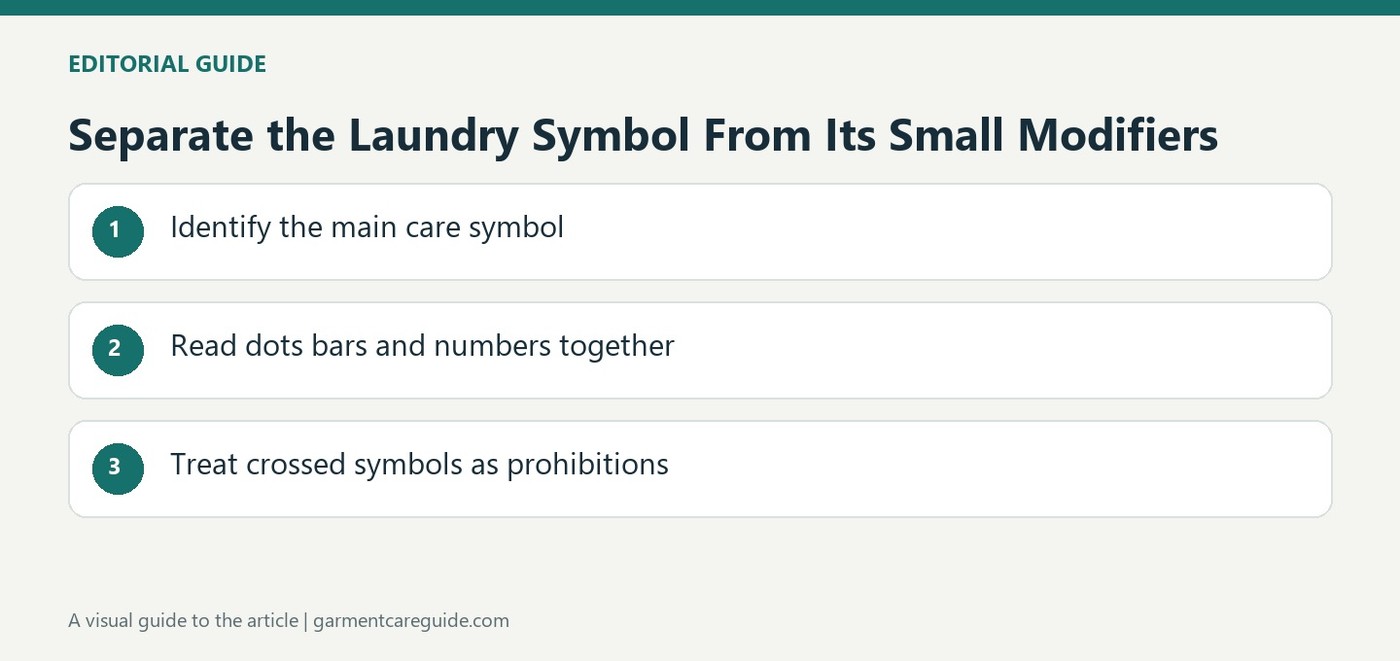
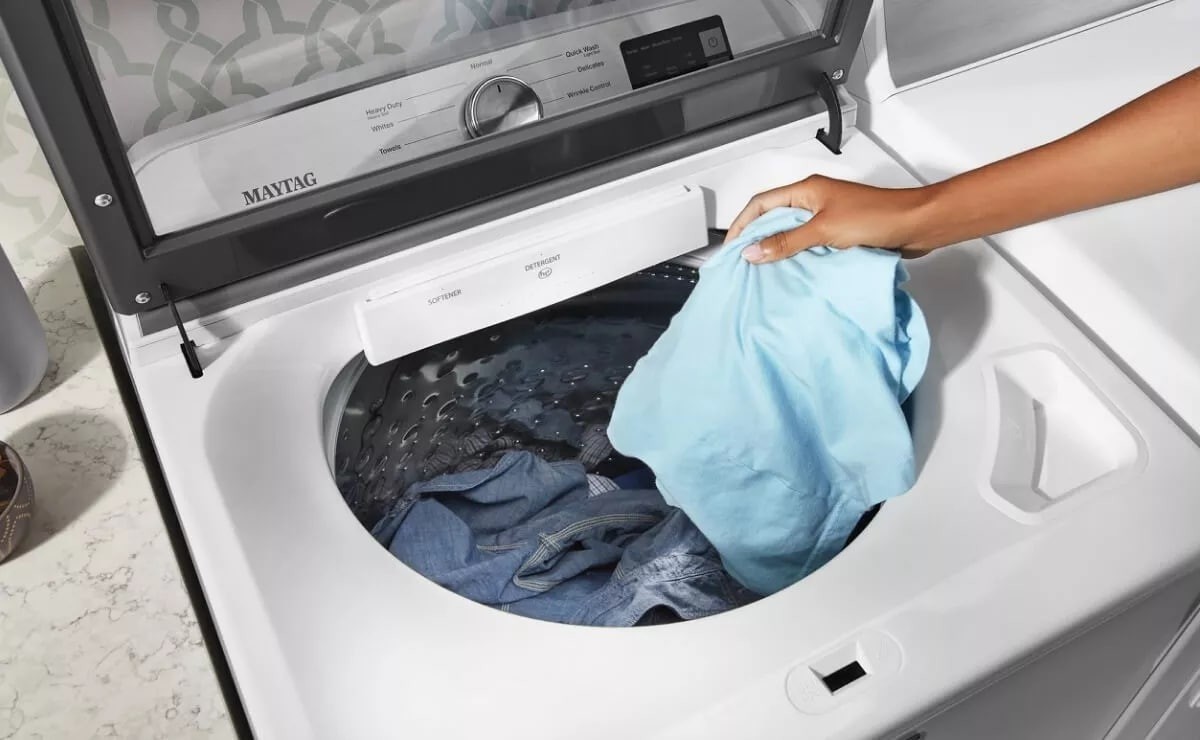
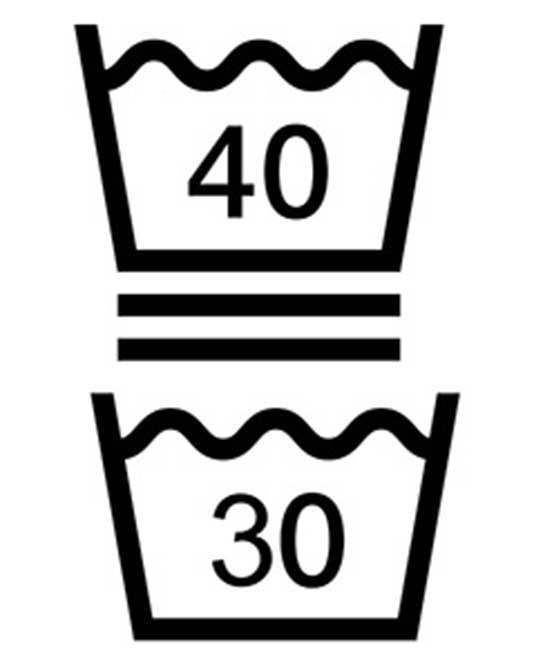
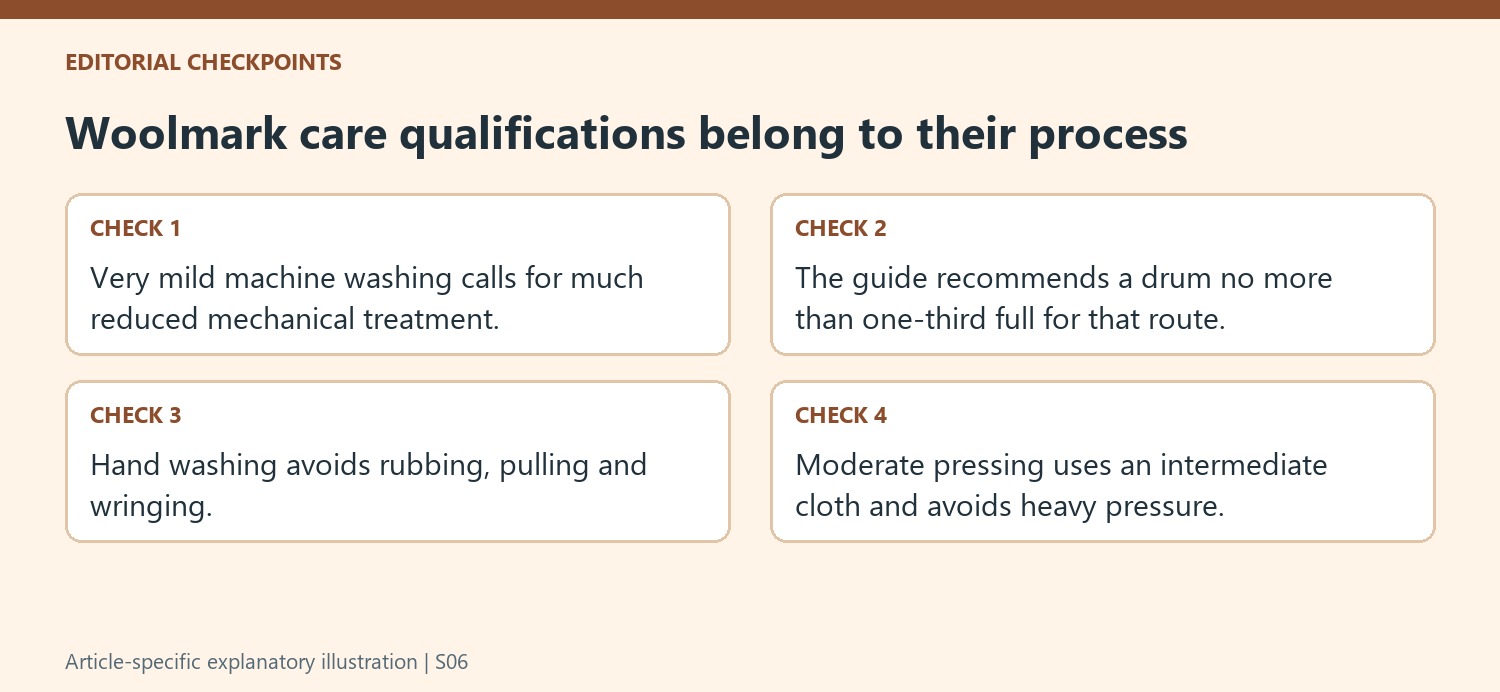
Woolmark's care-symbol guide challenges the assumption that every wool item needs hand washing or dry cleaning. Some finished wool garments are labeled for machine washing, and some also permit tumble drying. The instruction belongs to the particular product. Start with the sewn-in label rather than transferring a successful routine from another sweater. A very mild wash symbol can specify reduced mechanical treatment as well as a temperature limit. Woolmark recommends smaller loads for this process, noting that the drum should be no more than one-third full.
Hand washing still requires controlled handling
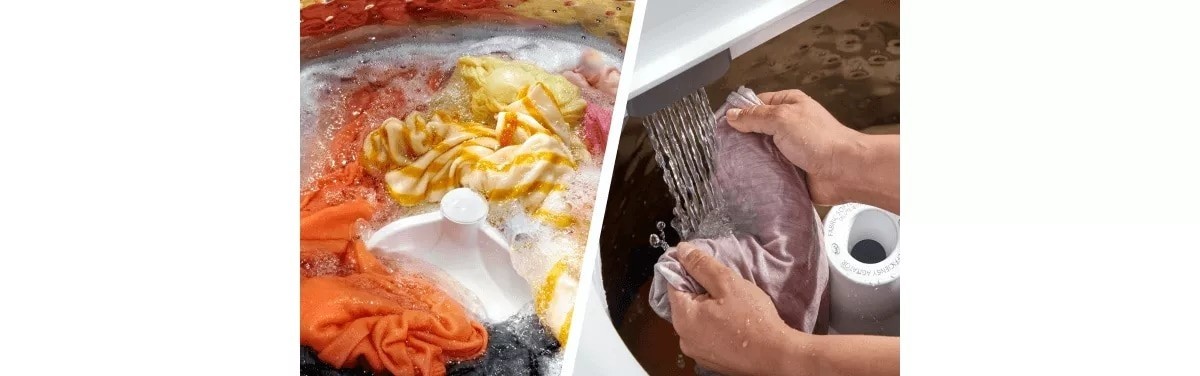
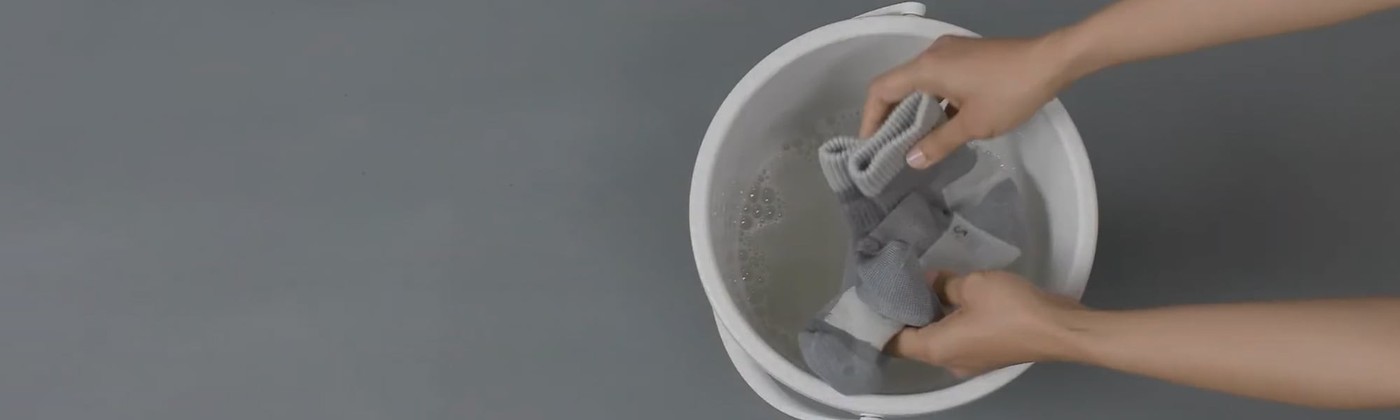
For garments carrying a hand-wash instruction, the source describes dissolving a suitable wool detergent in water and allowing the item to move gently in the solution. Avoid rubbing, pulling or wringing. After rinsing, remove surplus water carefully and restore the item's shape. The guide gives temperature guidance subject to the particular article, reinforcing the importance of the label. A do-not-wash instruction is a different claim altogether. It can reflect sensitivity to wet treatment or other limitations, so choosing a gentle cycle does not cancel the prohibition.
Drying and ironing need their own permissions
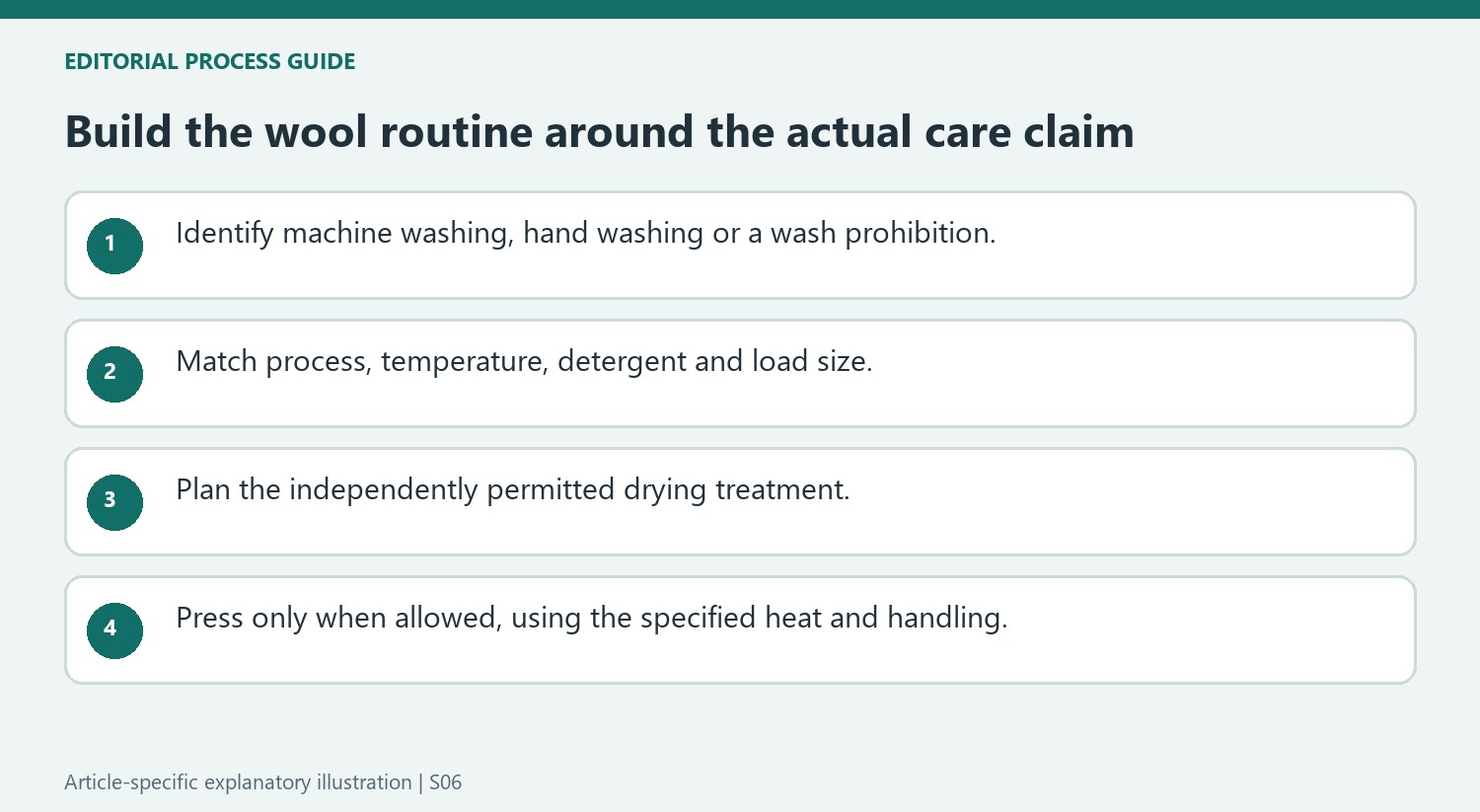
A wool garment labeled do not tumble dry must stay out of the dryer. Conversely, a mild drying claim describes a restricted process rather than unrestricted heat exposure. Woolmark also explains moderate ironing with an intermediate cloth and without heavy pressure where ironing is allowed. These finishing instructions should be read alongside washing directions before the task begins. Planning the whole sequence avoids reaching the drying stage without knowing how to support the wet garment. The most reliable routine follows the actual item's claims at every stage, keeping the fiber name as context rather than as a complete care instruction.
Reduced mechanical treatment also affects load size
For a very mild machine-wash claim, Woolmark recommends reducing the quantity of laundry so the drum is no more than one-third full. This is part of the process description rather than only a choice of lower water temperature. The specified wool or delicate cycle needs to be combined with the actual garment's permission and the appliance instructions. A full drum of otherwise compatible clothing does not reproduce the smaller-load recommendation merely because the control is set to a gentle program. Read the whole care claim first, then plan the load. The fabric name provides useful context, while the permitted process and its conditions explain how the particular article is intended to be washed.
Manual washing still has a sequence to follow
The hand-washing guidance begins by dissolving a suitable wool detergent in plenty of water. The item is allowed to float and is moved carefully, with rubbing, pulling, and wringing avoided. Rinsing and careful water removal follow before the garment is restored to shape. Woolmark also advises treating sensitive colored pieces promptly rather than leaving them wet. These details explain why hand washing is more than substituting a basin for the washer. The solution, temperature, movement, time, and drying transition still need attention. Use the actual label's limits and keep the item supported as required. A do-not-wash claim remains a prohibition rather than an invitation to invent a gentler wet treatment at home.
Pressing permission includes pressure and an intermediate cloth
Where moderate ironing is permitted, the source describes a maximum soleplate temperature of 150 degrees Celsius, an intermediate moderately moist cloth, and avoiding heavy pressure. Those are coordinated instructions for the allowed treatment, not a general requirement that every wool garment be ironed. The drying claim needs its own check as well: some articles permit a mild tumble process, while others must remain outside the dryer. Decide these stages before washing so the routine has an appropriate ending. The complete label can distinguish garments made from the same broad fiber family. Its value lies in preserving those item-specific differences through washing, drying, and any permitted finishing rather than assuming all wool receives one default treatment.
References
- Washing instruction symbols explained. The Woolmark Company.