GarmentCare Guide
One label can contain several instructions
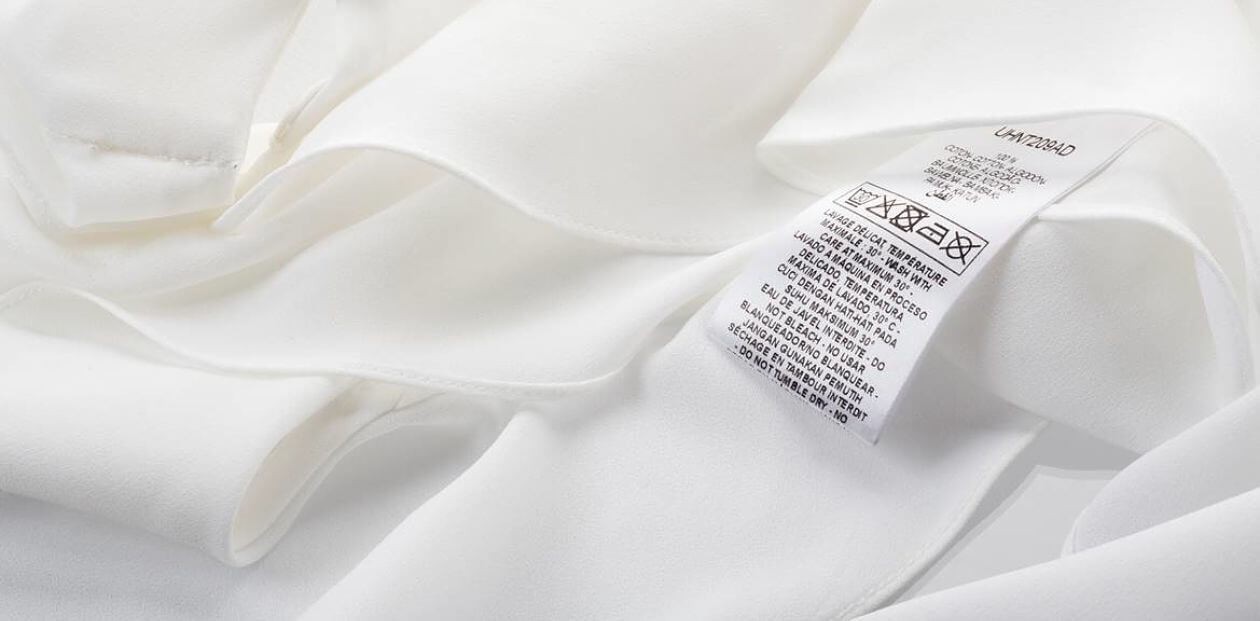
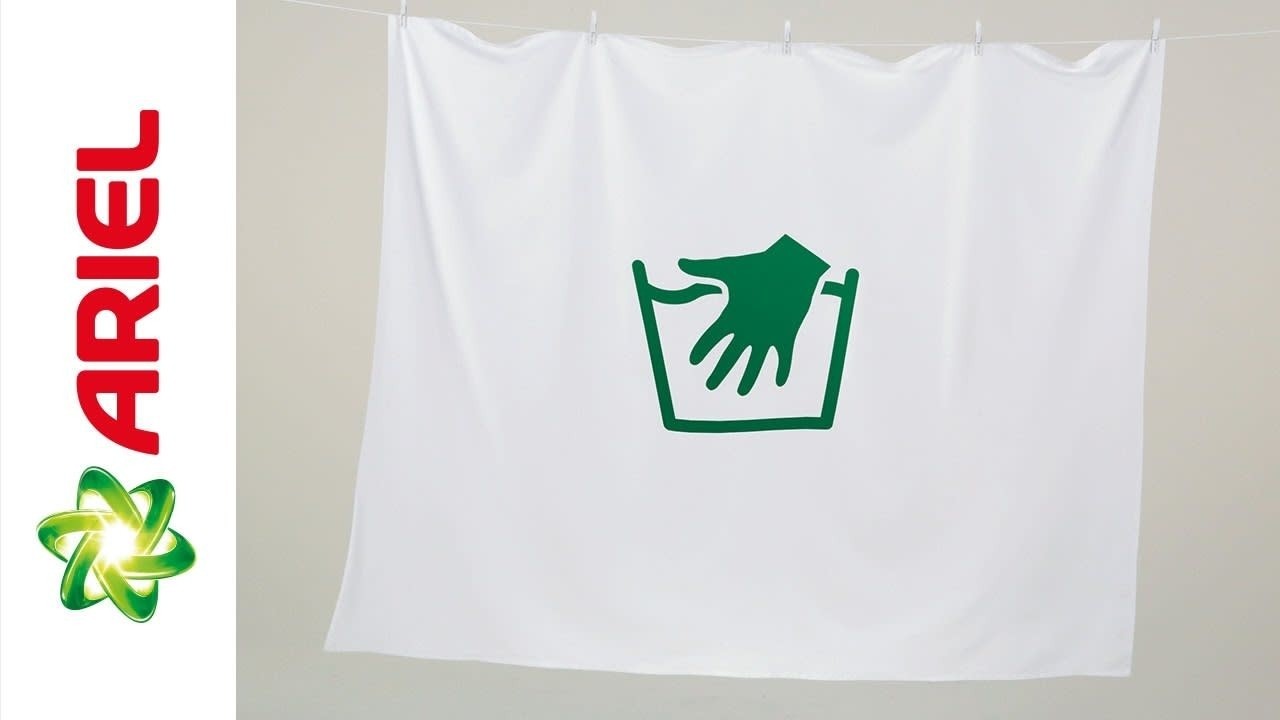
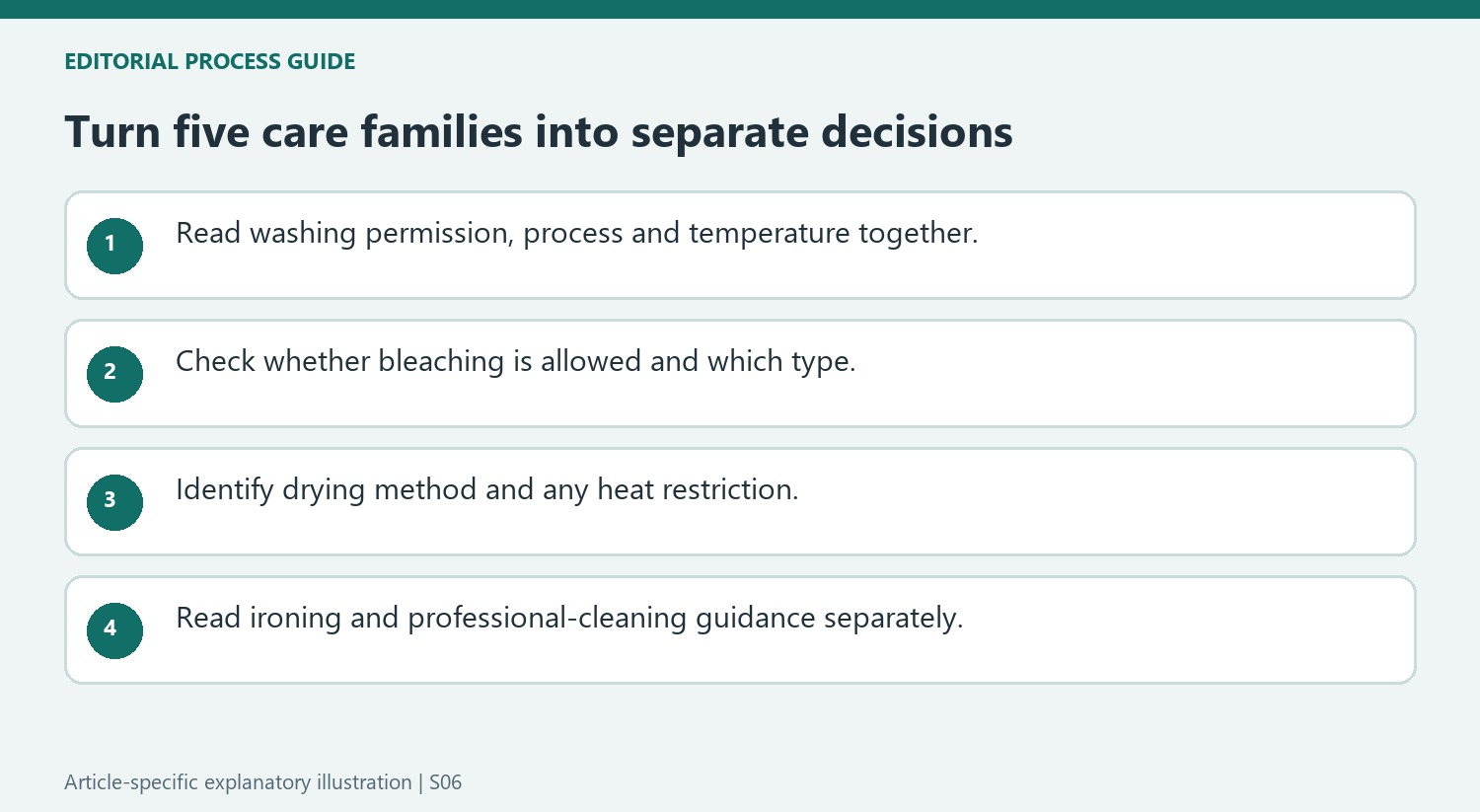
Ariel's clothing care guide describes labels that identify the fabric and provide up to five groups of care symbols. Those groups address separate processes, so the label should be read as a set rather than reduced to one familiar icon. Begin with whether washing is allowed, then check the accompanying limits. Numbers or dots in the tub concern temperature, while markings underneath modify the process. A gentler cycle and a lower temperature solve different problems, making it necessary to consider both when choosing settings for a particular garment.
The triangle controls bleaching choices
Bleaching has its own symbol because a washable fabric may still be unsuitable for a bleach product. Ariel identifies an empty triangle as permission for bleaching when needed, diagonal lines as a restriction to non-chlorine bleach and a crossed triangle as a prohibition. These distinctions matter even for white clothing. Color alone does not establish whether a garment can tolerate bleach. Read the symbol before adding a product, then follow the product's directions within the garment's stated limits. An apparently routine stain treatment should not bypass this part of the care label.
Drying and finishing complete the sequence
A square containing a circle refers to machine drying, while other square symbols describe natural drying methods. Ariel's guide also explains the iron shape, where dots provide heat guidance and a cross prohibits ironing. The professional cleaning circle supplies information intended for a cleaner, including letters relating to the process. Keeping those instructions together provides a more complete plan for handling the item after washing. When an unfamiliar mark appears, identify its process family first and then consult an appropriate reference for its modifiers, rather than guessing from a nearby symbol.
Do not use garment color as bleach permission
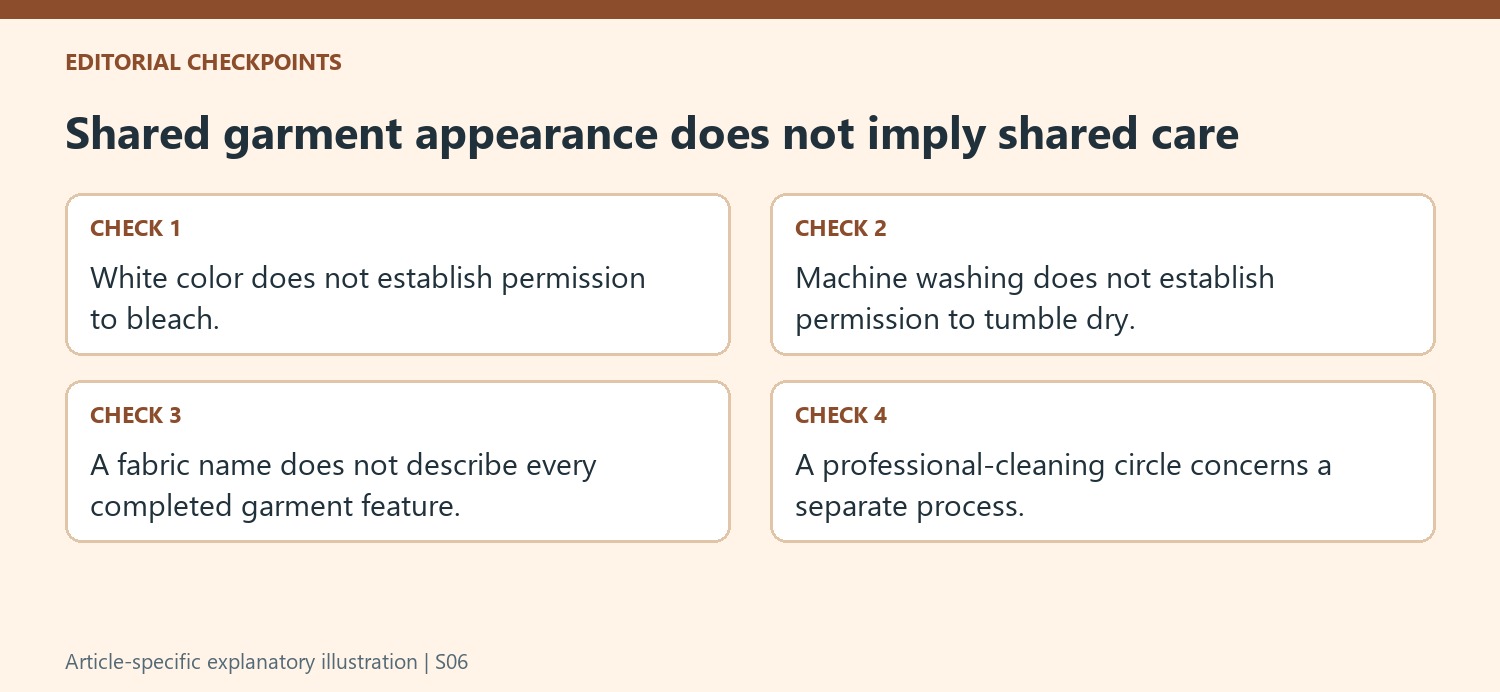
The guide gives the triangle its own place because bleaching is an additional treatment. A white shirt can still carry a crossed triangle, while diagonal marks can limit the permitted bleach type. These instructions do not disappear because the garment looks durable or because a stain is conspicuous. Check the actual symbol and then the directions for any suitable product. A detergent or stain-treatment decision should fit within those limits. This sequence is useful during sorting, when an apparently simple load of whites may contain garments with different requirements. The shared color describes their appearance, while the care labels describe which washing and bleaching treatments the individual items are intended to tolerate.
Read the drying family before interpreting the marks
A square containing a circle refers to machine drying. Other marks inside a drying square can indicate natural methods, such as flat or hanging arrangements. These are different routes rather than alternative temperatures for the same machine program. Once the drying family is identified, the remaining marks refine the permitted treatment. Check this before washing so the correct drying space is ready and an unsuitable item is not transferred automatically with the rest of a load. A label can allow washing while limiting tumble drying or specifying support for the damp garment. Those separate decisions explain why the entire care sequence should be planned from the same label rather than reconstructed from memory afterward.
Finishing symbols need their own interpretation
The iron shape and the professional-cleaning circle address operations beyond ordinary washing and drying. Dots on the iron concern its permitted heat, while a prohibition changes whether pressing is appropriate at all. The circle's letters are information for the professional process, rather than directions to add a household cleaning chemical. If a garment needs specialist attention, preserve its label so the cleaner can read the complete instructions. This is more reliable than passing along only a remembered fabric name. The label combines composition and treatment information for an actual finished item, which may include features not explained by the main fiber alone. Read each process independently while keeping the set together as the garment's care plan.