GarmentCare Guide
Understand what the selected cycle measures
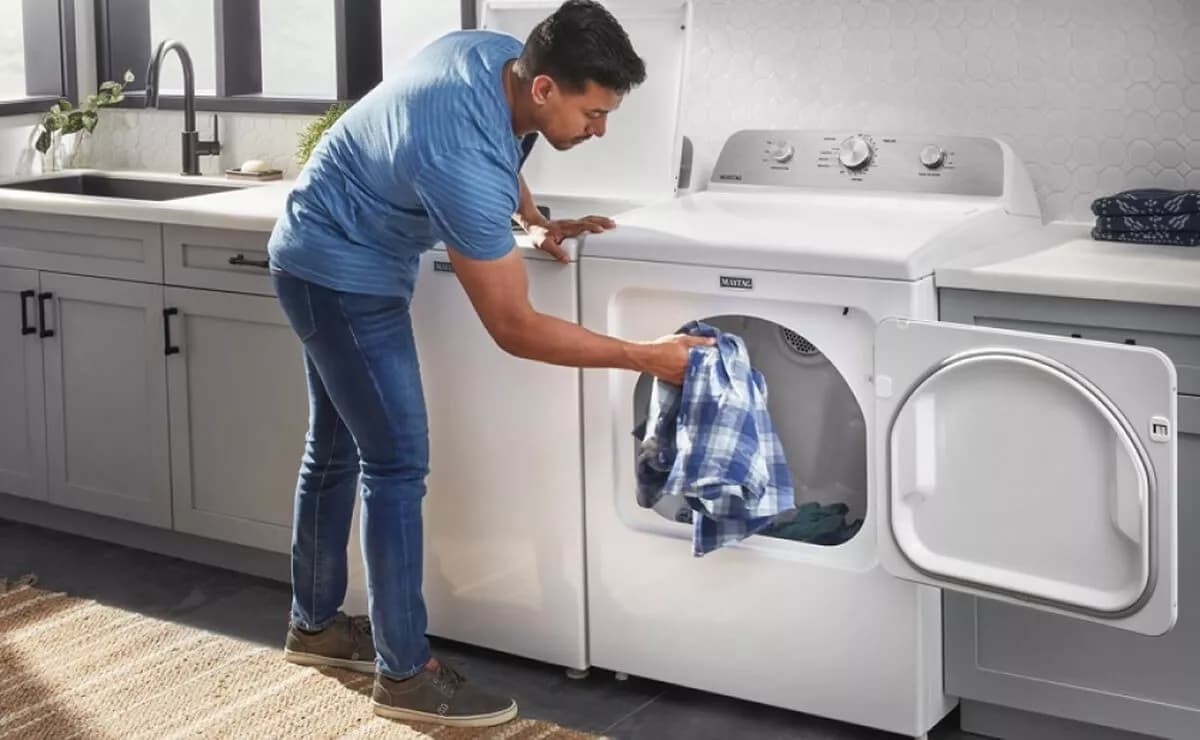
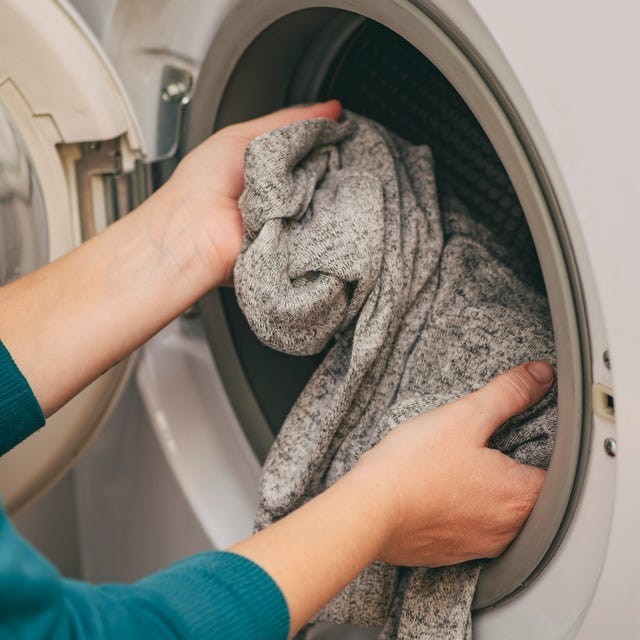
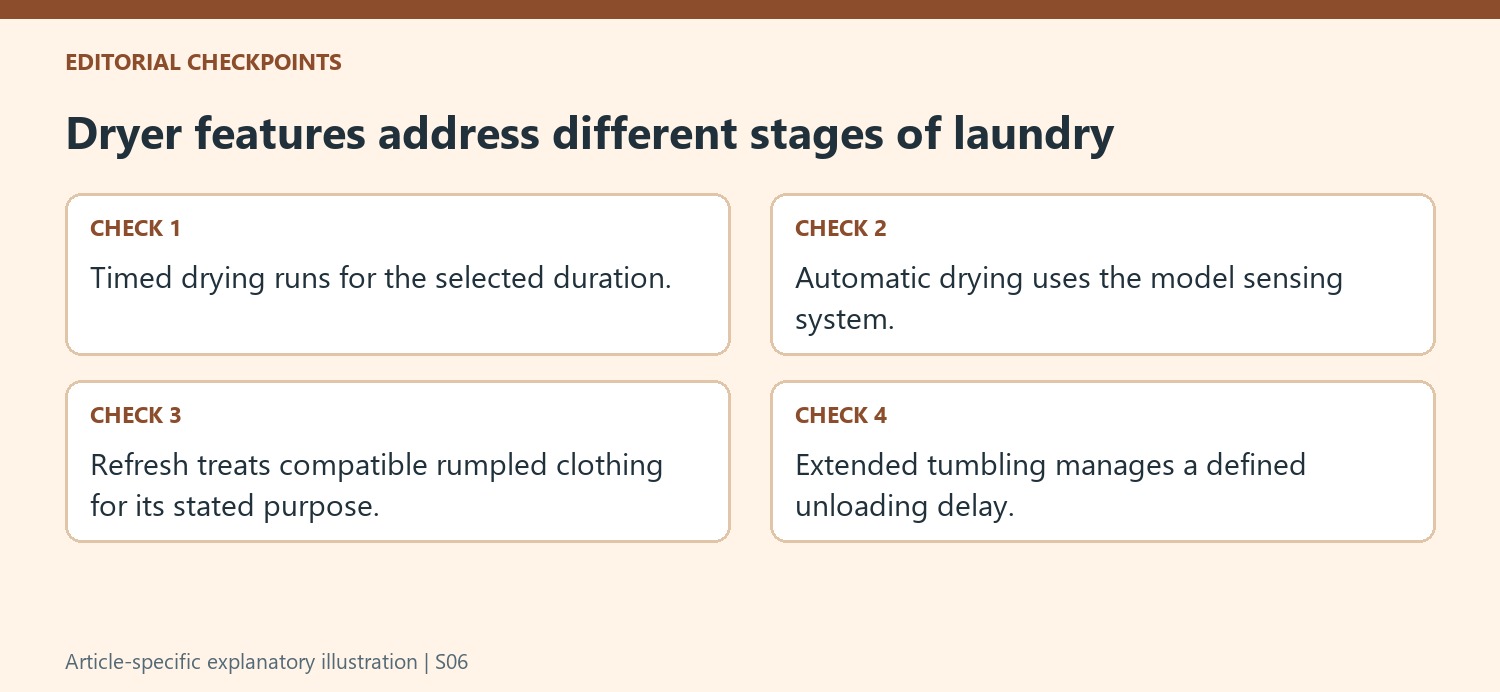
A timed dryer cycle runs for the duration selected, whether a particular load finishes earlier or remains damp afterwards. Good Housekeeping's guidance, drawing on Carolyn Forte's advice, favors automatic cycles that monitor moisture and end according to the machine's sensing system. This can reduce unnecessary drying compared with simply extending a timer. It is not a reason to ignore loading instructions or assume that every item in a mixed load will behave identically. Begin with the garment's care label, then choose an allowed automatic program available on the actual dryer rather than selecting a familiar cycle name without checking its function.
Distinguish delicate drying from a refresh
The source discusses delicate and low heat options alongside refresh cycles, but these serve different purposes. A drying program handles wet laundry, while a refresh setting may use steam to help clean but rumpled clothing look better. Neither option makes tumble drying suitable for a garment whose instructions prohibit it. Cycle names and durations vary among machines, so read the manual for temperature and intended load guidance. A shorter gentle program may suit one item while a sturdier piece needs another allowed setting. The aim is the required finish with appropriate treatment, rather than the longest or hottest cycle available.
Use extended tumbling with a clear purpose
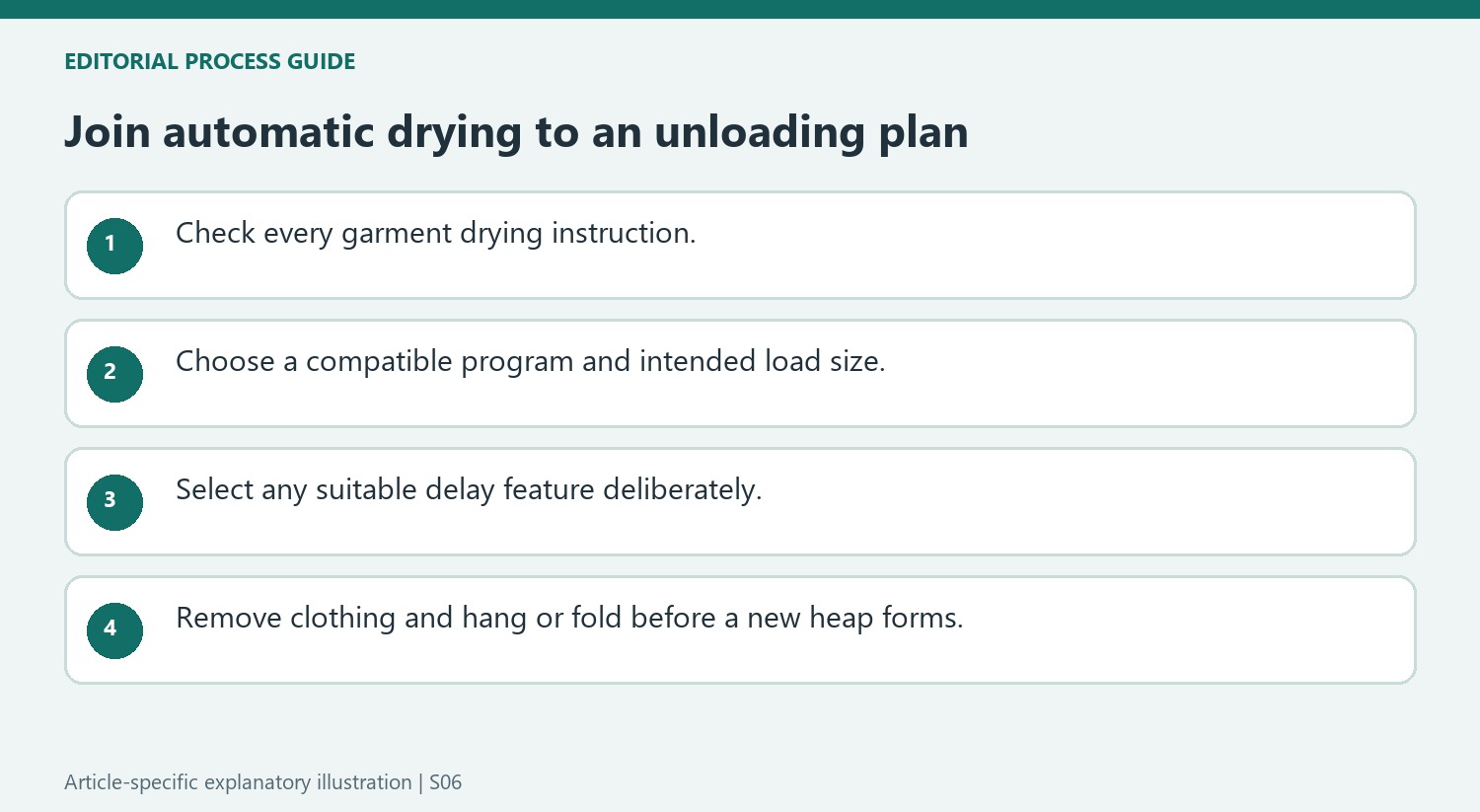
Some dryers offer intermittent tumbling after the regular program to help prevent wrinkles when immediate unloading is difficult. Good Housekeeping notes that this often needs to be selected by the user. Check the model's instructions and the garment's drying limits before relying on it. When possible, remove clothes promptly and fold or hang them instead of leaving a warm heap to settle. Automatic sensing and extended tumble features address different stages: one helps determine the drying endpoint, while the other helps manage a delay afterwards. Knowing that difference makes the controls more useful and reduces unnecessary repeat cycles.
Check the program function behind its name
The source explains the difference between an automatic cycle that senses moisture and a timed cycle that simply runs for a selected duration. Before choosing, identify how the particular dryer determines its endpoint and what load the program is designed to handle. A familiar label such as delicate or low heat may cover different details on another machine. The garment's drying instructions remain the starting point, including whether tumble drying is allowed at all. Then select an appropriate available program and load the drum as directed. Sensors can support the endpoint decision, but they are not a reason to combine incompatible pieces or assume every thick seam and light panel will need exactly the same treatment.
Separate finishing a wet load from refreshing clean clothing
The article discusses refresh cycles alongside ordinary drying options, but their purposes differ. A wet load needs drying under permitted conditions; a clean item rumpled in storage may need only a compatible refresh. Check the machine's guidance for the number and type of garments accepted by that feature, including whether steam is used. A refresh is not automatically a cleaning process for visible soil. Inspect clothing first and set aside pieces that need another care step. This prevents a convenient cycle name from becoming the default answer to every laundry problem. If only one garment remains wrinkled, assess that item rather than repeating heat or moisture treatment across the entire finished load without a specific reason.
Plan how the clothes will leave the machine
Automatic sensing and extended tumbling address separate stages. One helps determine when drying has reached the machine's endpoint; the other provides intermittent movement after a cycle when unloading is delayed. The source notes that this later option often needs to be selected, so check the actual controls instead of assuming it activates automatically. Confirm that its conditions remain compatible with the clothing and understand its duration. When the load can be removed, have hangers or a folding surface ready. A warm heap left on a chair can undo the convenience of carefully chosen controls. The strongest routine links program selection to a realistic unloading plan, using delay features for their defined role instead of treating the drum as indefinite storage.
References
- Use This Dryer Cycle to Avoid Wrinkled Clothes. Good Housekeeping; Kate Franke.