GarmentCare Guide
Check the tank and operating temperature
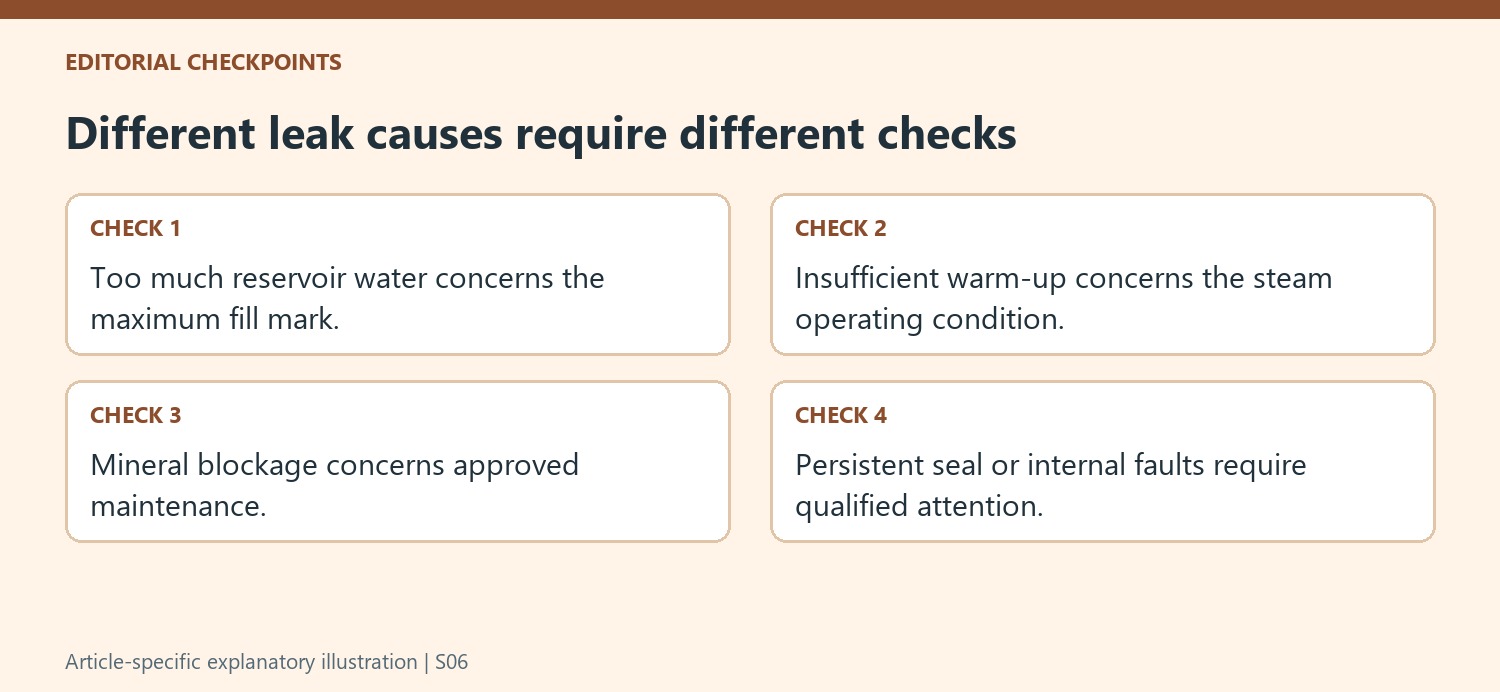
A leaking iron is not always beyond repair. Ideal Home lists an overfilled tank among the first things to check, because water added beyond the marked maximum may escape during use. Fill only to the level specified for the model. The article also identifies insufficient heat as a possible cause: water needs the appropriate operating conditions to become steam. Allow the iron to heat as instructed before activating that function. This does not mean selecting the highest temperature regardless of the garment. If the clothing requires a setting incompatible with steam, use the permitted method instead of increasing heat to stop a drip.
Look for maintenance and storage issues
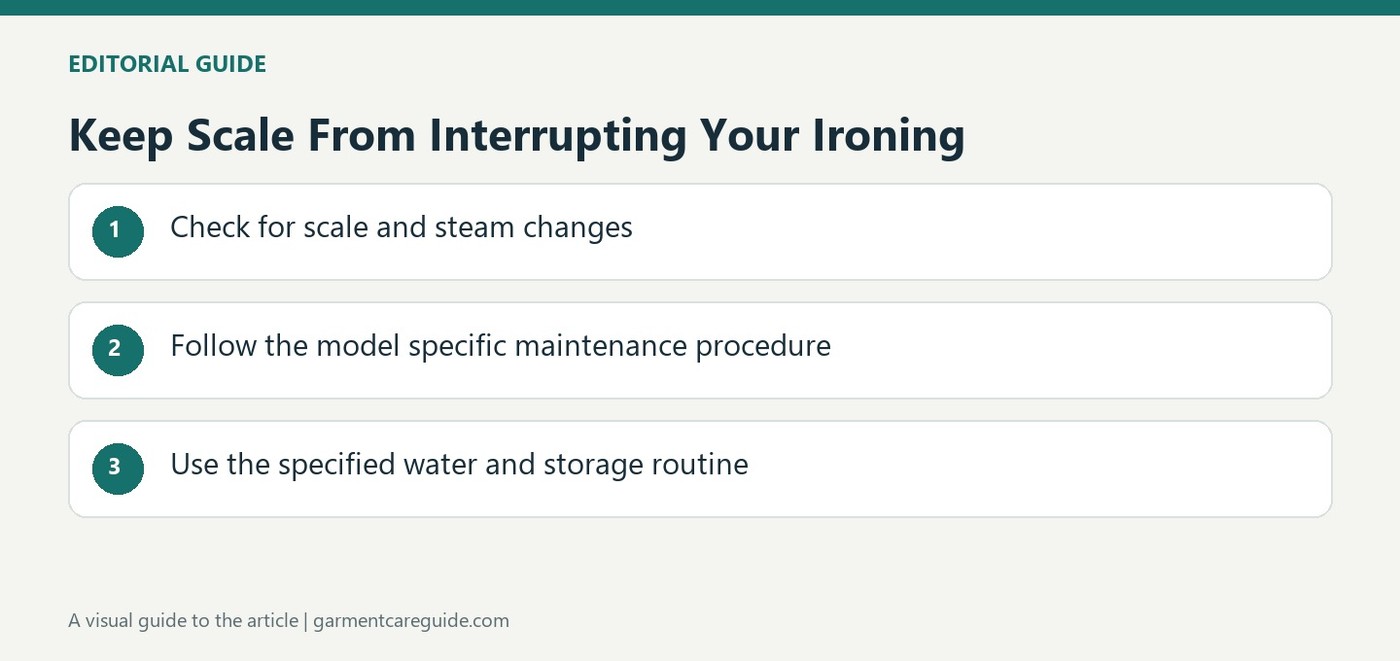
Mineral buildup can interfere with steam production, so consult the iron's cleaning and descaling directions when performance changes. The correct process depends on the appliance; do not assume any household descaler belongs in its reservoir. Storage can also contribute to leakage. Ideal Home recommends attention to the iron's position between uses, while the manufacturer's instructions determine whether and how its tank should be emptied. Make these checks with the appliance in the appropriate safe condition, including disconnecting and cooling it for inspection. Water remaining after use and a tank filled beyond its limit are different problems and should be assessed separately.
Recognize when troubleshooting should stop
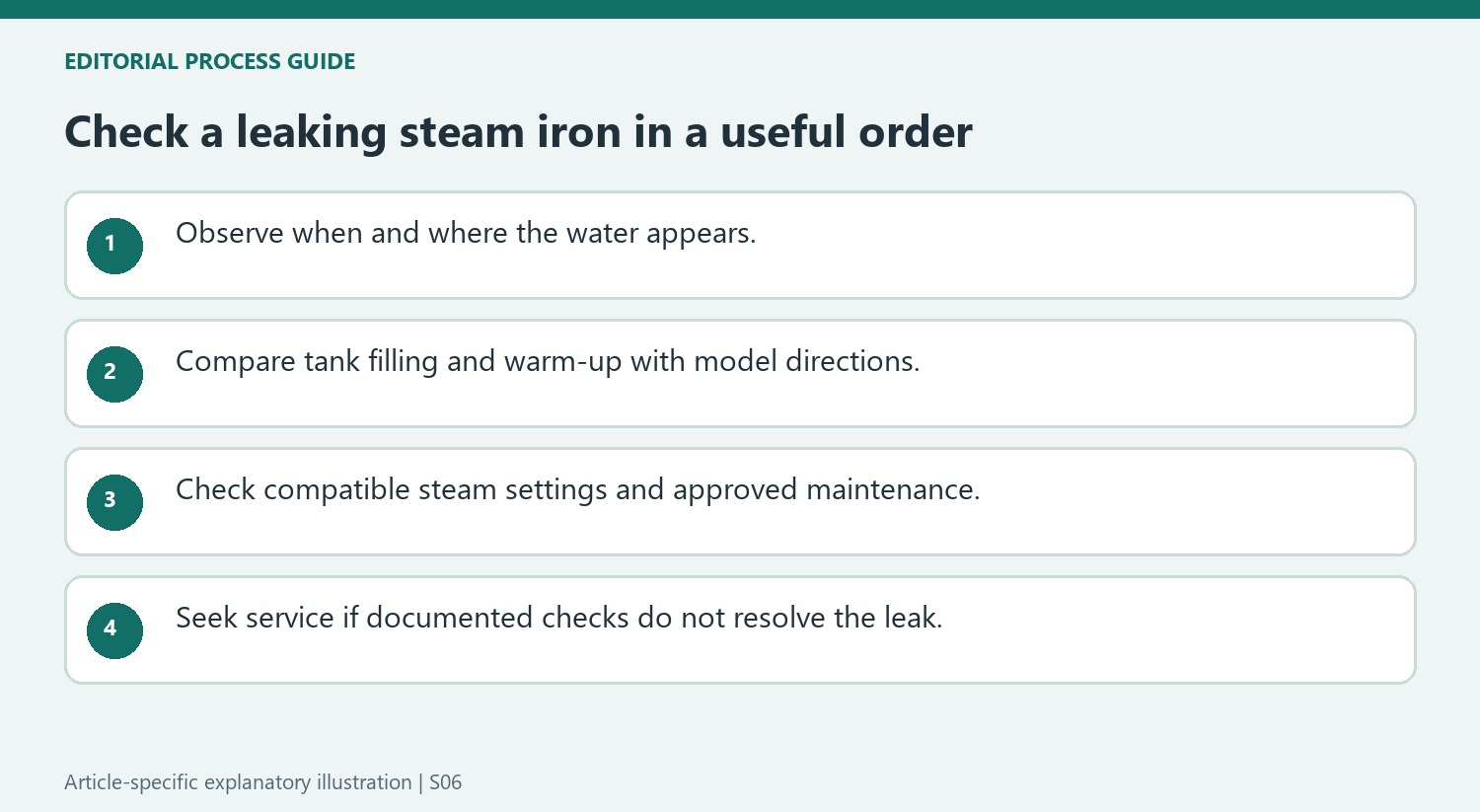
The source also points to worn seals or internal damage as possible causes. If the simple filling, temperature and maintenance checks do not resolve the leak, seek the manufacturer's advice rather than repeatedly testing the iron on clean clothes. Avoid opening the appliance to investigate internal components without the necessary expertise. Note when the water appears, which setting was selected and whether the tank was within its limit; those details make a service inquiry more useful. An orderly check can distinguish a routine operating issue from a fault that needs professional attention or replacement.
Check the operating sequence before changing settings
A useful first check is whether the leak appears during filling, before the iron has reached its operating condition, or only after steam is selected. The source identifies both an overfilled reservoir and insufficient heat as possible causes, but those are separate circumstances. Compare the fill level with the actual maximum mark and follow the model's warm-up indication rather than guessing from elapsed time. Then check which steam settings are permitted at the garment's temperature. If that combination is unavailable, choose an appropriate alternative treatment. Raising the heat solely to make dripping stop can expose the clothing to a setting it cannot tolerate, so the fabric requirement must remain part of the troubleshooting decision.
Keep cleaning and storage checks model specific
The source also connects leaks with mineral blockages and the way an iron is put away. Those suggestions are starting points for consulting the correct manual, not permission to use a general-purpose descaler or to disassemble the appliance. Look for the documented self-cleaning process, scale collector, or approved maintenance procedure. Follow the required cooling, emptying, and finishing steps completely. The storage position and remaining reservoir water should also match the model's instructions. These details can help distinguish a problem that follows a particular storage habit from one that appears during every pressing session. A household mixture suitable for a kettle should not automatically be transferred into an iron simply because both appliances encounter water and mineral deposits.
Make a service inquiry more informative
If ordinary operating and maintenance checks do not resolve the problem, describe the behavior precisely to the manufacturer or a qualified service provider. Note the setting, approximate tank level, whether the appliance was fully heated, and where water appeared. Mention any recent cleaning treatment because it may help explain a change in performance. The source lists worn seals and internal damage as possible faults, so repeated leaking should not always be interpreted as a need for more descaling. Avoid continuing to test the appliance on valued clothing while the cause is uncertain. The goal is to identify whether a documented user-level step remains available or whether the iron needs service or replacement, without opening internal components as an improvised diagnostic exercise.
References
- Why is my steam iron leaking water? Experts explain | Ideal Home. Ideal Home; Jullia Joson.