GarmentCare Guide
Notice changes in steam and fabric marks
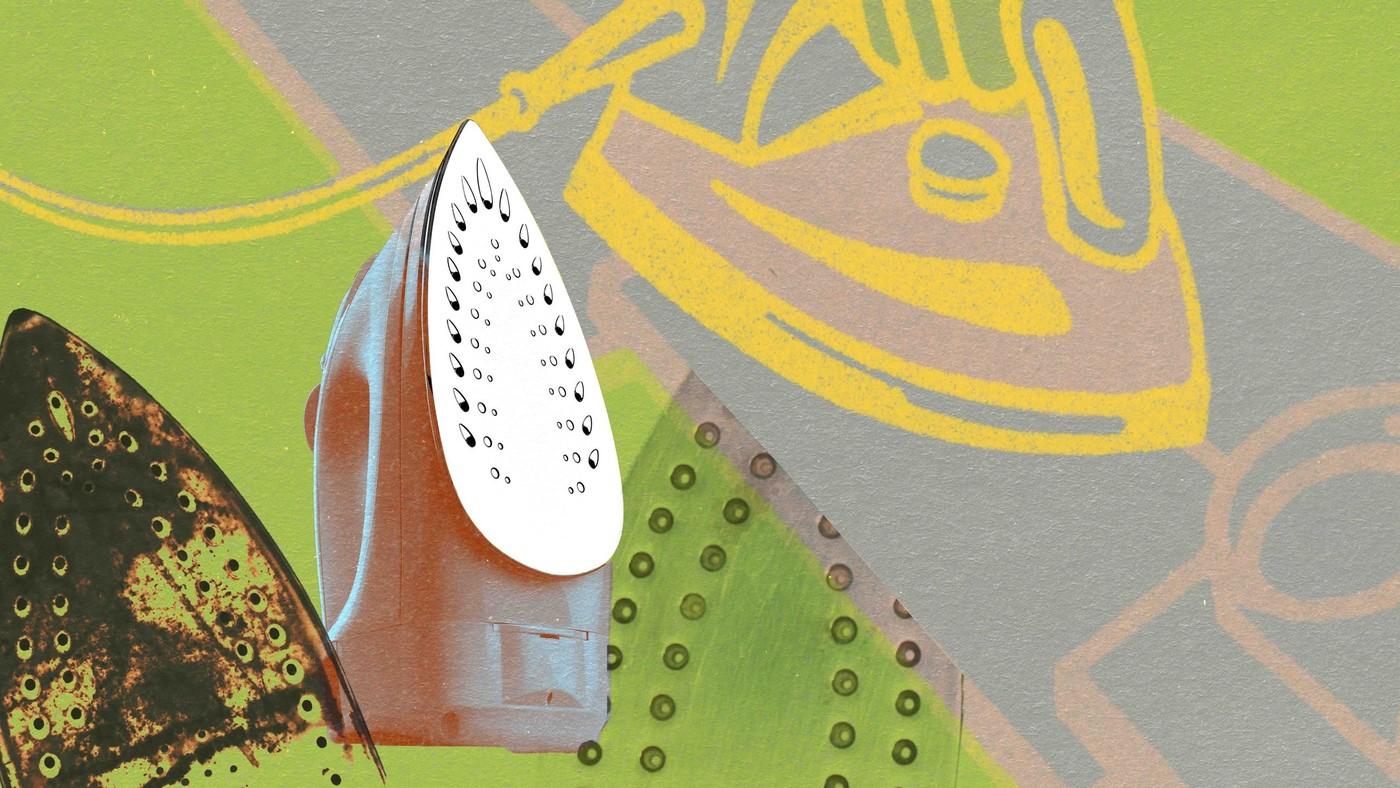
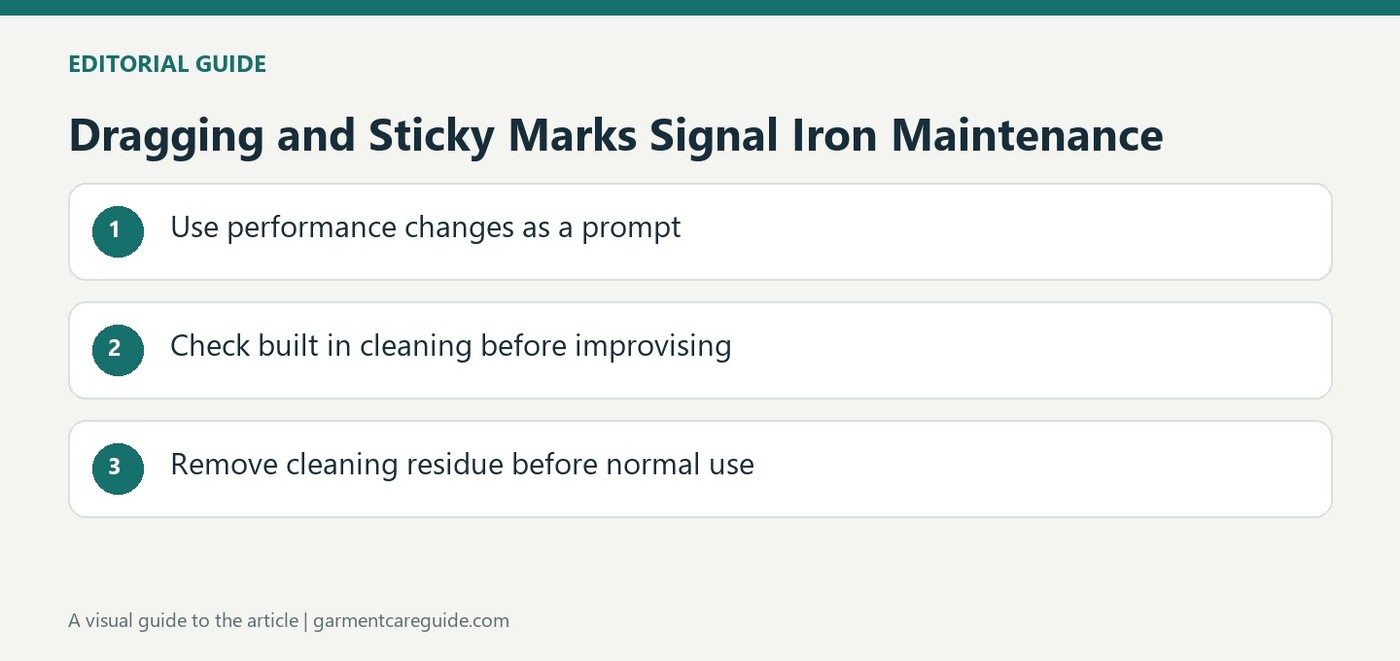
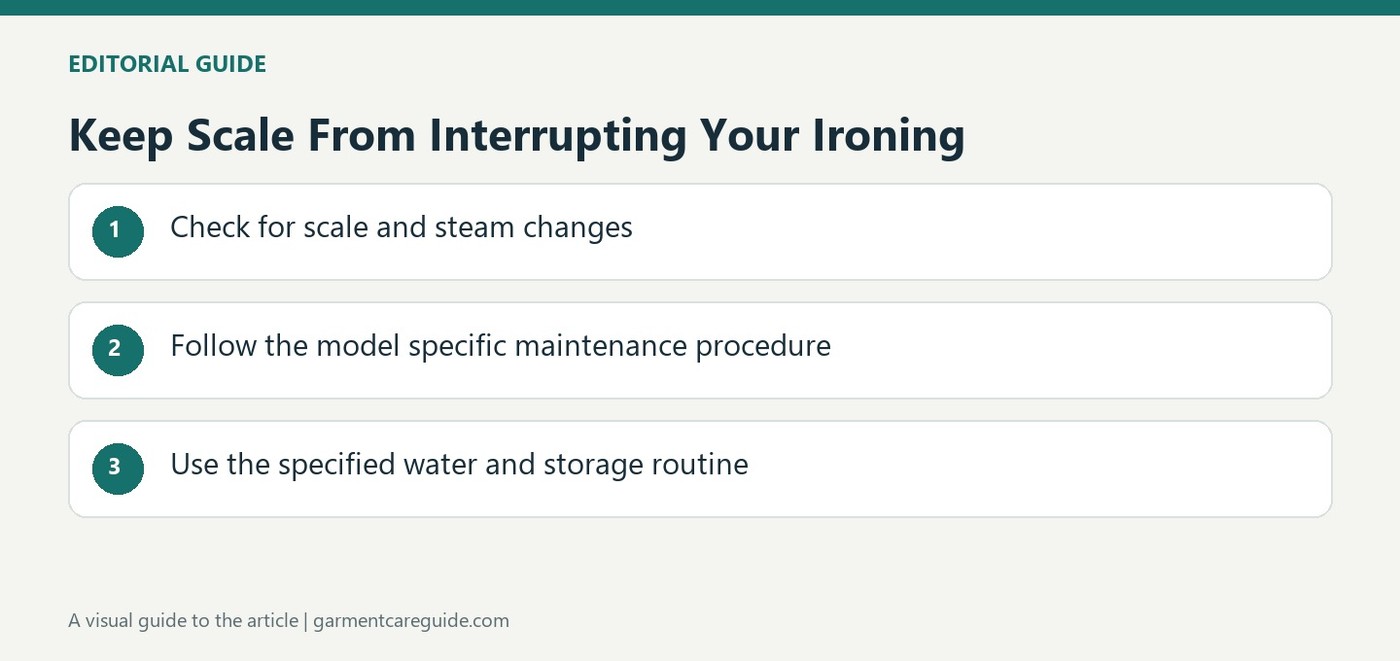
Limescale can become visible through an iron's performance before it is obvious inside the appliance. Ideal Home describes blocked steam openings and deposits that may leave pale streaks or spots on clothing. A change in steam flow, material emerging through the vents or unexplained marks should prompt inspection rather than another pass across a freshly washed shirt. The source links the problem to minerals in water accumulating during use. How quickly this happens varies with water conditions and how often the appliance operates, so a single cleaning interval will not suit every household equally well.
Use the process intended for the model
Check the manufacturer's instructions for descaling, self cleaning or any removable scale collector fitted to the iron. These systems differ, and a household cleaning mixture described in a general article should not automatically be poured into every reservoir. Follow the specified product, water type, filling level and operating sequence. Cooling, emptying and flushing steps are part of the process, rather than optional finishing details. If the instructions prohibit a descaler or additive, use the approved alternative. Keeping the correct manual accessible helps separate routine maintenance from improvised treatment that could damage seals or internal components.
Build maintenance into normal storage
After use, let the iron cool and empty or store its reservoir as the manufacturer directs. Wipe the exterior and inspect the soleplate using an appropriate method, so residue is noticed before the next pressing session. Plan maintenance around actual use and the appliance's guidance rather than waiting for marks on an important garment. If scale symptoms persist after the correct cleaning cycle, contact the manufacturer for further advice. Consistent care supports steam performance, but it cannot guarantee that every leak or stain is mineral related. Observing what changes and when helps identify a separate fault without repeating unnecessary cleaning.
Separate the symptom from its possible cause
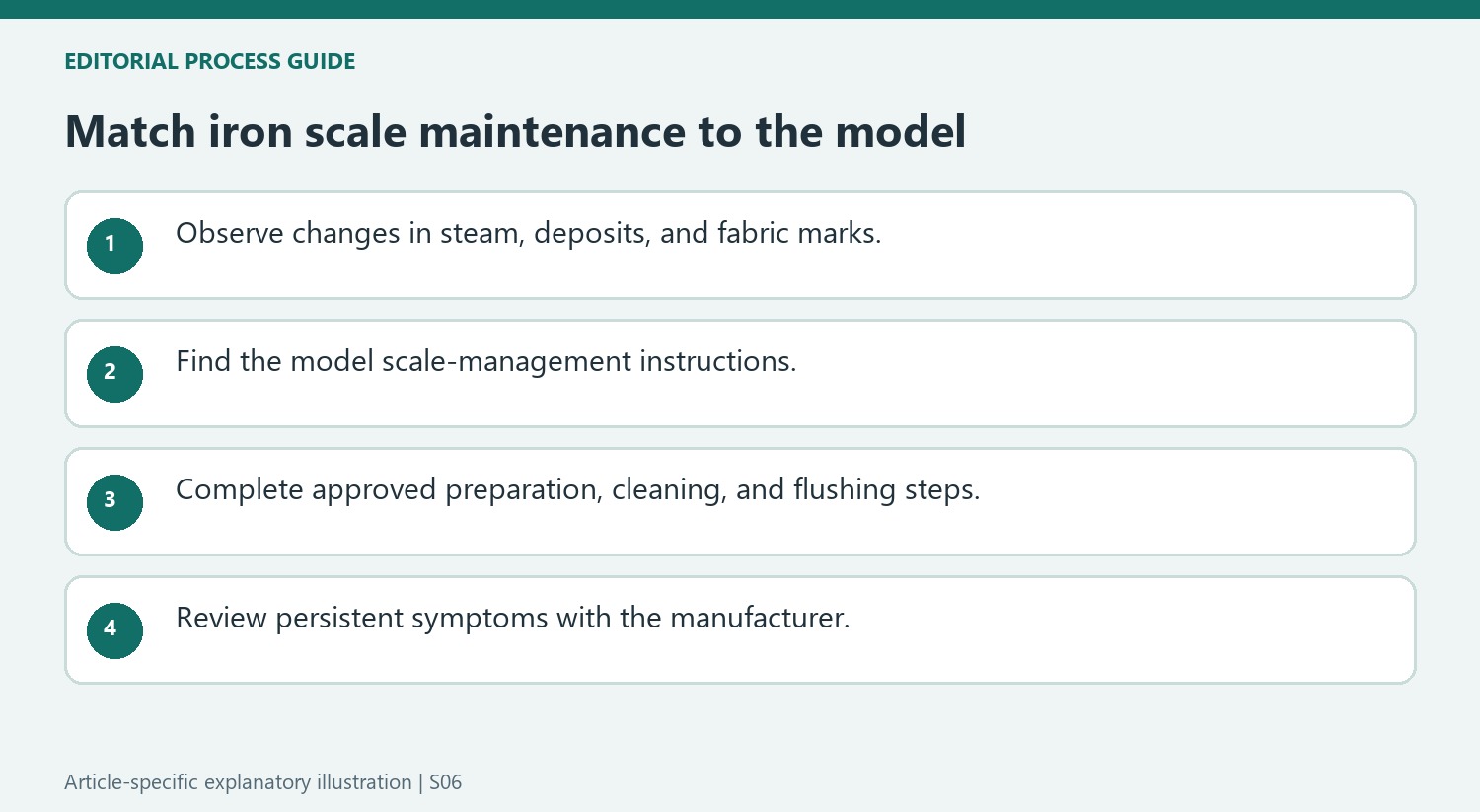
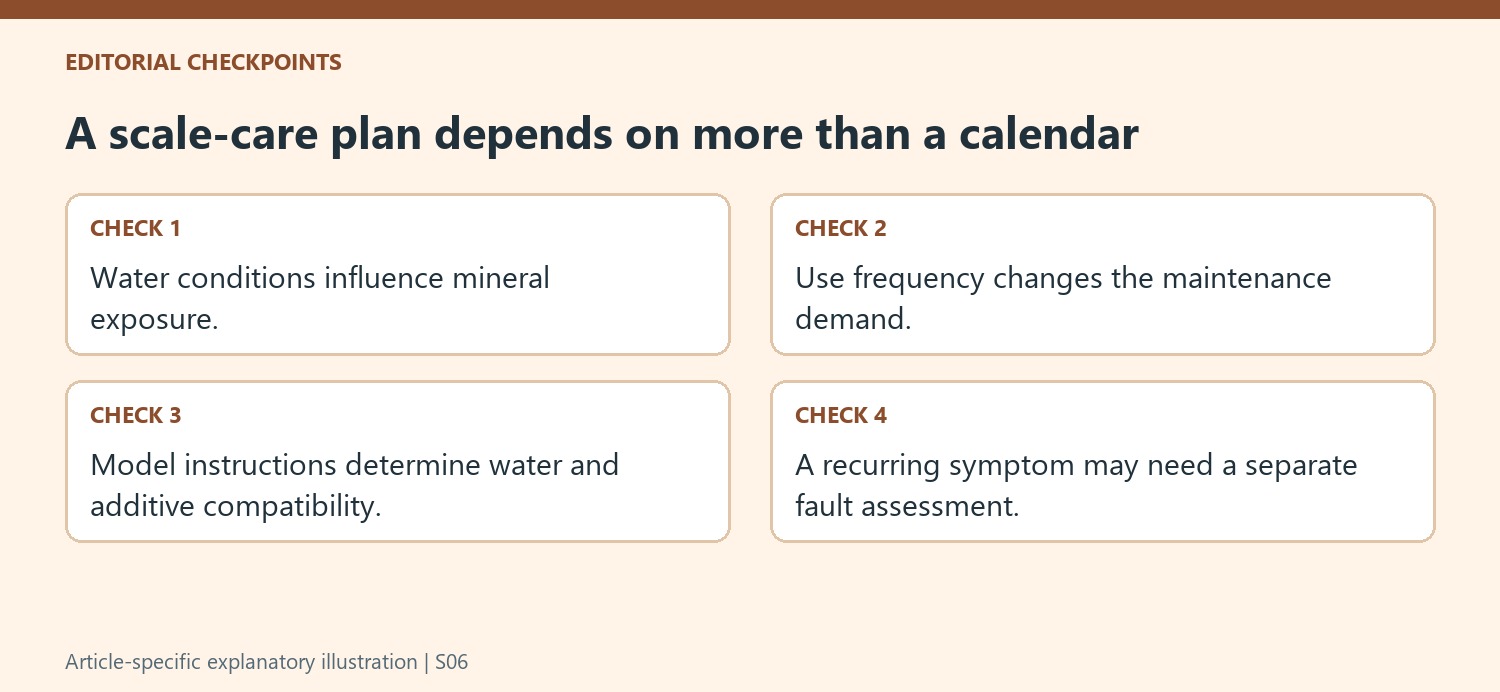
White deposits, reduced steam, and unexplained marks are the kinds of changes discussed in the source, but observing one does not prove every internal problem is limescale. Record what appears and when: material coming through a vent during steam use is a different observation from water leaking while the appliance is stored. This distinction helps when consulting the manual or asking the manufacturer for advice. Start with the approved checks for the particular symptom instead of repeatedly applying a cleaning mixture to any change in performance. If an appropriate maintenance cycle fails to resolve the issue, treat that result as useful information. Further investigation may be needed rather than a stronger or more frequent version of the same treatment.
Identify the actual scale-management system
Irons can provide different ways to manage deposits, so first find the relevant section of the manual for the model in use. A self-cleaning sequence, removable collector, or specified descaling product may involve different preparation and finishing steps. Follow the stated filling level, appliance position, operating sequence, and cooling requirements throughout the procedure. The source's vinegar method is not a universal instruction for all reservoirs, seals, or soleplates. If the manufacturer prohibits additives, that restriction takes priority over a general household article. Keep the approved materials available so maintenance does not become an improvised substitution when steam performance changes. Once complete, follow the documented flushing or checking process before the appliance returns to valued clothing.
Plan intervals around use and water guidance
The source connects mineral buildup with local water conditions and how often the iron is used, which makes a fixed calendar interval an incomplete maintenance plan. Begin with the manufacturer's schedule and water directions, then notice whether the actual use pattern calls for attention sooner under those instructions. Do not assume that distilled water is required for every model; water specifications vary. After pressing, follow the prescribed reservoir and storage routine rather than leaving the next session to begin with an unknown condition. Keep a simple note of completed maintenance if the appliance is used heavily or shared. That history can help explain a performance change and makes a service conversation clearer if correct cleaning no longer restores normal operation.
References
- How to descale an iron with white vinegar | Ideal Home. Ideal Home; Kezia Reynolds.