GarmentCare Guide
Keep the comparison in its original context
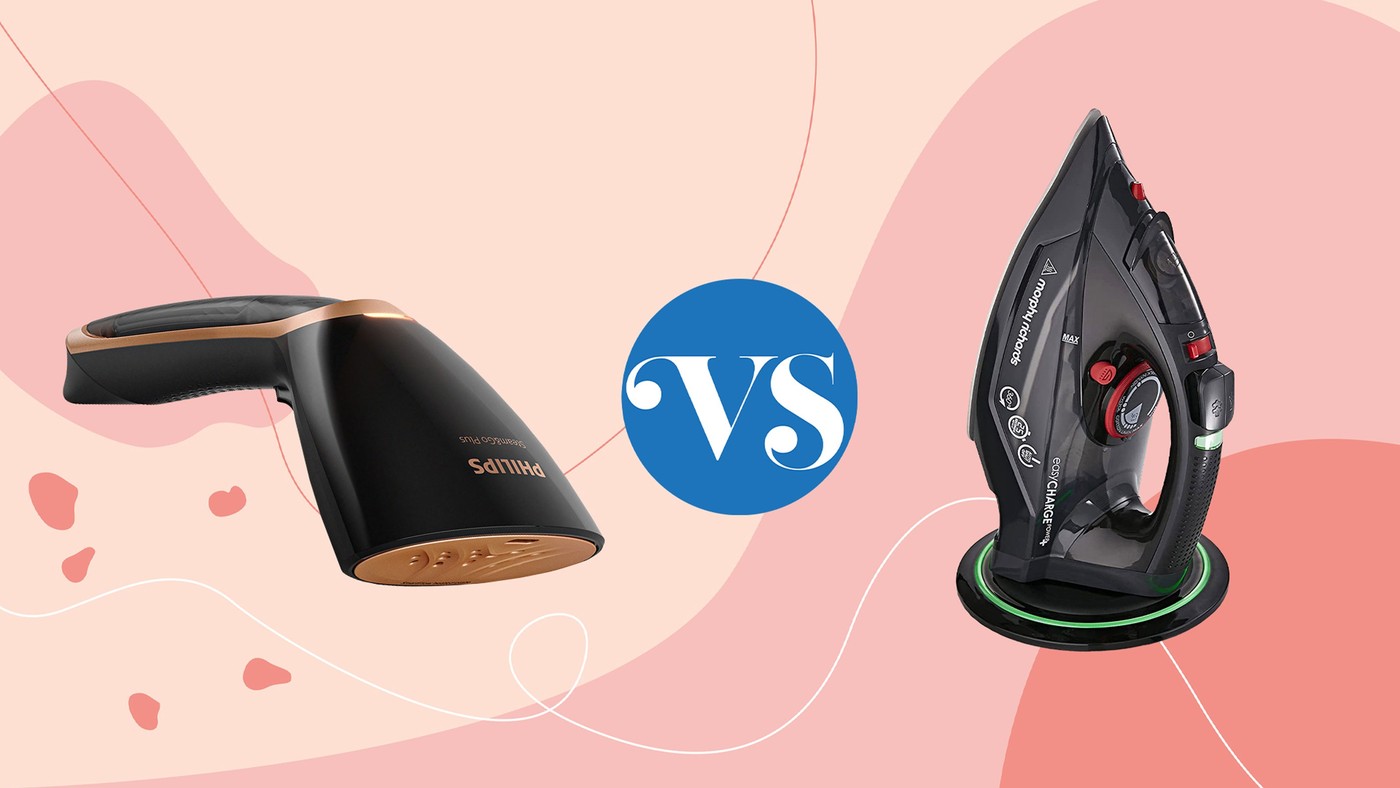
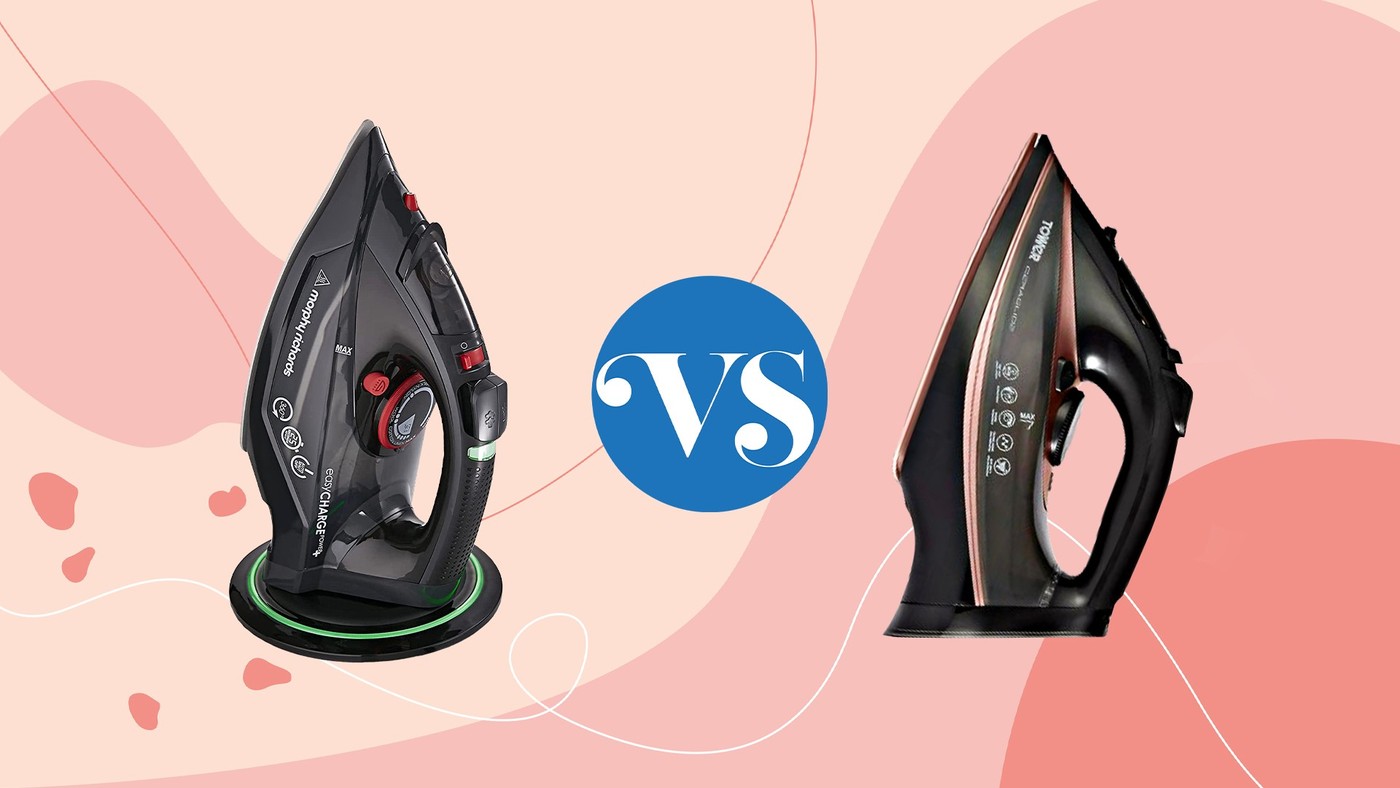
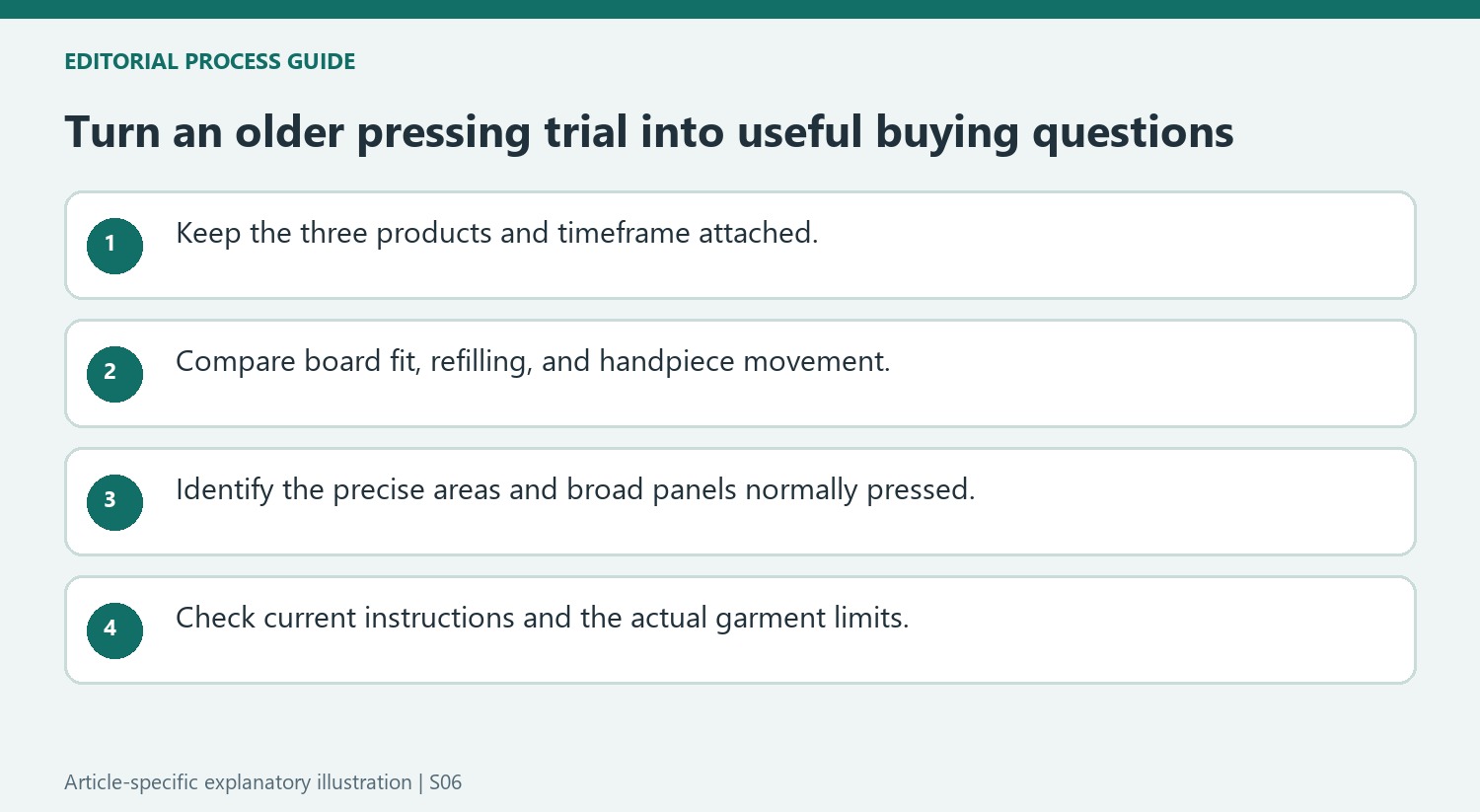
Real Homes compared a Tower two in one iron, a Breville PressXpress iron and a Russell Hobbs Steam Genie garment steamer in a report linked to its earlier buying coverage. The results describe those particular tested products, rather than ranking every current iron and steamer. Prices and availability mentioned in an older trial should not be assumed to remain current. What stays useful is the way the comparison separates ease of movement from wrinkle removal. A product that feels comfortable in the hand can still perform differently on a shirt collar, a wool scarf or a wide panel of fabric.
Look at the handling tradeoffs
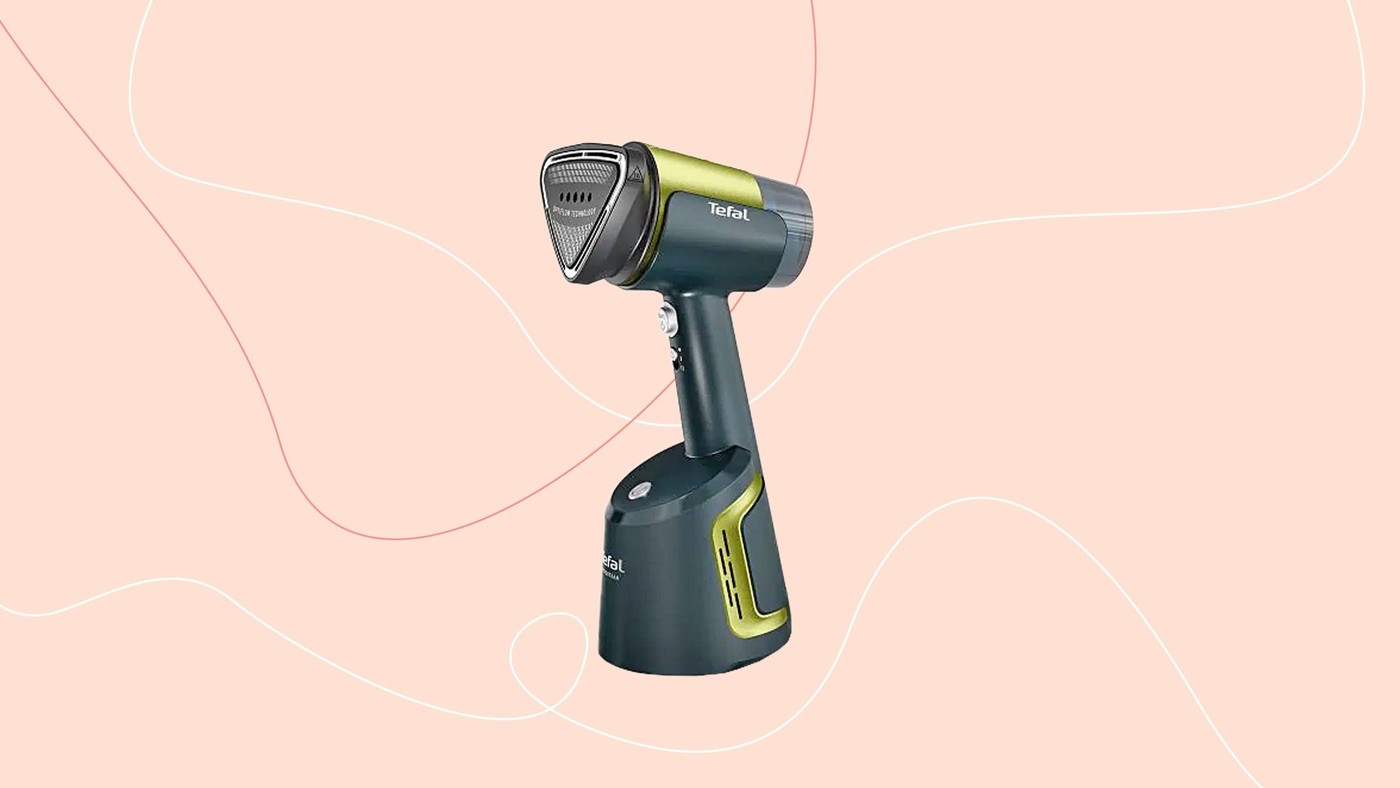
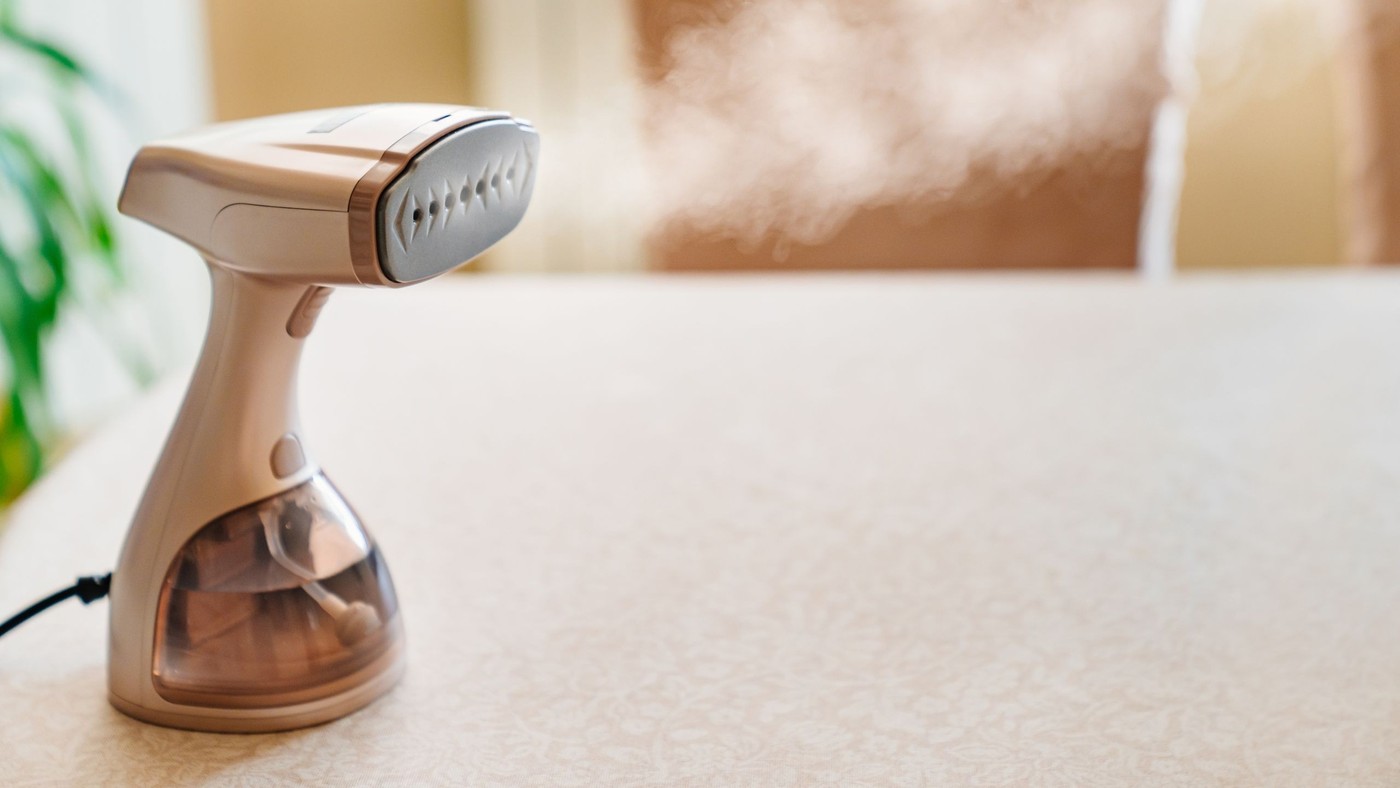
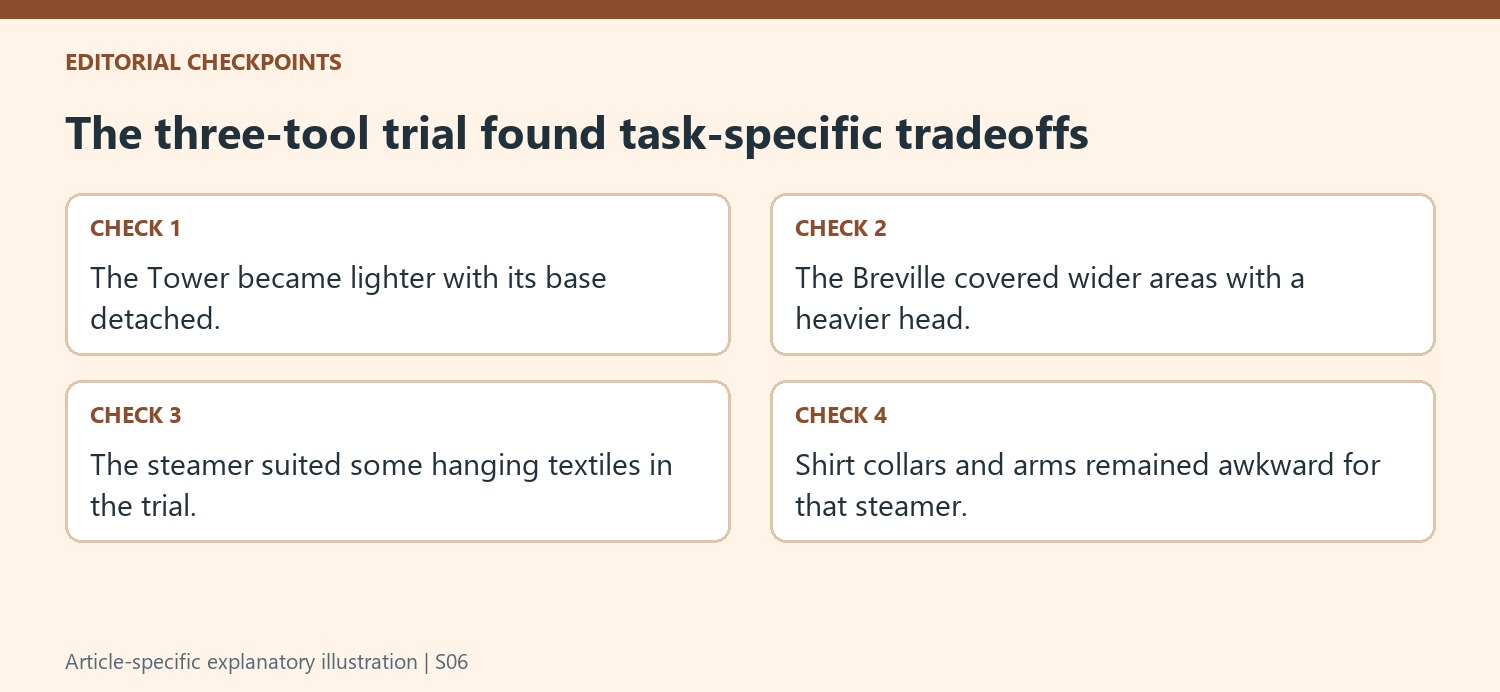
The reviewers found the Tower easy to move, especially with its base detached, but noted that the large base did not fit a standard board's storage slot. The Breville was heavier and wider, while offering a larger water reservoir and covering more area with each pass. The steamer used a smaller tank and a trigger operated steam flow. These observations show why weight alone is an incomplete measure of convenience. Board fit, reservoir size and the shape of the working head all affect how a tool fits into an actual routine, including where it is set down between sections.
Match the tool to the difficult areas
In the trial, the Breville handled stubborn creases well but needed time to cool before more delicate work. The Tower's controls responded quickly to changes. The steamer worked well on a wool scarf and selected household fabrics, yet the reviewers found shirt arms and collars more awkward. Those differences suggest practical questions to ask before buying: which areas usually cause trouble, how much fabric needs covering and whether precise pressing is important. Use the garment label and current appliance instructions to choose settings. The older trial illustrates distinct strengths without proving that one format can replace every other pressing tool.
Look at the board fit as well as the handpiece
The trial's most useful handling observations concern the complete setup. The Tower became easier to move with its base detached, yet the reviewers could not fit that large base into a standard board's storage slot. The Breville covered a wider area, but its broader head and additional weight required adjustment. These findings explain why the lightest advertised appliance is not automatically the most convenient. Think about where the iron rests when the garment is being turned and whether the base or handpiece fits the available support. Compare that arrangement with the actual board before purchase. A good result in the hand is only part of a routine that also includes setting down, refilling, and storing the appliance.
Keep precise areas separate from broad fabric work
The source reports that the handheld steamer performed well on a wool scarf and some household textiles but was awkward around shirt arms and collars. That contrast is more helpful than a general declaration that steaming works or fails. Broad hanging fabric and a narrow structured area present different access and finishing needs. List the places that normally take the most effort in your own laundry, then look for a tool tested on comparable tasks. Do not reproduce a trial merely from a fiber name: the garment's care label still governs the allowed treatment. A permitted relaxed finish on one piece does not prove the same method will create the sharply shaped collar expected on another item.
Interpret older specifications as product context
The comparison includes weights, reservoir sizes, power figures, and prices for three particular products in its earlier buying coverage. These details help explain the trial but should not become a current shopping promise. Check today's model documentation and availability, especially if a similar name now refers to a different version. The source's cooling observation is still a useful practical question: after hotter work, how does the user move to clothing needing a lower setting? Allow the required cooling rather than assuming an adjusted dial instantly changes the soleplate. Use the historical trial to develop a relevant checklist of handling, wrinkle removal, precision, and temperature control. That approach preserves its value without ranking every present-day iron or steamer from three older examples.
References
- Standard steam iron vs handheld steam cleaner – which tackles creases best? | Real Homes. Real Homes; Laura Crombie.