GarmentCare Guide
Check stains before applying heat
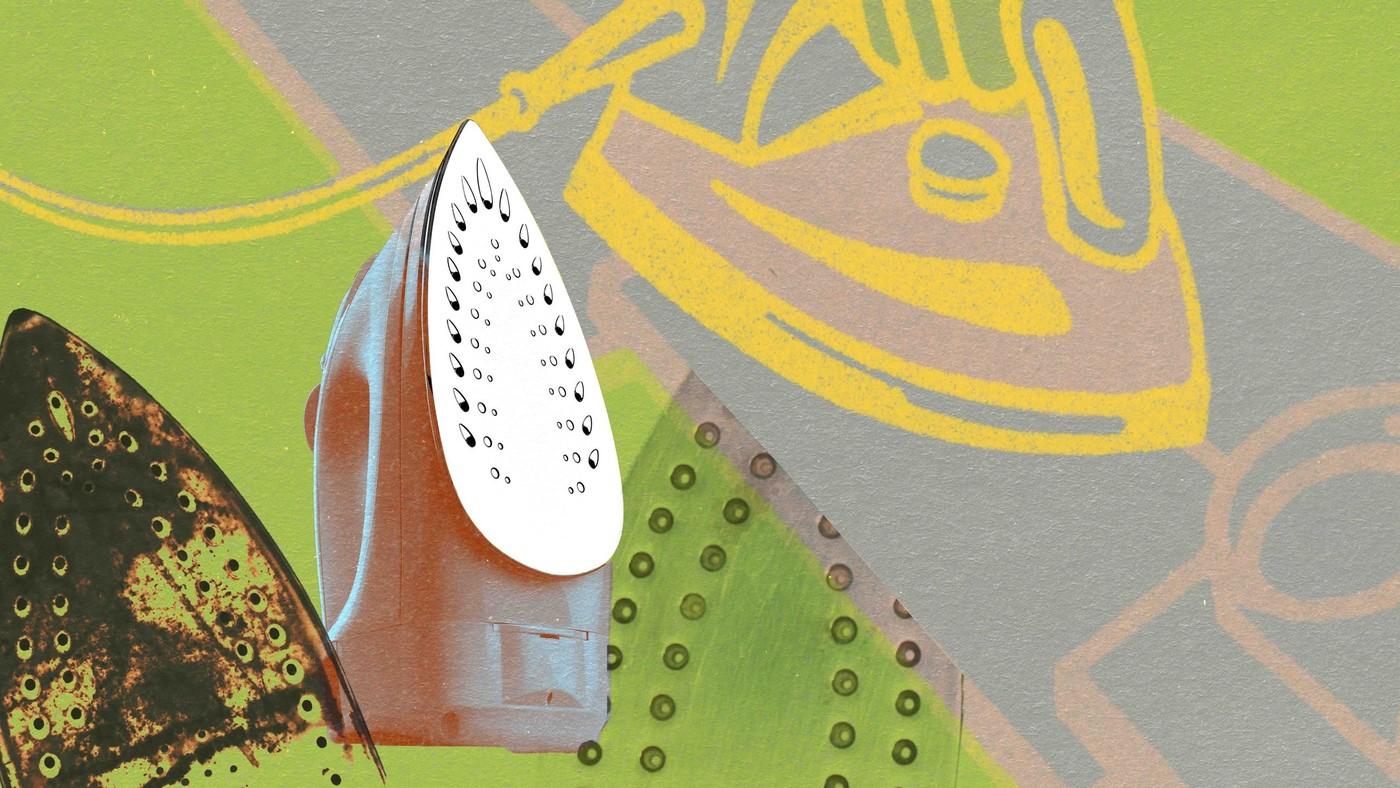
A wrinkle is easy to notice when arranging a shirt on an ironing board, but a remaining stain deserves attention first. Ideal Home warns that ironing over marks can make subsequent removal more difficult. Inspect the fabric while it is spread out, especially areas already treated during washing. If a stain remains, return to an appropriate cleaning method rather than pressing it in the hope that it will become less visible. The iron's own surface also needs a check. Residue or blocked steam openings can compromise the result even when the garment was washed correctly and the selected temperature appears suitable.
Use the label to set the iron
Read the specific garment's care instructions before choosing heat and steam. A broad rule based only on a familiar fiber name can miss a blend, finish or decorative detail that requires different treatment. Grouping clothes by permitted temperature can make a mixed laundry basket easier to manage. Start with lower heat items and allow adequate cooling when a later item needs less heat than the iron currently holds. Keep attention on the garment when adjusting controls; quickly increasing the setting to chase a wrinkle can create a more serious problem than the original crease.
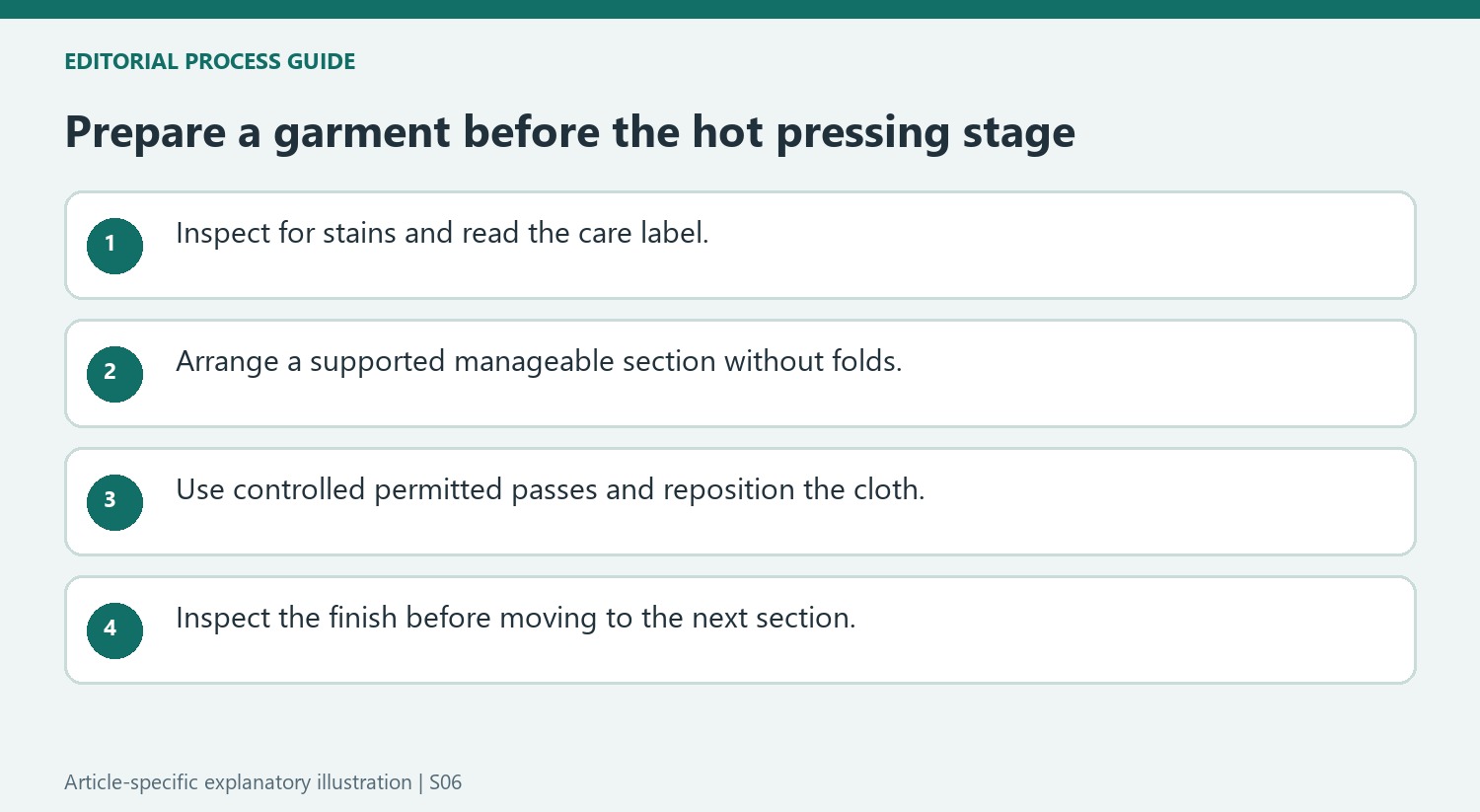
Move deliberately over a supported section
The source recommends straight controlled movements rather than repeatedly working in circles, which can distort fabric. Arrange a manageable area on the board, smooth it into position and move the iron carefully without forcing or stretching the material. Reposition the clothing when another layer or seam interrupts the surface. Rushing can leave uneven results that require more passes, cancelling any time saved. A clean appliance, a suitable setting and patient positioning work together: each helps the next part of the routine succeed, without relying on an improvised shortcut to correct an avoidable problem.
Inspect the clothing before setting up the board
The source warns against ironing over a remaining stain, making inspection a useful first step rather than something left until the soleplate reaches the mark. Look at collars, cuffs, and visible panels while the garment can still be set aside for appropriate cleaning. A wrinkle-free finish does not mean the fabric is clean, and direct heat can make some marks harder to address. Read the care label at the same time so pieces with different restrictions are not treated as one uniform pile. This preparation helps establish which garments are ready for pressing and which need another decision first. It also avoids interrupting a hot ironing session to investigate an unfamiliar mark or search for a hidden instruction.
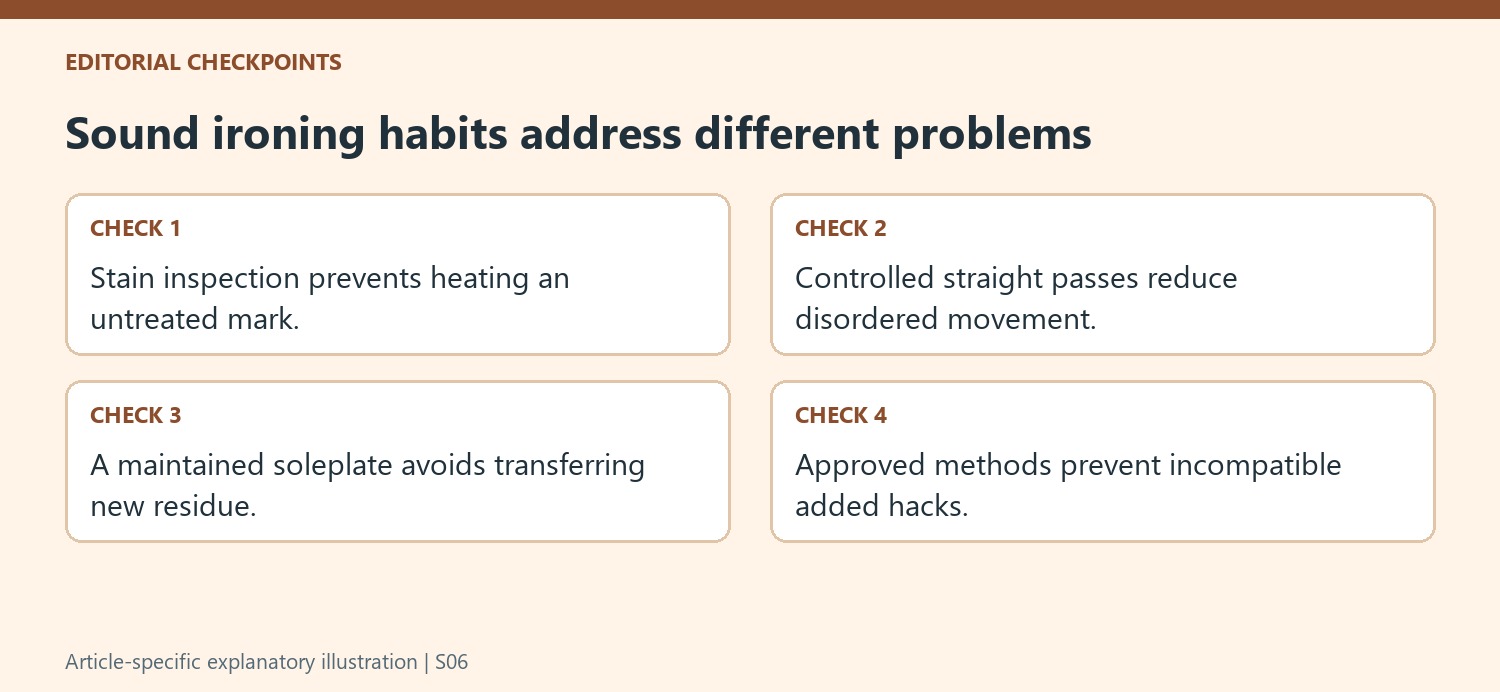
Control movement by arranging smaller areas
The article contrasts circular movements with deliberate straight passes and warns that rushing can leave an uneven result. Apply that advice with a properly arranged section of fabric rather than pushing against folds or pulling the garment taut in an awkward position. Smooth the cloth, make a controlled permitted pass, and reposition when the accessible area changes. Repeating fast movements over a large disordered section is unlikely to solve the underlying arrangement problem. If the result remains uneven, inspect the position and the care-compatible setting before adding more pressure or heat. An organized collar, sleeve, or body section gives a clearer view of what the iron is actually changing and reduces the temptation to chase wrinkles across unsupported fabric.
Choose compatible maintenance over improvised shortcuts
The source groups soleplate cleanliness with other ironing habits because a dirty surface can transfer a new problem onto freshly washed clothing. Inspect and maintain the iron according to its own instructions, including the correct cleaning materials and water requirements. The article also mentions household hacks, but these should not be read as universal additions to every appliance or board. Added foil, scented mixtures, or unapproved reservoir ingredients can conflict with product guidance. Keep the basic routine sound first: a clean compatible surface, permitted heat or steam, supported fabric, and time to inspect the result. When a wrinkle is stubborn, check these conditions before introducing an extra product or changing the setup in a way the manufacturer has not approved.
References
- 6 clothes ironing mistakes to avoid, according to experts | Ideal Home. Ideal Home; Jullia Joson.