GarmentCare Guide
Finish the session before storing the appliance
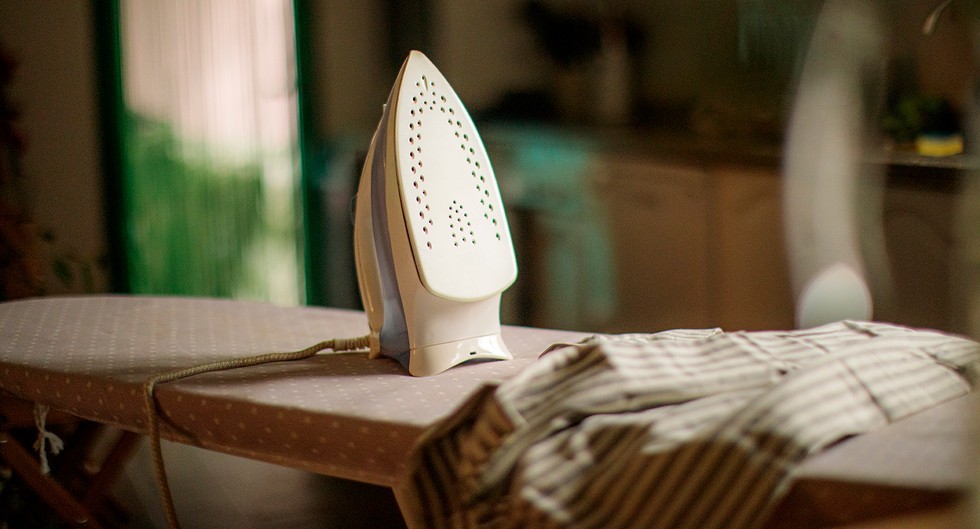
Putting away a steam iron with water still in its tank can create problems between laundry days. Good Housekeeping describes how remaining water may seep through steam openings, discolor the plate or contribute to internal deterioration. Follow the appliance's instructions for emptying and let it cool completely before storage. The last garment is therefore not quite the end of the routine. Allow time for the appliance itself to be handled correctly, rather than tucking it into a cupboard while it is hot or leaving water inside simply to make the next session start faster.
Use the water recommended for the model
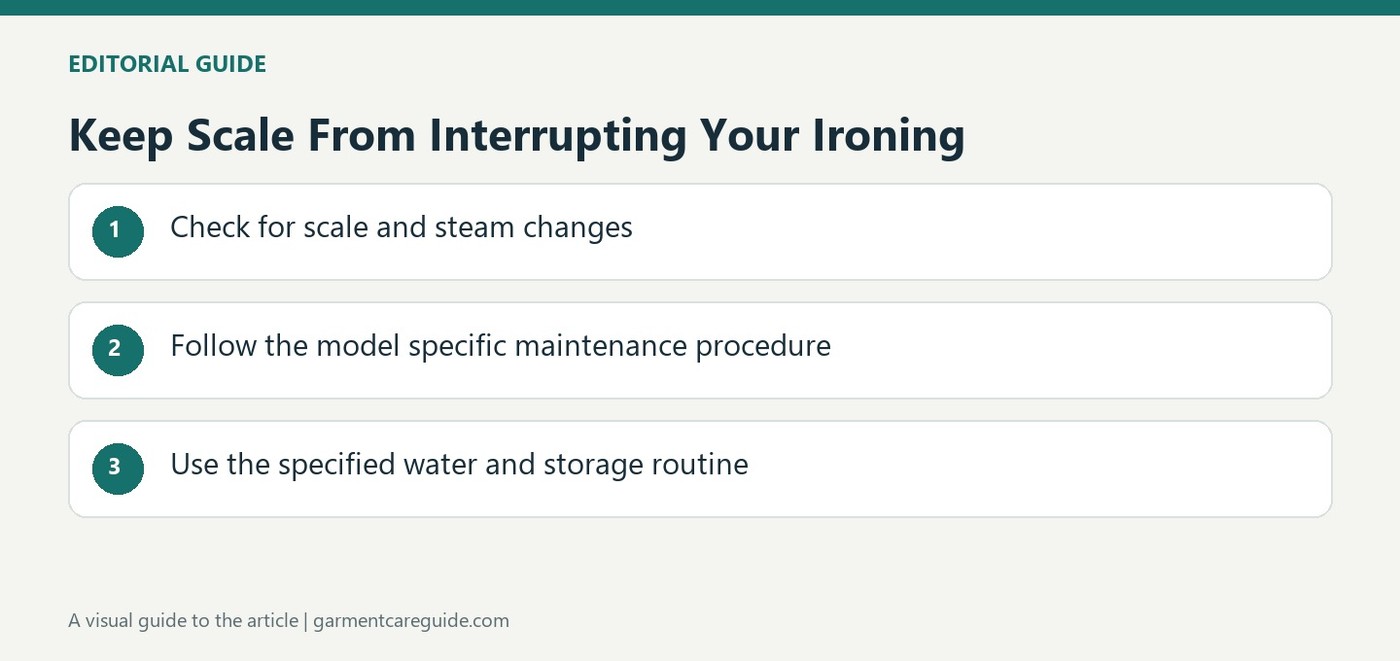
The source notes that water conditions influence mineral deposits and steam performance. Its general discussion includes tap and distilled water, but the correct choice should come from the specific iron's manufacturer. Some models have particular requirements for mixtures, treated water or additives. Check those instructions instead of assuming a universal rule based on the local water supply alone. Consistency helps when diagnosing a later change in steam output, since filling and maintenance can be compared with the approved routine. A tank that looks clear does not necessarily mean that minerals have not begun accumulating in less visible parts.
Prevent residue while working through the basket
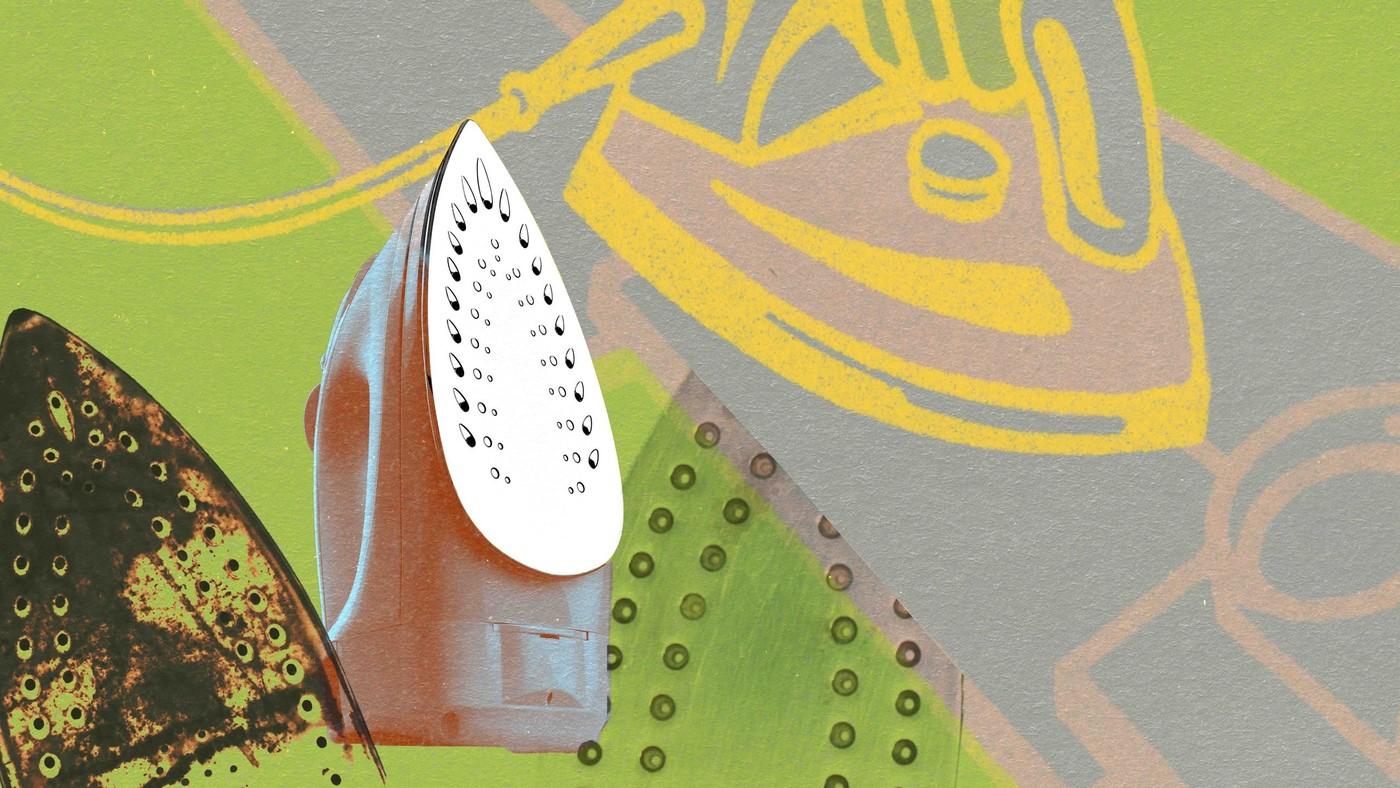
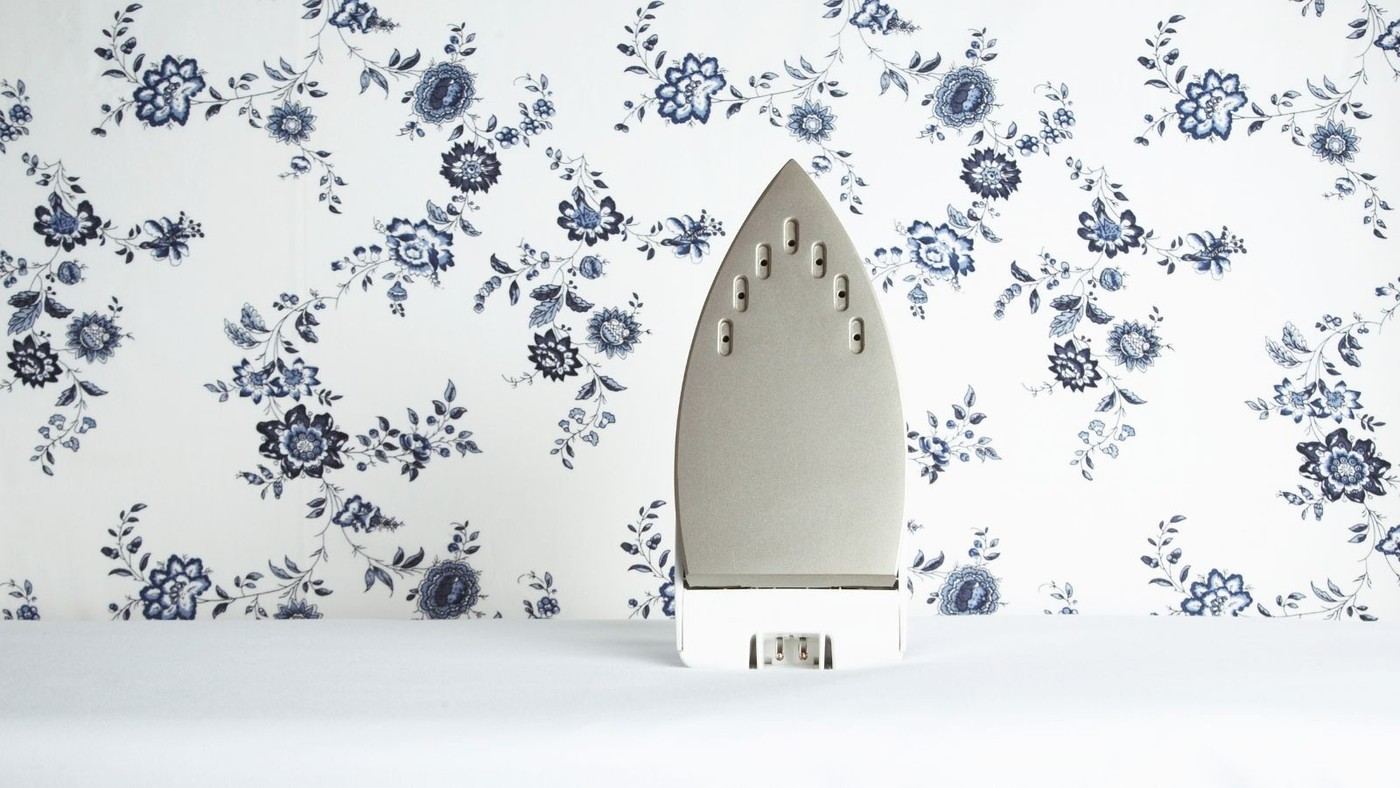
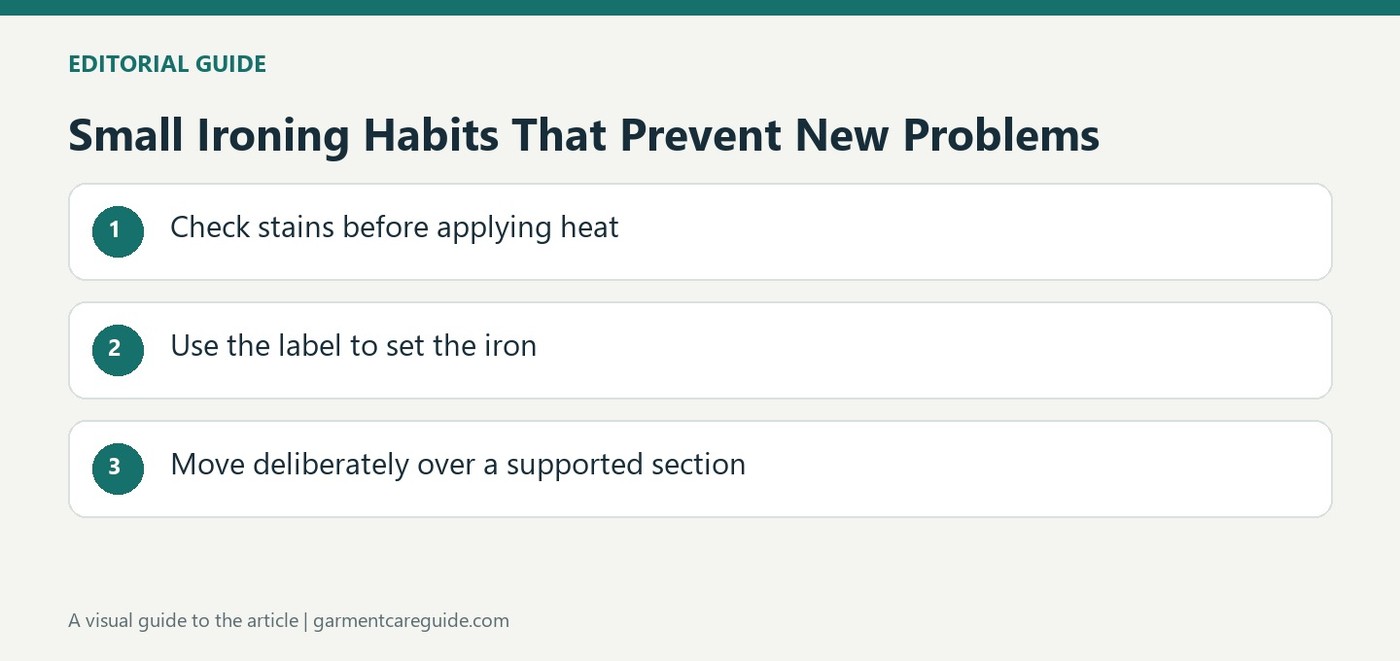
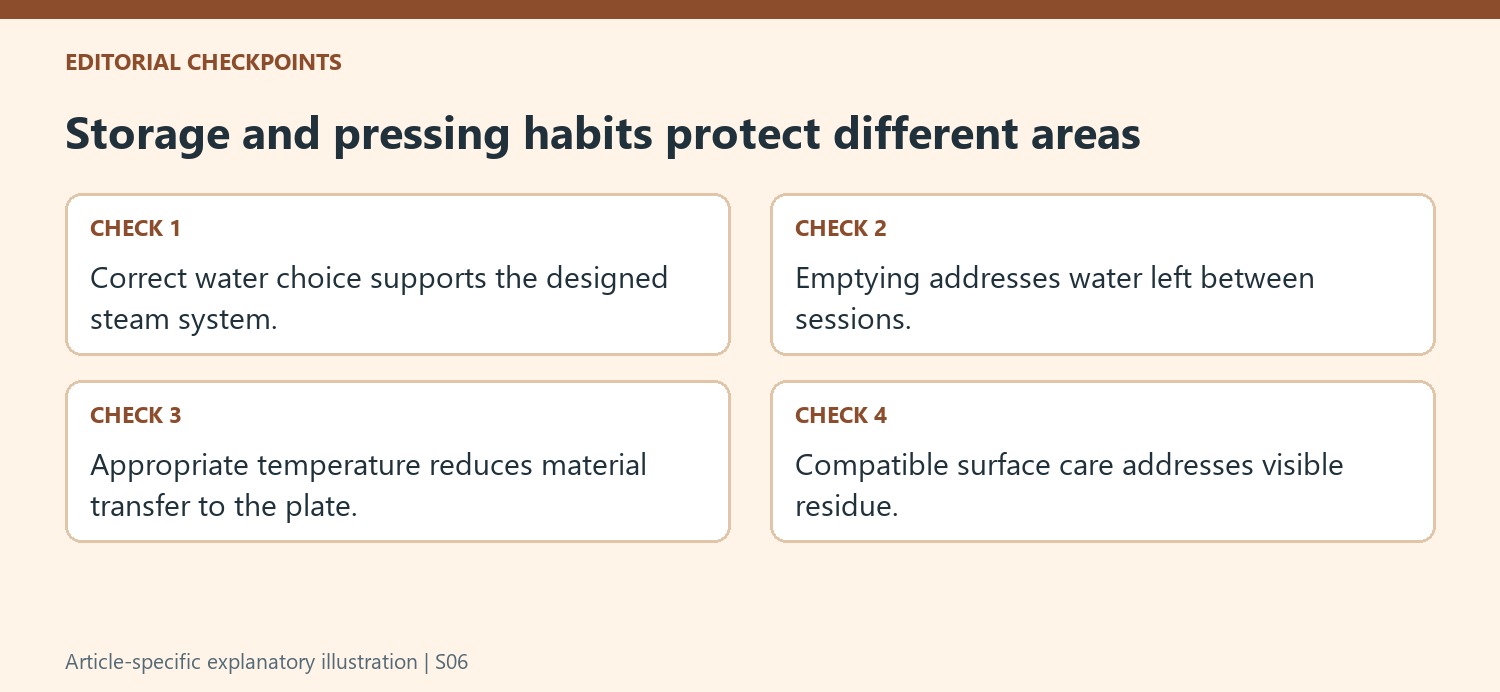
Good Housekeeping also connects soleplate buildup with unsuitable heat and material transferring onto the plate. Arrange clothing by permitted temperature, starting with lower heat items before progressing to higher settings. Give the iron time to cool when the order needs to reverse. If a starch product is used, apply it according to its own directions rather than immediately pressing an oversaturated area. Clean visible residue with a model compatible method before it starts snagging or marking other garments. Water choice, emptying and surface care address different parts of the same appliance, so a good storage habit works best alongside attentive use.
Make the appliance the last item to finish
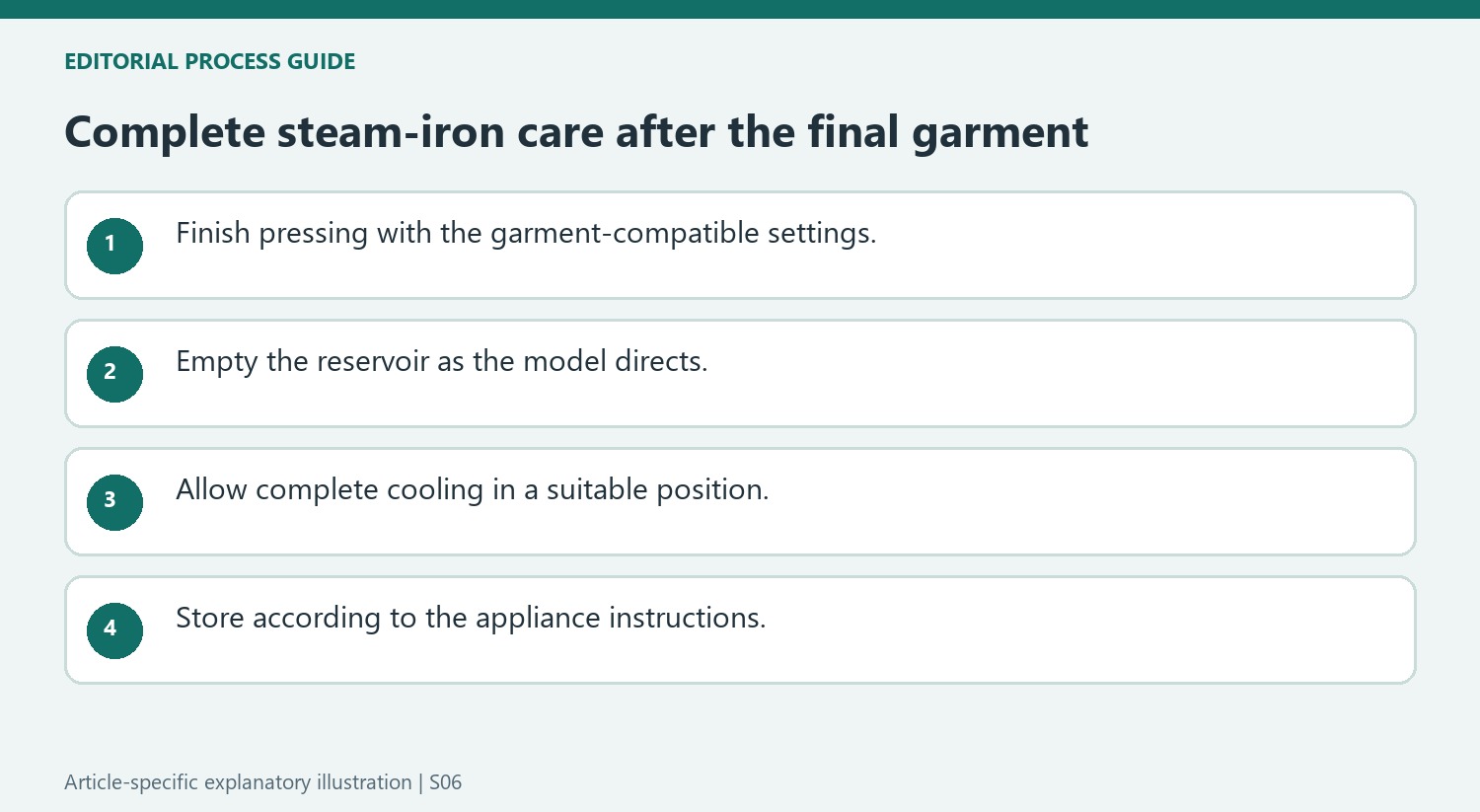
The article's main point is that putting away the iron requires its own closing steps after the clothing is done. Empty the reservoir at the stage and in the manner specified by the appliance maker, and allow complete cooling before storage. Plan a suitable place for that interval so the last shirt does not trigger an immediate rush to a cupboard. Remaining water and a hot appliance present different storage questions, both of which need attention. The source describes possible seepage, plate discoloration, and internal deterioration when water is left behind. These are reasons to follow the documented finish-to-storage sequence, not a guarantee that every mark on an older iron has the same cause.
Read water advice through the particular model
The source discusses tap water, hard water, and softened supplies, but a general article cannot establish the correct fill for every iron. Locate the current model's requirements, including whether a mixture, a particular water type, or restrictions on additives apply. Do not assume that all treated water is equivalent or that more purified water is always the intended choice. Keeping the fill routine consistent makes later changes in steam performance easier to describe. If deposits appear, use the approved maintenance instructions instead of changing water and adding a cleaner at the same time without knowing which step is permitted. The tank is part of a designed system, so its care deserves the same model-specific attention as temperature controls and the soleplate.
Prevent surface buildup during the pressing order
The source connects residue with material transferring onto an overly hot plate, making garment order a useful preventive habit. Group clothing by its actual permitted temperature and begin with lower-heat work where appropriate. If a hotter iron must return to a lower-temperature task, allow cooling rather than immediately pressing after moving the dial. Products such as spray starch add another set of directions: use the intended amount and wait or prepare the fabric as specified before contact. If new residue appears, address it with a compatible cleaning method before carrying it across more clothes. These habits concern the pressing surface, while emptying concerns the water system. Treating both as ordinary parts of the routine is more complete than relying on good storage alone.
References
- If You're Doing This With Your Iron, It's a Huge Mistake. Good Housekeeping; Brigitt Earley.