GarmentCare Guide
Compare the space used during drying
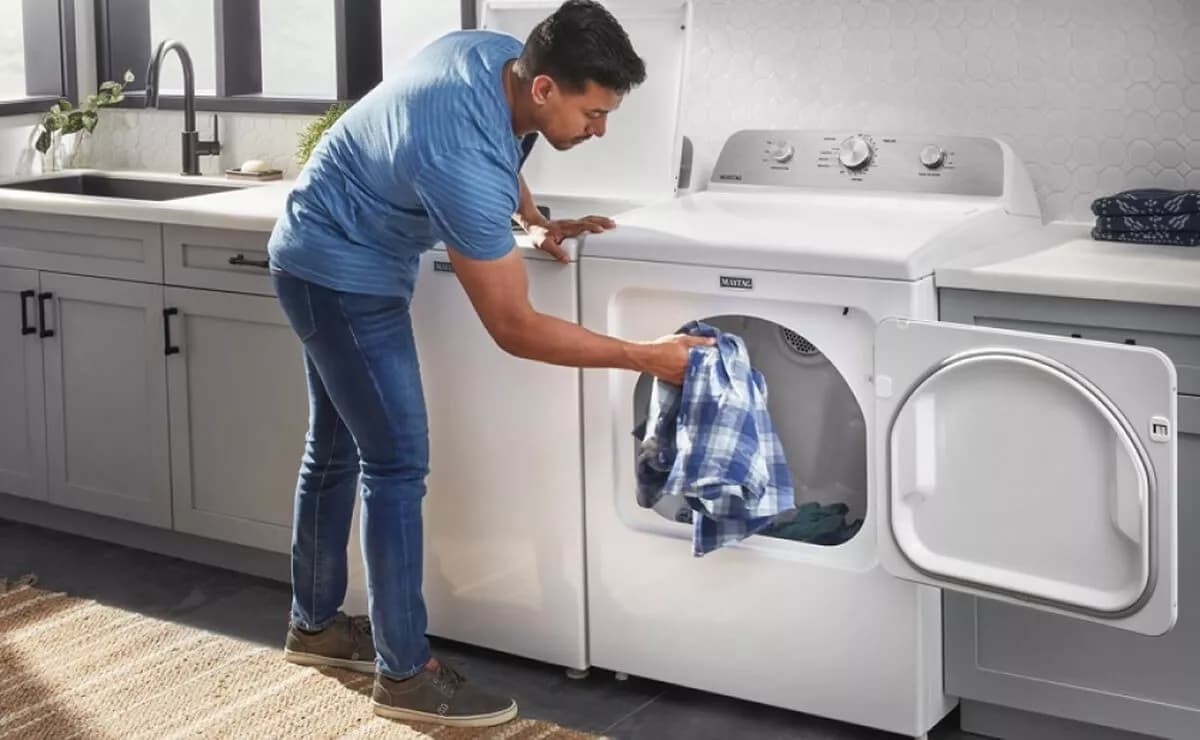
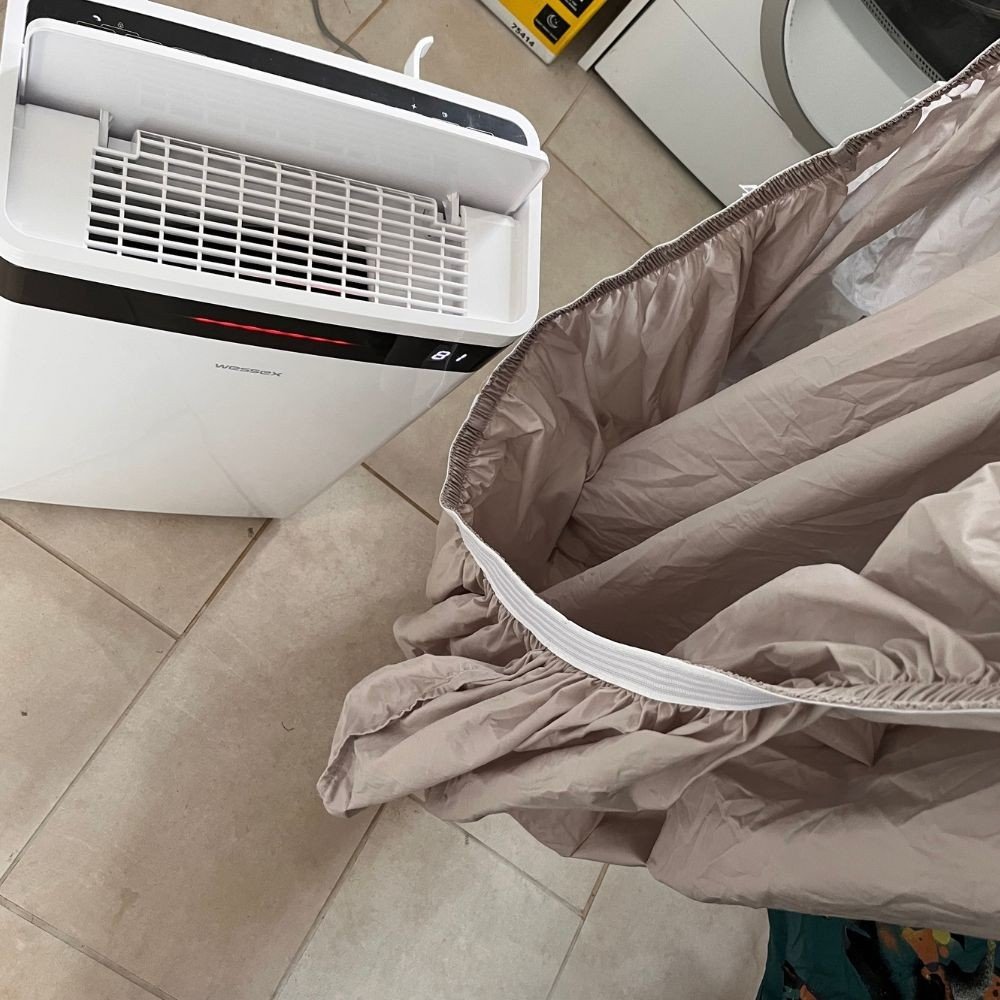
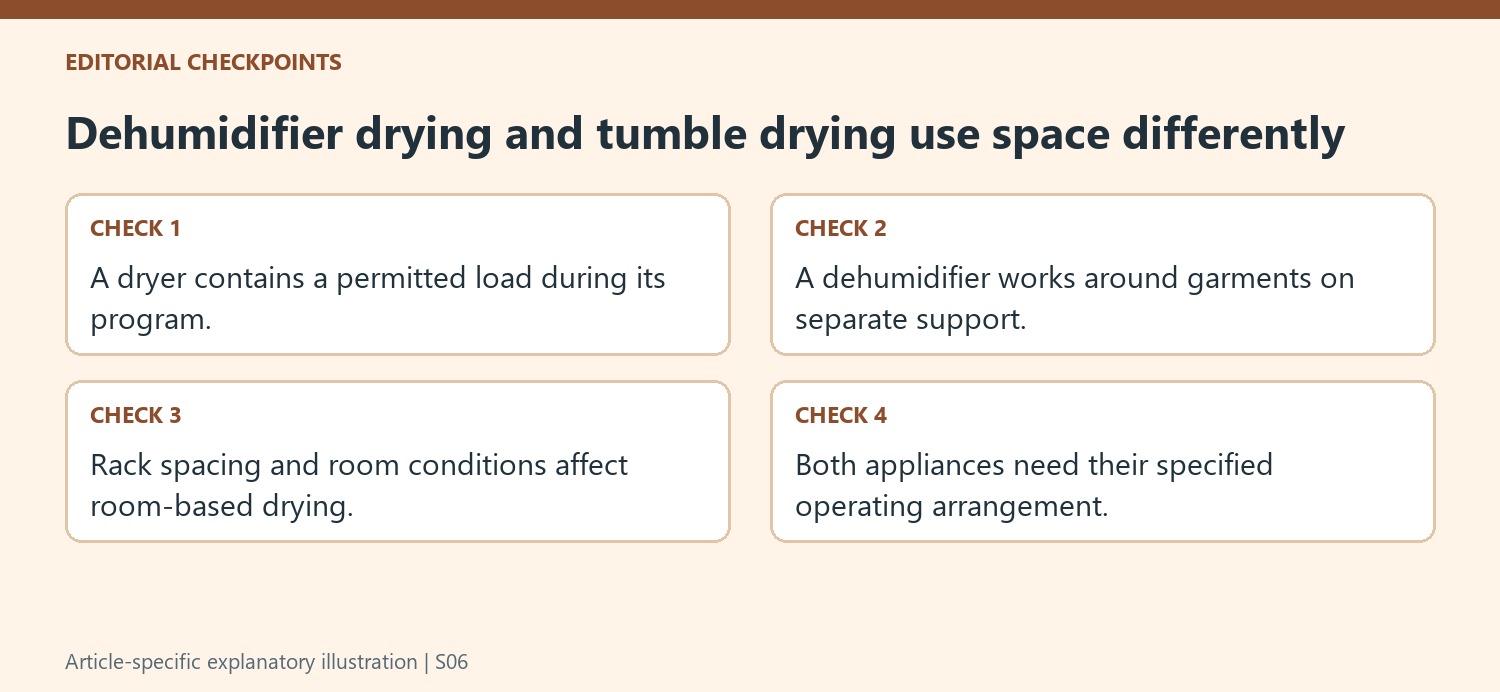
A tumble dryer contains suitable laundry inside the machine, while a dehumidifier supports drying clothes arranged on a separate rack. Ideal Home's comparison points out this practical difference before considering cost or speed. The rack takes working room for the full drying period, not just storage space when folded. Clothing needs separation for air movement, and the dehumidifier needs the clearances specified in its instructions. A compact appliance can still require a meaningful drying area once the wet garments are included. Consider where the complete setup will fit without blocking normal use of the room.
Plan for a different waiting period
The article describes a tumble dryer as generally faster for appropriate loads, while rack drying with a dehumidifier usually needs more time. Actual duration depends on the garments, load size, room conditions and equipment, so a reported estimate should not be treated as a deadline. Heavy seams and layered pieces may finish after lighter items. Leave adequate gaps on the rack and check progress rather than packing every rail tightly. A dehumidifier's laundry mode, where provided, should be used according to its manual; the presence of that setting does not establish that every load will dry within one fixed interval.
Choose around care needs and household use
Some garments prohibit tumble drying, making a rack or another specified method necessary regardless of convenience. Follow those instructions before comparing appliances. A dehumidifier may also serve a household humidity control role between laundry loads, while a dryer is a dedicated laundry machine with its own installation and maintenance needs. Running cost comparisons depend on the actual models, operating time and local electricity tariff. Evaluate those details rather than assuming every appliance in one category is cheaper. The most useful setup is one that fits the clothing, the available drying area and how quickly the household needs each load ready.
Compare complete drying arrangements rather than appliances alone
A tumble dryer contains the suitable load during its program, while a dehumidifier removes moisture from room air around clothing supported on a rack. The source emphasizes this difference in household convenience. A dehumidifier therefore needs more than a power socket: the rack, wet garments, ordinary access, and the appliance's required clearances all form part of the setup. Follow the manual for positioning, drainage or tank handling, and operating conditions. A dryer has its own installation and capacity requirements and can accept only garments that permit the selected treatment. Compare those whole arrangements with the available room. A smaller portable appliance does not automatically make a loaded rack disappear from a busy living space.
Evaluate running cost with time and local conditions
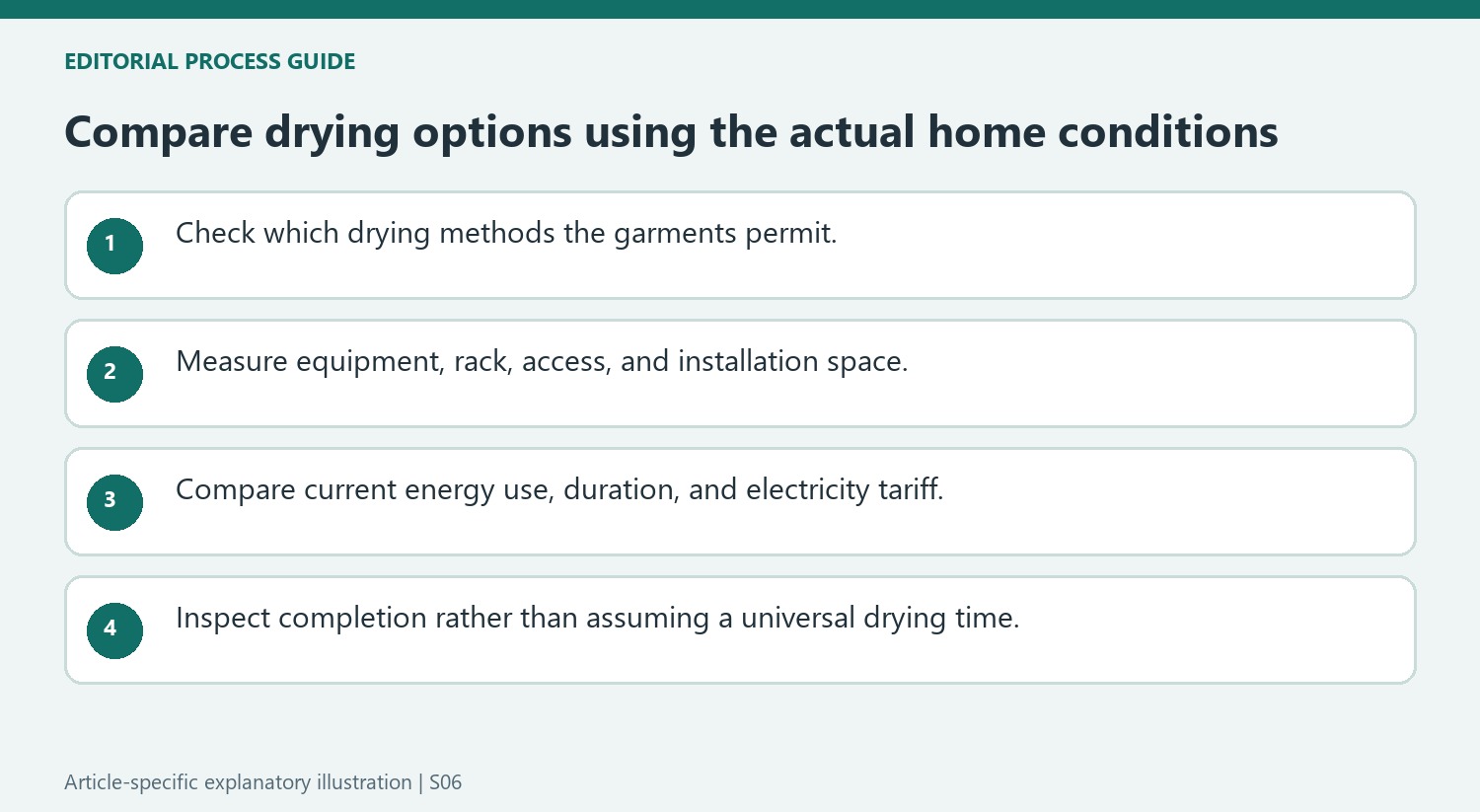
The article gives example running costs and drying periods, but those are not universal prices or guaranteed completion times. Compare the actual appliance power use, program or operating duration, electricity tariff, and quantity of suitable laundry. A room-based method also depends on temperature, moisture conditions, rack spacing, and the materials being dried. An efficient dryer and a poorly arranged rack can produce a different comparison from the source's example. Use current specifications and observations rather than treating an hourly cost as the cost of a completed load. Purchase price matters too, but it answers a separate question. The useful decision combines what the equipment costs to obtain with how it will operate in the particular home.
Allow garments and equipment conditions to decide the route
Some clothing cannot enter a tumble dryer, making suitable supported drying necessary regardless of a speed comparison. Other permitted loads may fit a dryer when space or turnaround time matters. The source also notes that dehumidifier performance depends on room conditions and appliance type, so check the actual model's operating range before choosing an unheated location. Spread clothing with room for air movement and inspect progress rather than promising a fixed number of hours. A laundry mode, where provided, has model-specific behavior and does not remove the need to handle a full tank or observe instructions. These constraints make the choice more concrete than declaring one appliance universally cheaper, faster, or suitable for every winter load.
References
- Dehumidifier vs tumble dryer - the one to choose if you want to dry your clothes on a budget. Ideal Home; Lauren Bradbury.