GarmentCare Guide
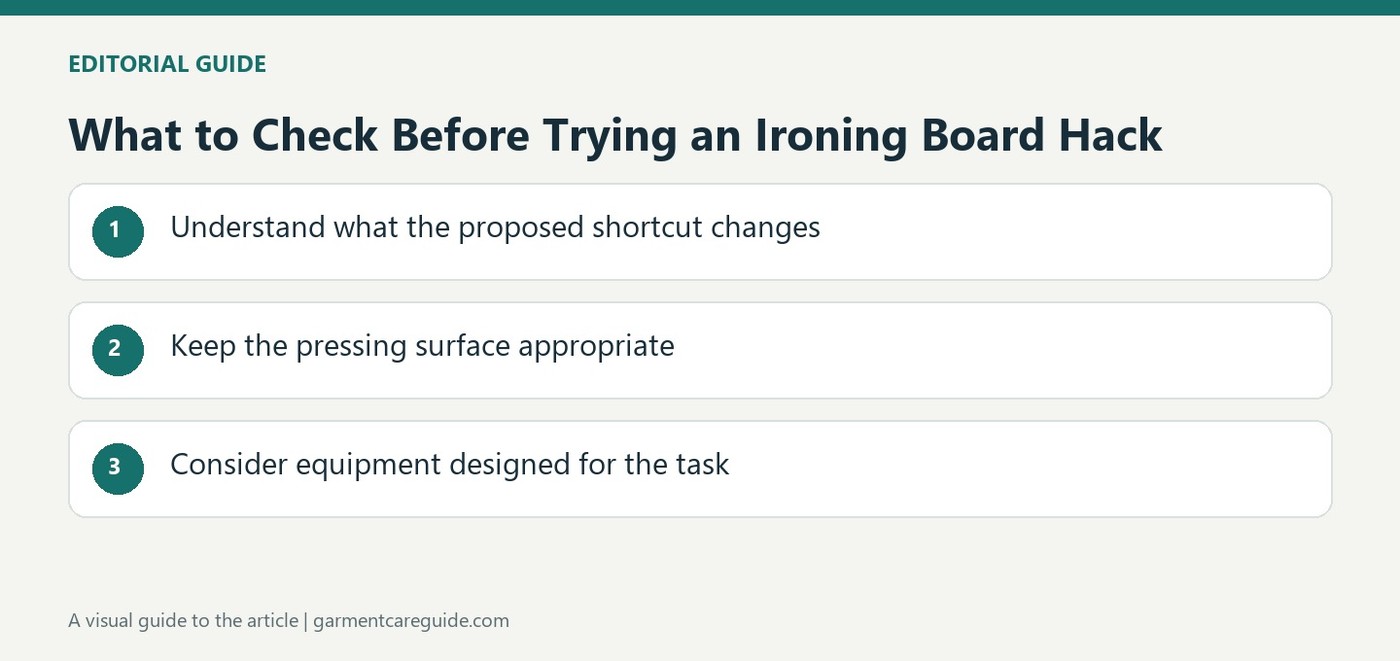
Understand what the proposed shortcut changes
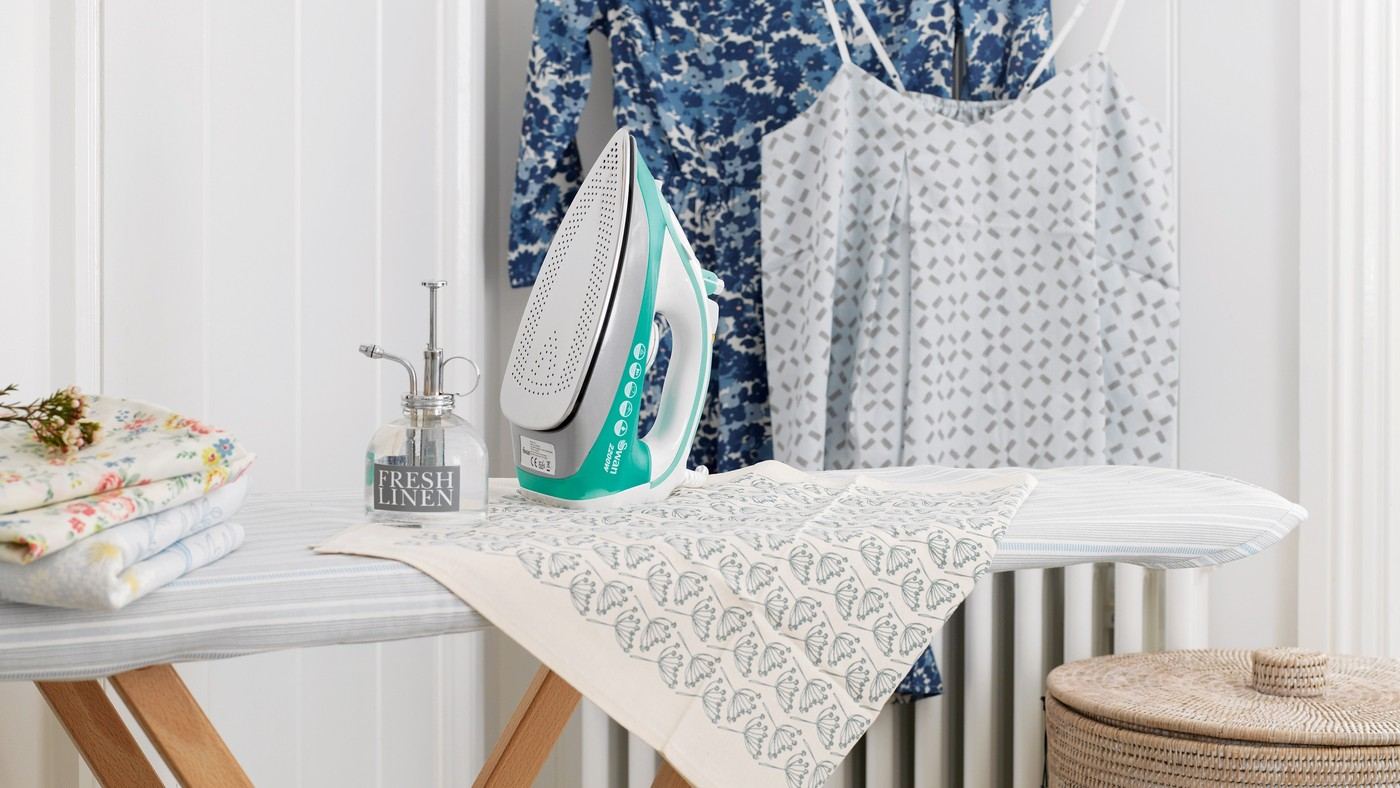
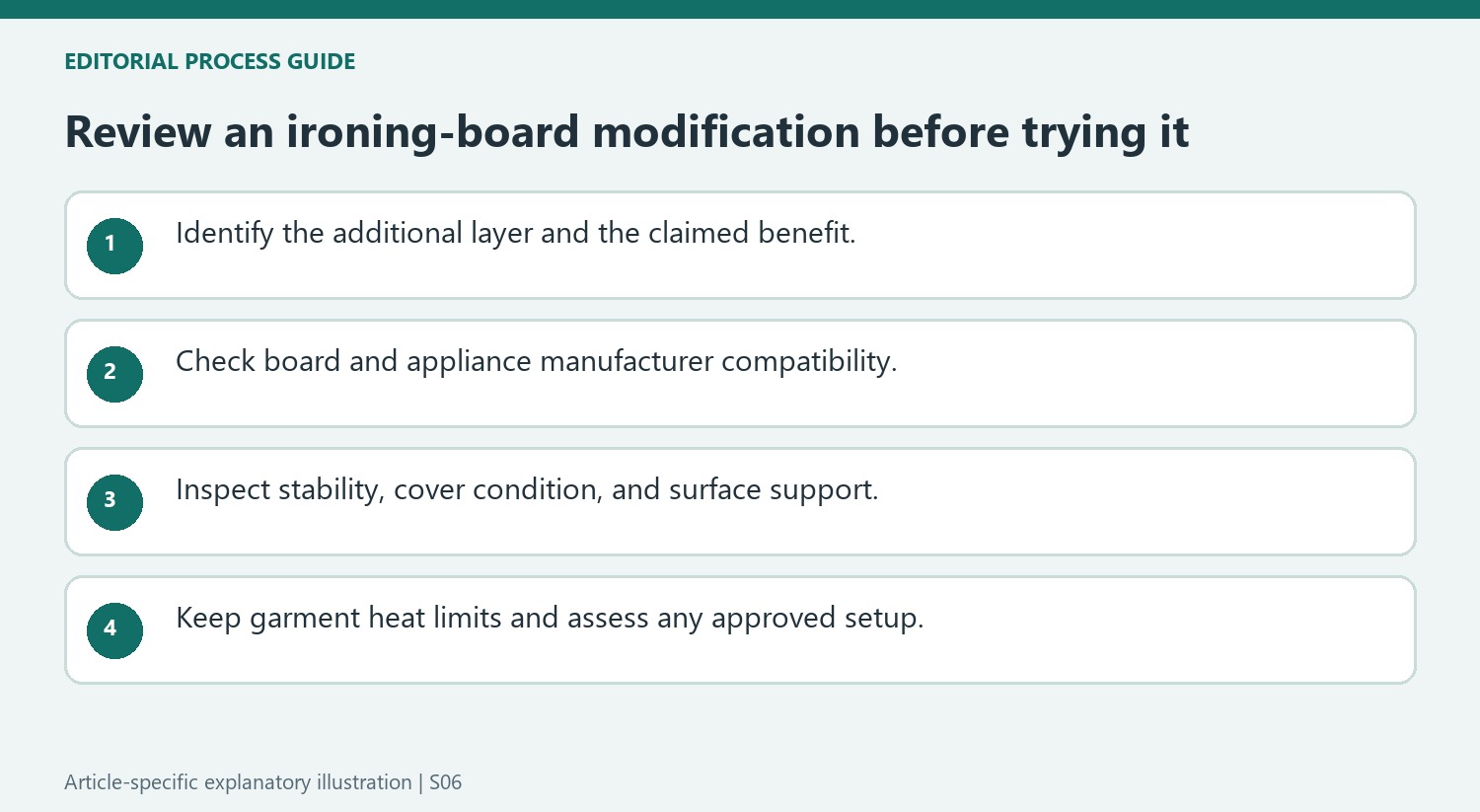
Ideal Home reports a cleaner's suggestion to place aluminum foil beneath an ironing board cover, with the aim of returning more heat toward the underside of a garment. The article presents this as a possible way to reduce repeated passes. It is a reported household technique, rather than a controlled comparison establishing the same time saving for every fabric and board. The proposal changes the layers under the cover, so it should not be treated as an ordinary garment care instruction. Check the board and iron manufacturers' guidance before modifying a setup designed to handle heat and steam.
Keep the pressing surface appropriate
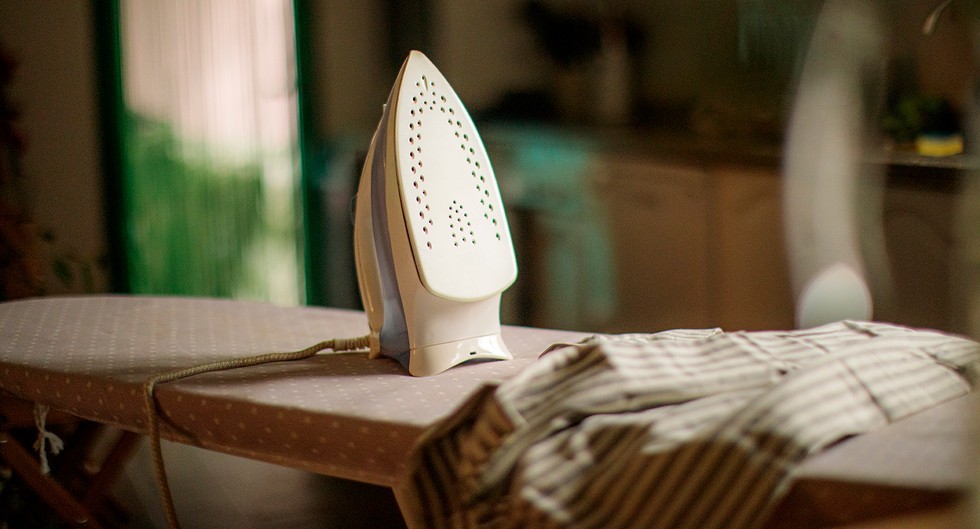
In the source's description, the foil goes underneath the cover, with the garment resting on the cover rather than directly on the metal sheet. The writer emphasizes a smooth layer without wrinkles and coverage across the working area. Those details matter to the proposed technique, but they do not remove the need for a stable board and a suitable cover. A damaged or uneven pressing surface needs attention independently of a time saving idea. Avoid interpreting a household hack as a reason to leave a hot iron resting on clothing or to exceed the temperature permitted by its care label.
Consider equipment designed for the task
The article also mentions ironing boards made with reflective surfaces as an alternative to improvising a layer. Compare the manufacturer's intended use, steam handling and care instructions if considering such equipment. A compact board may suit smaller clothing, while a larger surface can be more convenient for wide panels. The useful choice depends on the regular laundry task as well as storage space. Good positioning and suitable heat remain central regardless of the cover selected. Treat claims about faster pressing as something to evaluate within an approved setup, rather than a promise that one addition replaces careful ironing technique.
Identify the setup change behind the time-saving claim
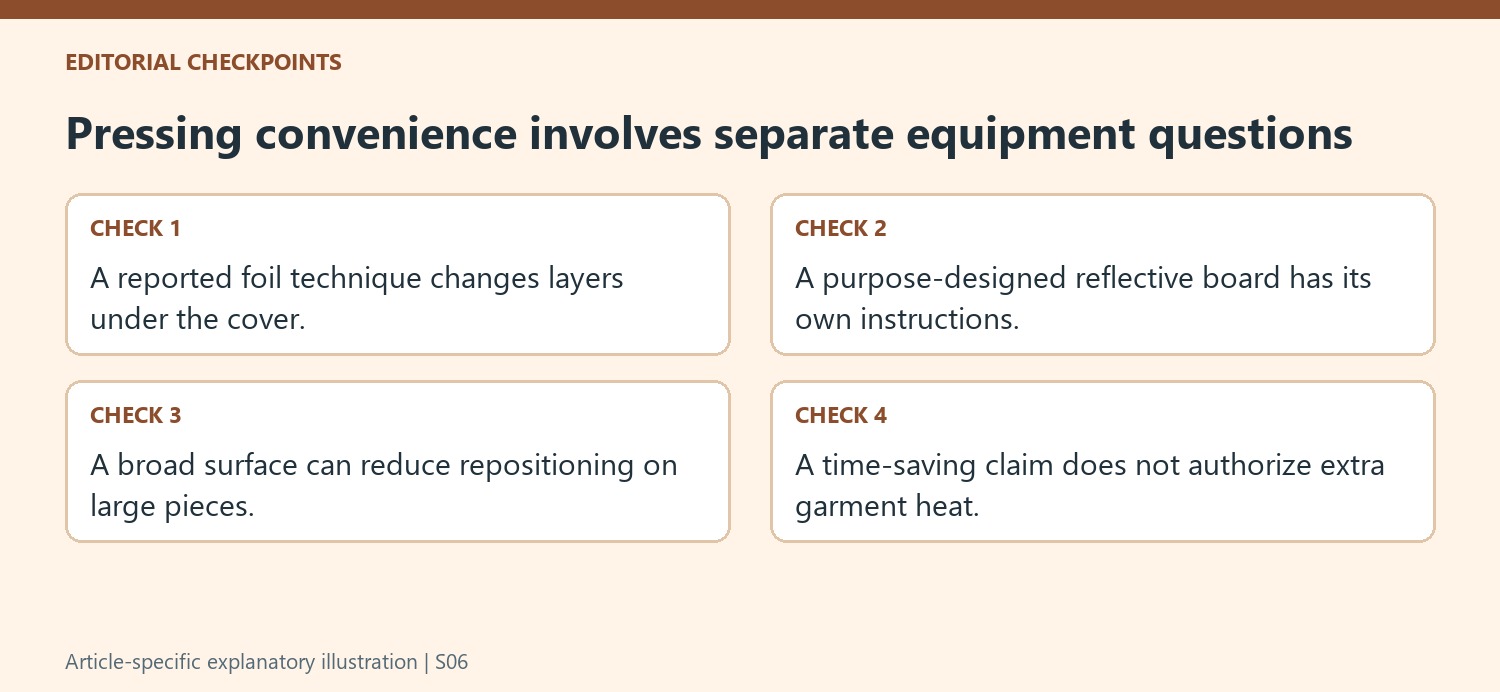
The reported foil technique adds a layer beneath the board cover, so it changes the pressing arrangement rather than the iron itself. That is the first fact to establish before considering the promised convenience. The source attributes the suggestion to a cleaner and describes the intended reduction in repeated passes, but it does not provide a controlled result for every board, fabric, and steam condition. Keep that limit attached to the claim. Before modifying equipment, check what its manufacturer allows under the cover and how its surface is intended to handle heat and moisture. If the combination is not approved, a reported household shortcut is not a substitute for instructions designed for the particular equipment.
Inspect the ordinary board before considering an addition
An unstable frame, uneven cover, or damaged working surface needs attention independently of any reflective layer. The source's description emphasizes smoothness beneath the cover, reinforcing the wider need for an even pressing area. Check the board as it will actually stand, including its support and the accessible garment area. A small board can be convenient to store yet make wide fabric panels more awkward, while a larger one needs a suitable place to open. These everyday considerations can affect how many times clothing has to be repositioned. Resolve them first rather than expecting an added material to compensate for a crowded or poorly supported setup. Good fabric positioning remains essential whatever approved cover system is used.
Compare purpose-designed equipment on its own terms
The article mentions boards made with reflective surfaces as an alternative to an improvised layer. If considering one, read its intended use and the requirements for the iron or steam generator placed beside it. A product designed around a particular cover arrangement should be assessed as a whole, including replacement covers, cleaning, and storage. Do not assume the presence of a reflective surface means every garment can be heated more strongly or pressed without attention. The clothing's care limits still control the treatment. Compare relevant reviews for the actual task rather than accepting a universal reduction in ironing time. A useful improvement makes a compatible routine easier; it does not remove the need to inspect the finish and reposition difficult areas deliberately.
References
- How to use tin foil to make ironing quicker | Ideal Home. Ideal Home; Amy Hunt.