GarmentCare Guide
Separate freedom of movement from power supply
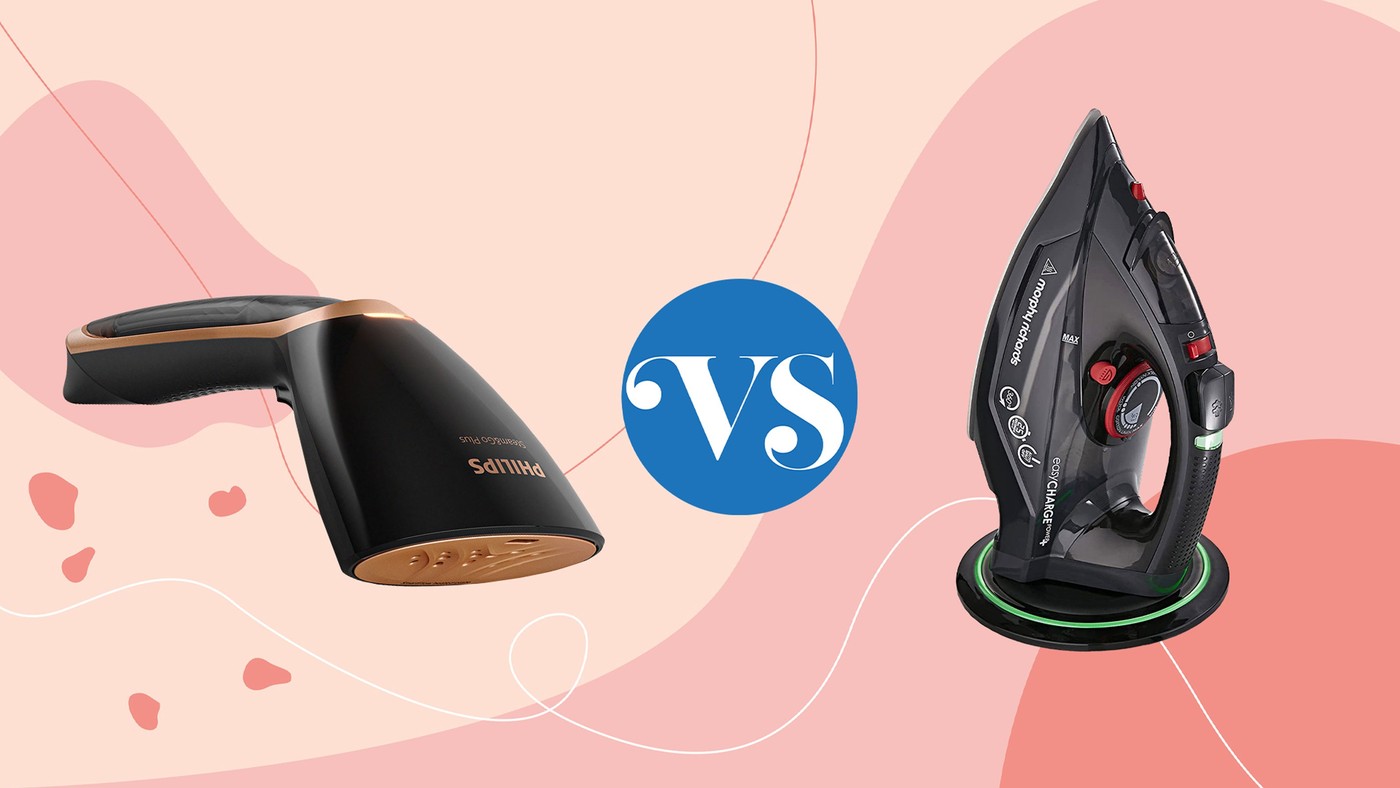
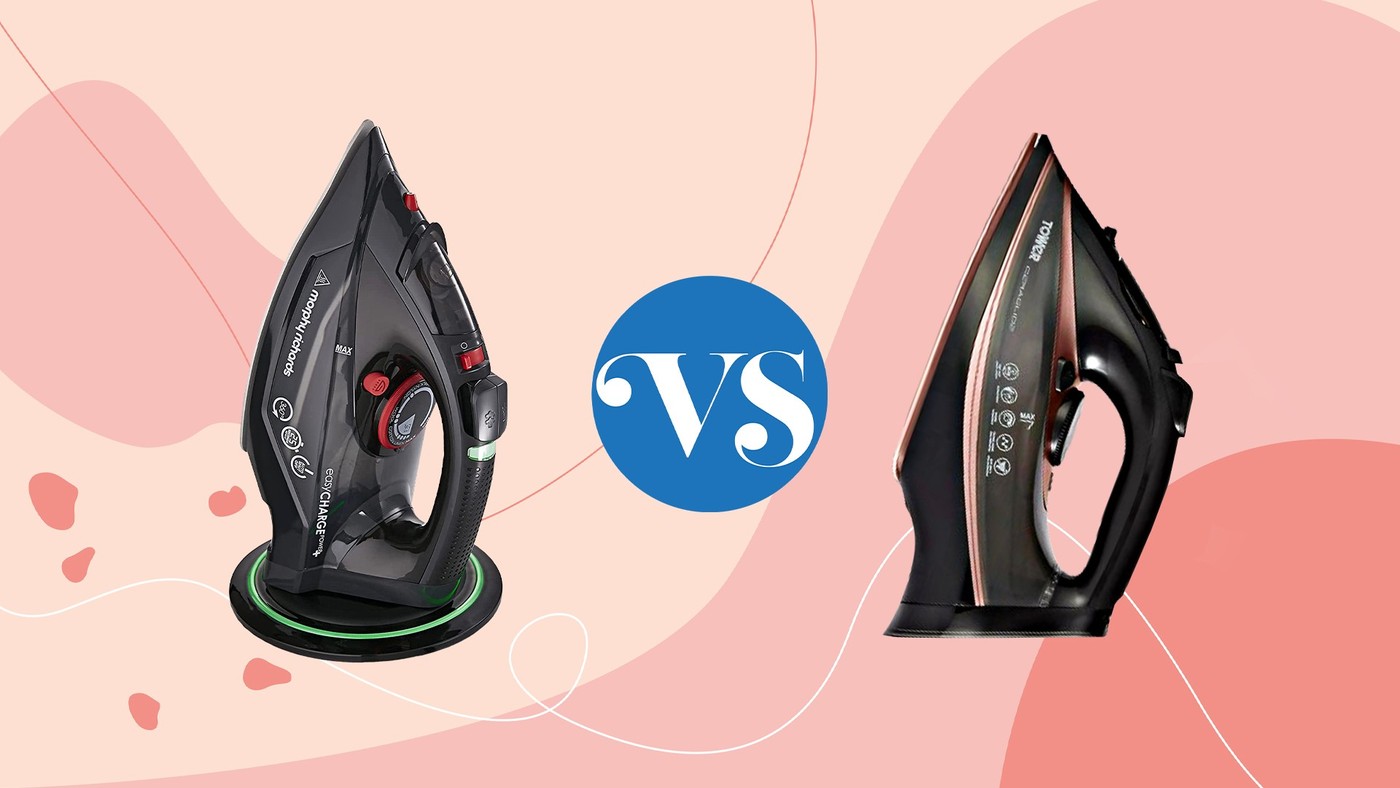
A cordless iron makes it easier to move around a shirt without a trailing cable crossing the pressing area. Ideal Home's comparison emphasizes this handling advantage, while noting that the base still needs a nearby power socket. The appliance is therefore cordless in the hand rather than independent of household power. It returns to its base during use to restore operating heat according to the model's design. Check the specific manual instead of assuming that every cordless iron contains the same technology or can work for the same length of time away from its base.
Consider the pauses already in your routine
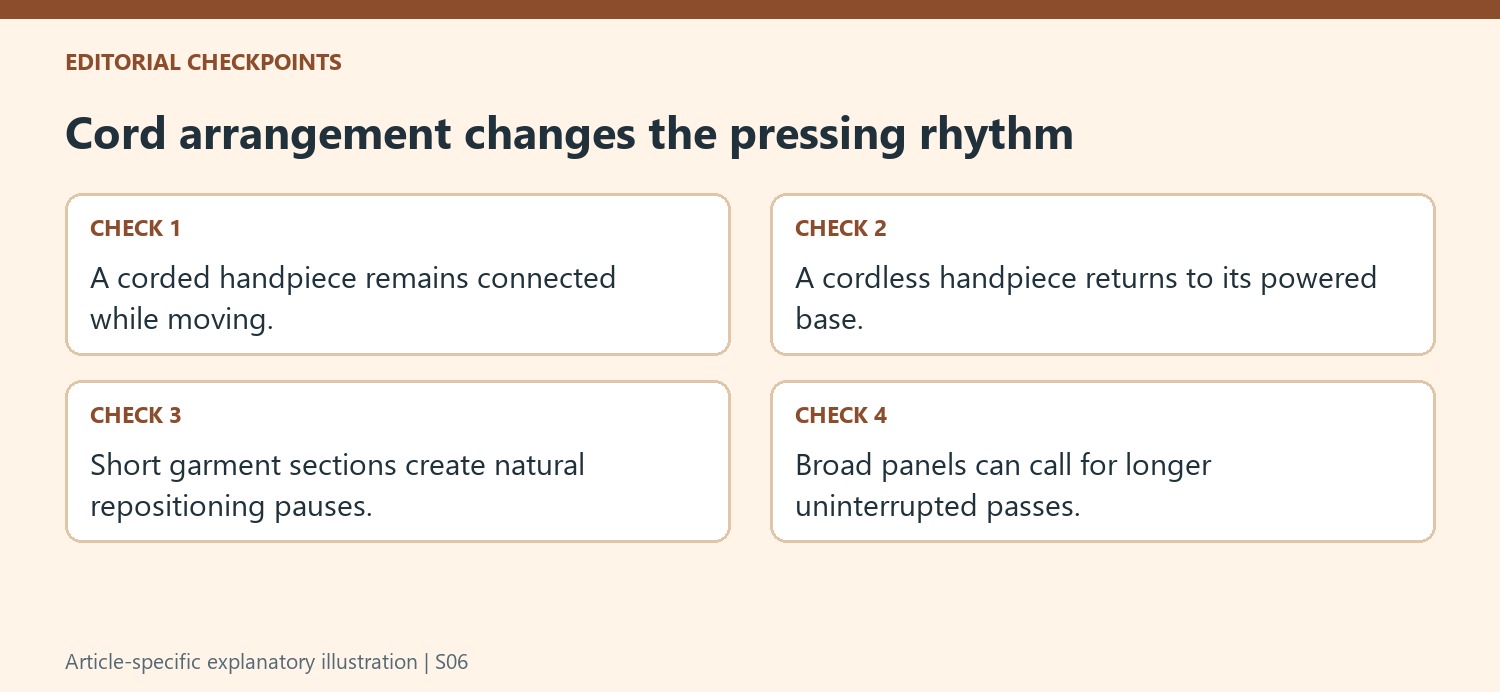
Returning the iron can fit naturally into the moment spent turning a sleeve or shifting a shirt front. Ideal Home's reviewer found that this pattern worked comfortably with one tested model. Other users may find it less convenient when handling a large item with long areas to press. A corded iron stays connected as it moves, avoiding the same return routine, although the cable needs managing. Neither experience is captured by the word cordless alone. Think about whether your usual work involves short sections and frequent repositioning or sustained passes across larger fabric panels.
Evaluate the complete pressing setup
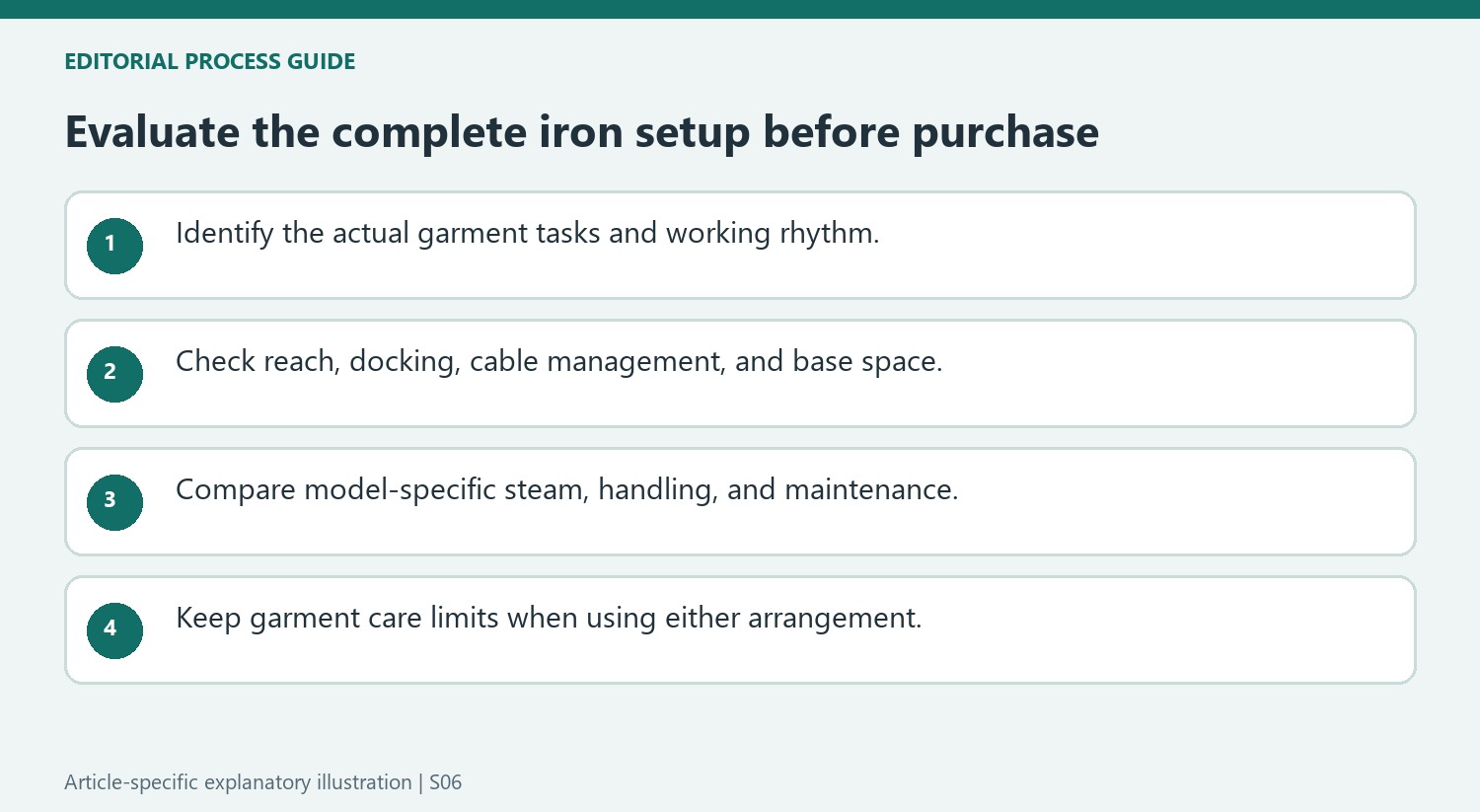
Both the working surface and storage area need room for the appliance and any base. Check how comfortably the base can sit beside the board and whether docking is easy from your normal position. Compare steam controls, soleplate shape, maintenance requirements and weight as well as cord arrangement. The source describes different tested irons excelling at different tasks, making individual performance more informative than a blanket rule about the entire category. Choose the model that fits the laundry routine, then use its permitted settings for each garment. A more convenient power arrangement does not change a care label's restrictions on heat or steam.
Compare real pressing intervals instead of category promises
The source describes one reviewer's experience with a cordless model that signaled a return to its base after a short working period. The pause fitted the time needed to reposition a garment in that test. This is useful practical evidence, but the timing belongs to that particular iron and does not establish how all cordless models operate. Think through the size of the pieces usually pressed. A shirt involves frequent turns and small sections, while a broad panel may encourage longer continuous passes. Compare the model's instructions and tested performance with that rhythm. The relevant question is whether the return-to-base sequence fits the task, not whether an entire category can be declared faster for every user.
Assess reach and storage with the board in place
Cordless handling removes a trailing cable from the moving iron, yet the powered base still has to remain in an appropriate position. Set out the available board area and nearby stable support before deciding that cable freedom solves a cramped setup. Check how the handpiece docks from the normal working position and where the base cord will run. A corded iron needs its own cable management, especially when changing direction around sleeves or larger pieces. Both arrangements also need storage and a suitable cooling routine. The source highlights these practical tradeoffs, which can be overlooked when comparing only the appliance in the hand. Measure and visualize the whole arrangement rather than assuming a small handpiece automatically means a compact complete system.
Keep model performance separate from the power arrangement
The comparison discusses specific irons with different steam behavior, gliding performance, controls, and reviewer preferences. Those details are more informative than assuming every corded iron performs alike or every cordless design shares the same limitations. A dual-mode model is another option, but its operating sequence and balance still need checking in each configuration. Compare current product instructions and relevant testing rather than treating historical price examples as today's market. Maintenance features and a comfortable soleplate can matter alongside the cord. Once a model is selected, the garment's heat and steam restrictions remain unchanged. Continuous power is not authorization for a hotter treatment, and freedom of movement does not remove the need to support and reposition the fabric deliberately.
References
- Corded iron vs cordless iron - which one should you buy? | Ideal Home. Ideal Home; Lauren Bradbury.