GarmentCare Guide
Treat the dryer as a separate care decision
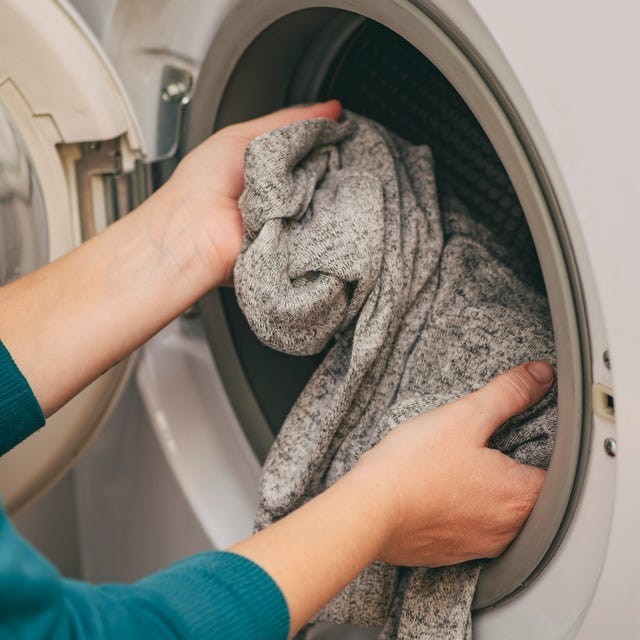
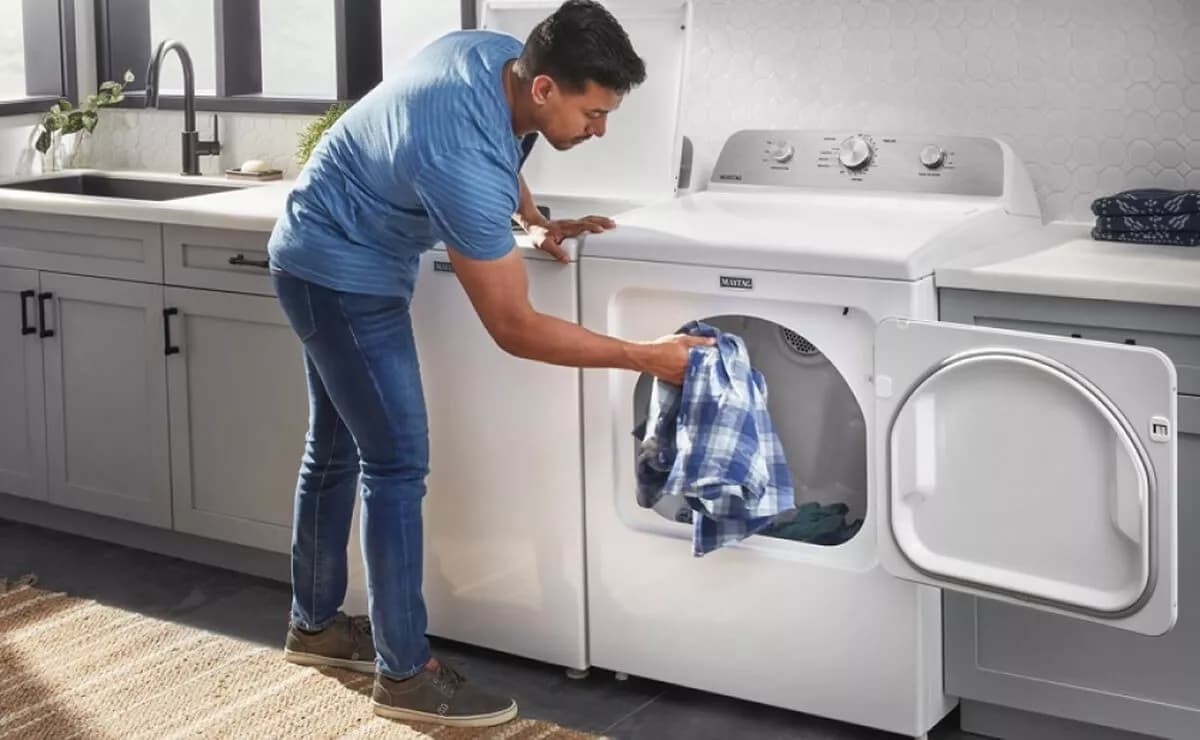
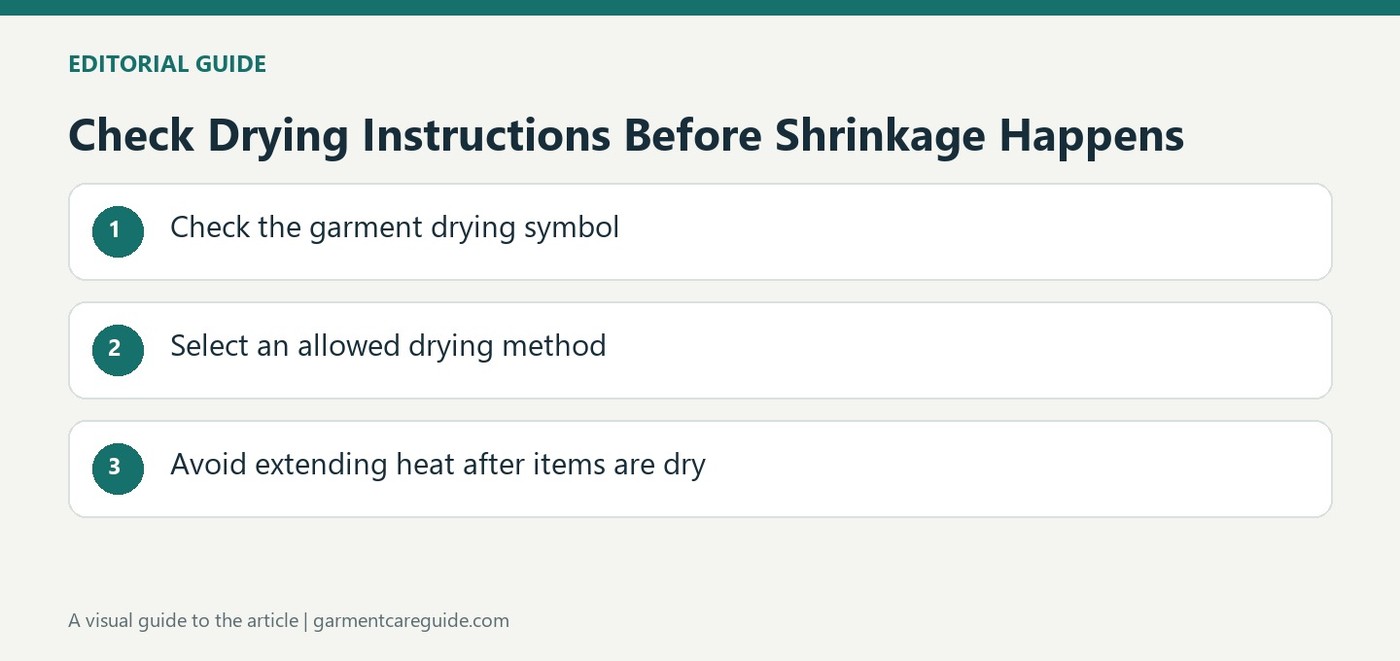
A successful wash does not mean the same garment can safely enter a heated dryer. Homes and Gardens identifies drying conditions as an important part of the shrinkage problem, particularly when heat and movement exceed what a textile can tolerate. Before transferring a load, check the drying instructions for each unfamiliar piece. Some allow tumble drying with limits; others require an alternative such as reshaping and drying flat. Mixed loads can hide these differences. Pulling out the items that need separate treatment before starting the dryer is simpler than trying to restore their dimensions afterwards.
Avoid using extra heat to solve every delay
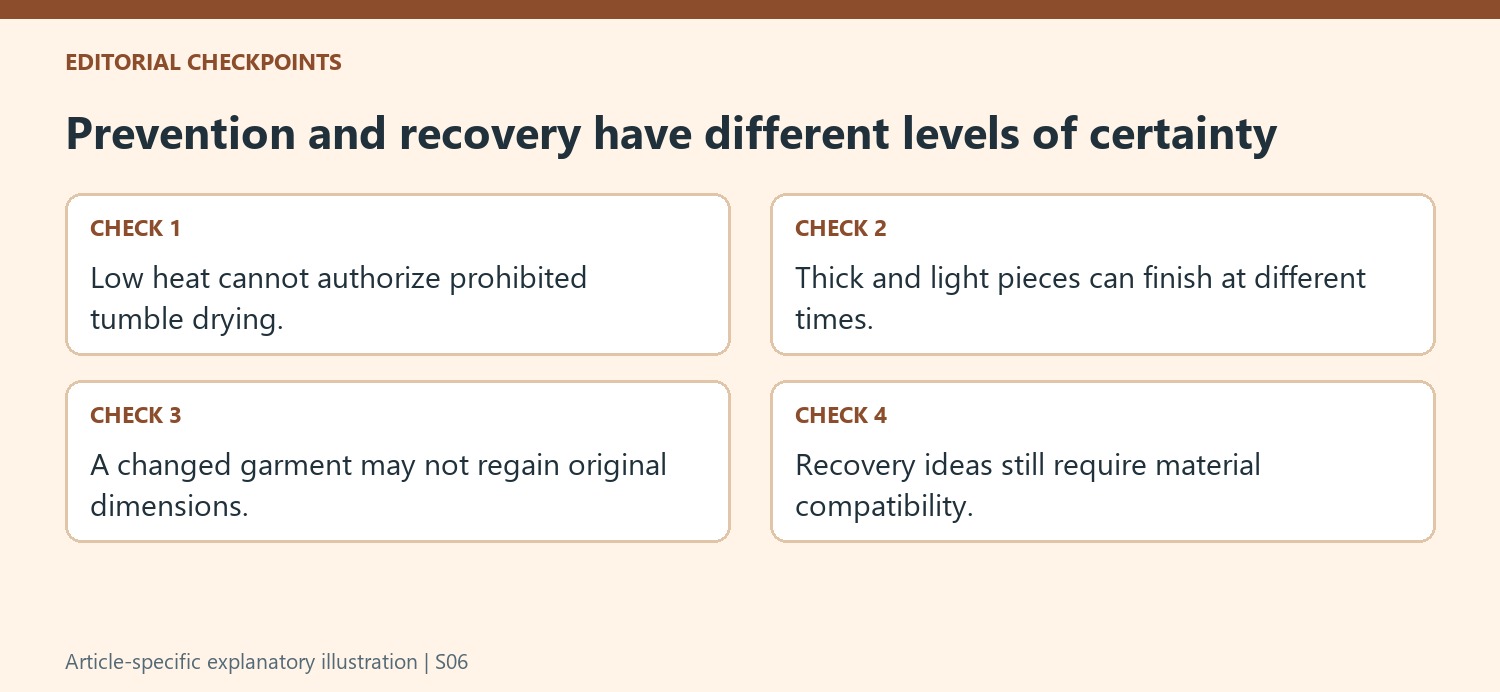
Thicker fabric and seams can remain damp after lighter pieces have finished. Extending a hot cycle for the whole load exposes already dry items to more treatment without resolving their individual care needs. Use the permitted settings and assess garments separately as drying progresses. A lower setting is useful only within the label's instructions; it does not turn a prohibited tumble dry into an approved one. For pieces that need a rack, arrange the allowed shape and support while they are still damp. Give those garments their own drying space rather than hanging everything by whichever edge is easiest to reach.
Be realistic about a garment that has changed size
The source notes that clothing may not return to its original dimensions after shrinking. Repeated heating or forceful pulling is not a dependable route back to the original fit. Check the garment's care information before considering any recovery attempt, and seek specialist advice where the item is valuable or difficult to handle. Preventive habits are more reliable than assuming every mistake has an easy reversal. Keep the label readable, separate unfamiliar purchases during the first laundry cycle and check the drying stage deliberately. Those small decisions help avoid discovering a fit change only when the clothing is worn again.
Separate permitted tumble drying from prohibited treatment
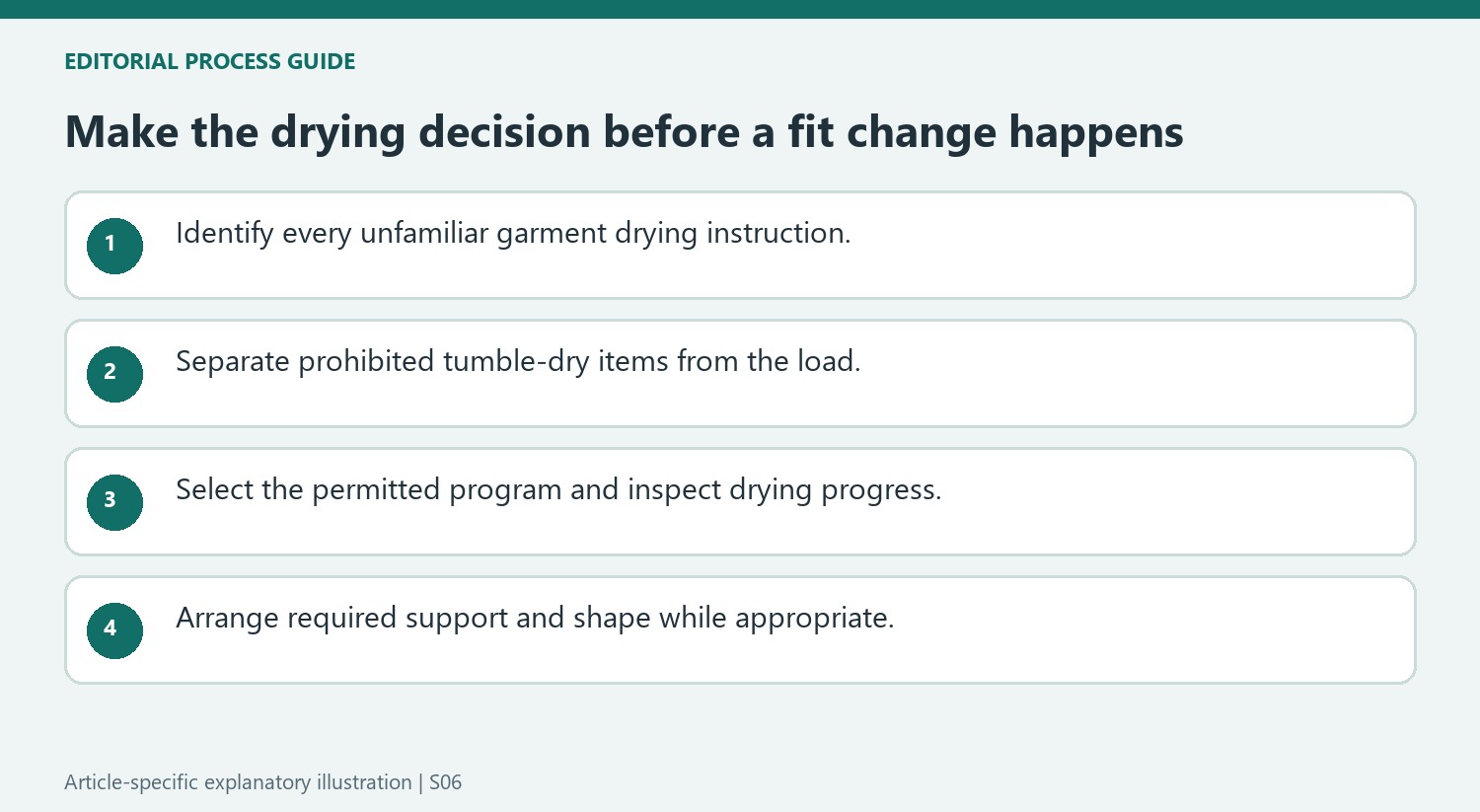
The source discusses heat, tumbling, fabric type, and drying duration as interacting concerns. These points are most useful as questions to apply to a specific care label, rather than as a universal setting for every load. A low-heat dryer cycle can still be the wrong method when a garment prohibits tumble drying. Similarly, a familiar fiber name does not fully describe a blend, finish, knit, or constructed item. Identify which pieces are eligible for the dryer first, then choose the permitted program for that group. Put garments requiring flat drying or another alternative aside clearly. This avoids treating the absence of damage in a previous load as evidence that every similar-looking item can tolerate the same conditions.
Plan for uneven progress in mixed loads
Light pieces and thicker sections can reach the end of useful drying at different times. The source's warning about overdrying is a reason to assess progress rather than repeatedly extending an entire hot cycle. Follow the appliance's loading guidance so garments have the intended room to move, and use settings compatible with every included piece. When an item needs reshaping while damp, arrange the prescribed support before it has dried into an unsuitable position. Do not use forceful pulling to compensate for an overloaded or inappropriate cycle. These decisions concern the actual pieces in front of you: waistband thickness, folds, and remaining moisture are more informative than assuming a single elapsed time means the whole load has finished together.
Treat recovery suggestions as uncertain interventions
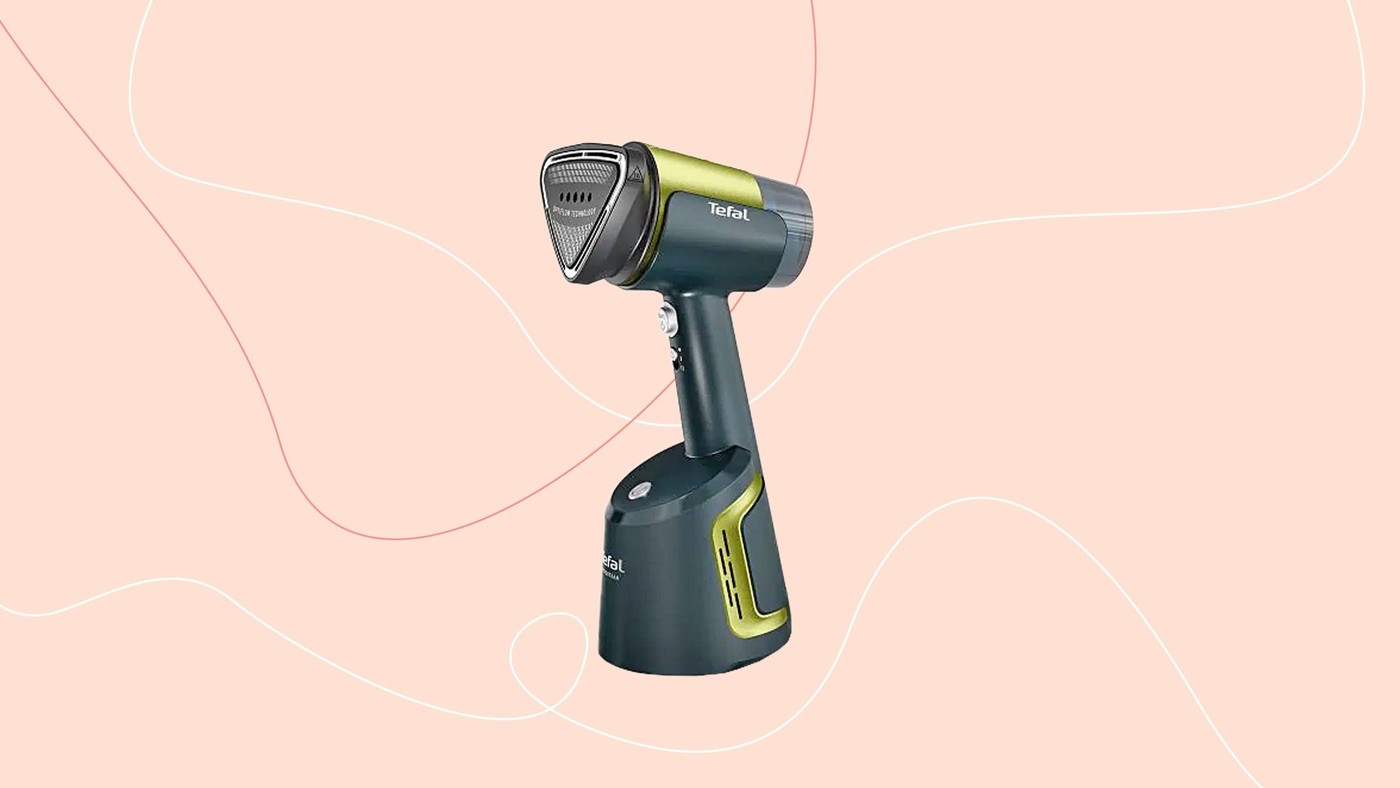
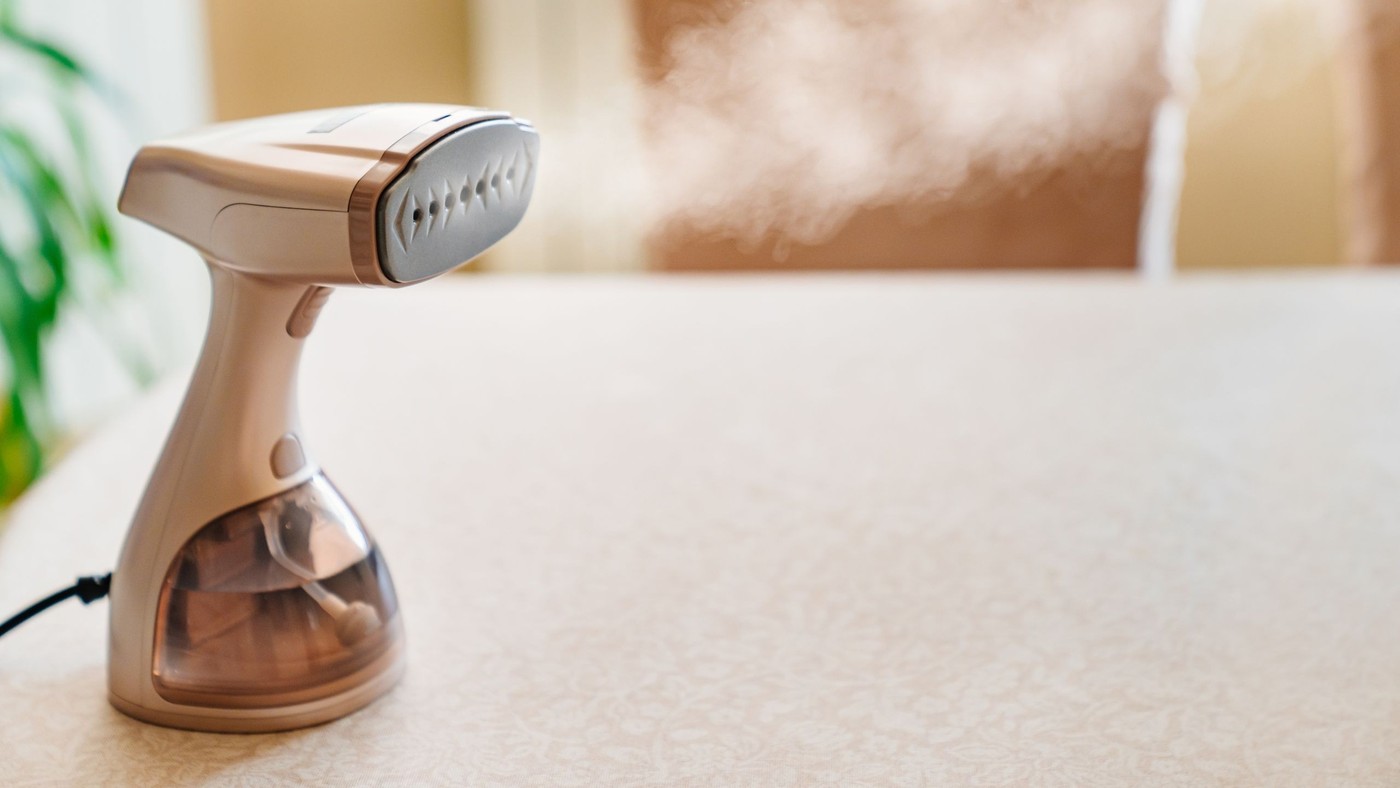
The article offers several household approaches for garments that have changed size, while acknowledging that results differ and the original dimensions may not return. That limitation should govern the decision, especially with a valuable knit or unfamiliar finish. Do not assume a conditioner soak, vinegar treatment, weighted stretching, or steam is appropriate simply because a general article mentions it. The garment's instructions and specialist advice remain relevant after a mistake. Further heat or heavy stretching may create another problem instead of reversing the first. Record which treatment was used before seeking help, so the next decision is based on the garment's actual history. The more dependable routine is to preserve compatible washing and drying choices before shrinkage occurs.
References
- Why do clothes shrink in the dryer, and can you un-shrink them? Cleaning pros reveal you can remedy sweater, shirt and jean drying disasters. Homes and Gardens; Ottilie Blackhall.