GarmentCare Guide

Read care requirements before the first wash
Whirlpool's advice on preventing shrinkage begins earlier than the laundry cycle: look at the garment's care requirements when choosing it. A piece that needs careful drying or specialist cleaning may require a different routine from everyday machine washable clothing. Checking that information before purchase makes the commitment clearer. A preshrunk description can be useful, but it should not be interpreted as permission to ignore the care label. Fit, fiber blend and garment construction all make a single universal shrink prevention setting unreliable. Keep the actual item's instructions available for its first cleaning rather than relying on memory from similar clothes.
Limit heat and mechanical treatment appropriately
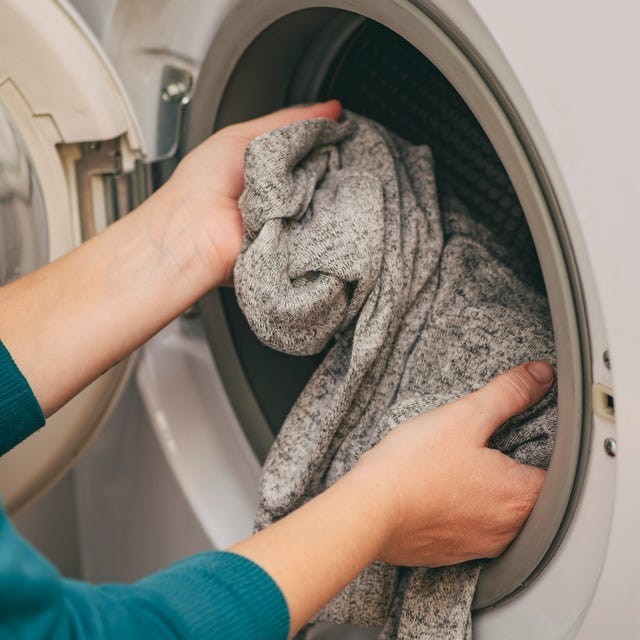
The source recommends matching washing conditions to what the garment can tolerate, with cooler water and gentler treatment useful where the label allows them. These choices can reduce exposure to conditions associated with shrinkage, but cold water is not a guarantee for every textile. Overloading or selecting a more vigorous cycle than needed may also work against careful handling. Sort garments by their permitted care, including drying requirements, rather than putting everything of a similar color through one program. A sweater needing flat drying should remain identifiable when the load is transferred out of the washer.
Make the drying decision deliberately
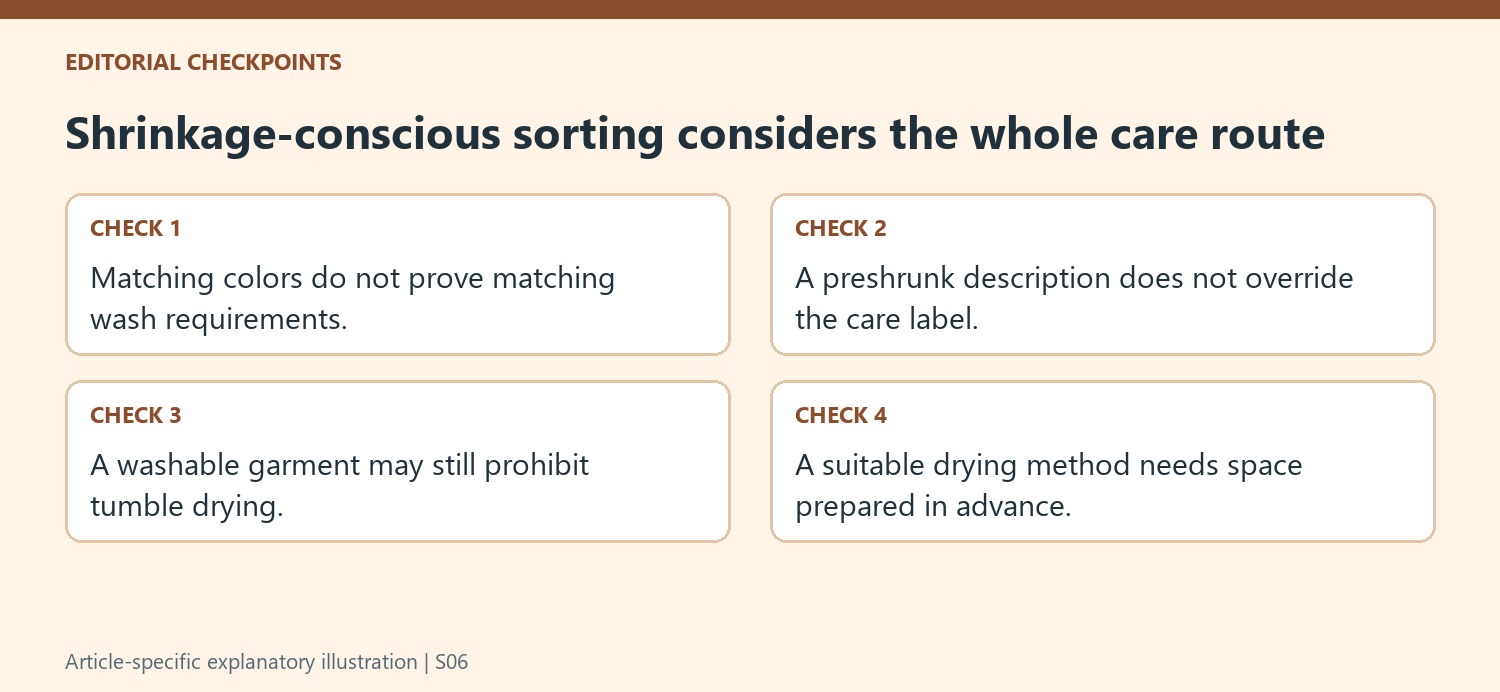
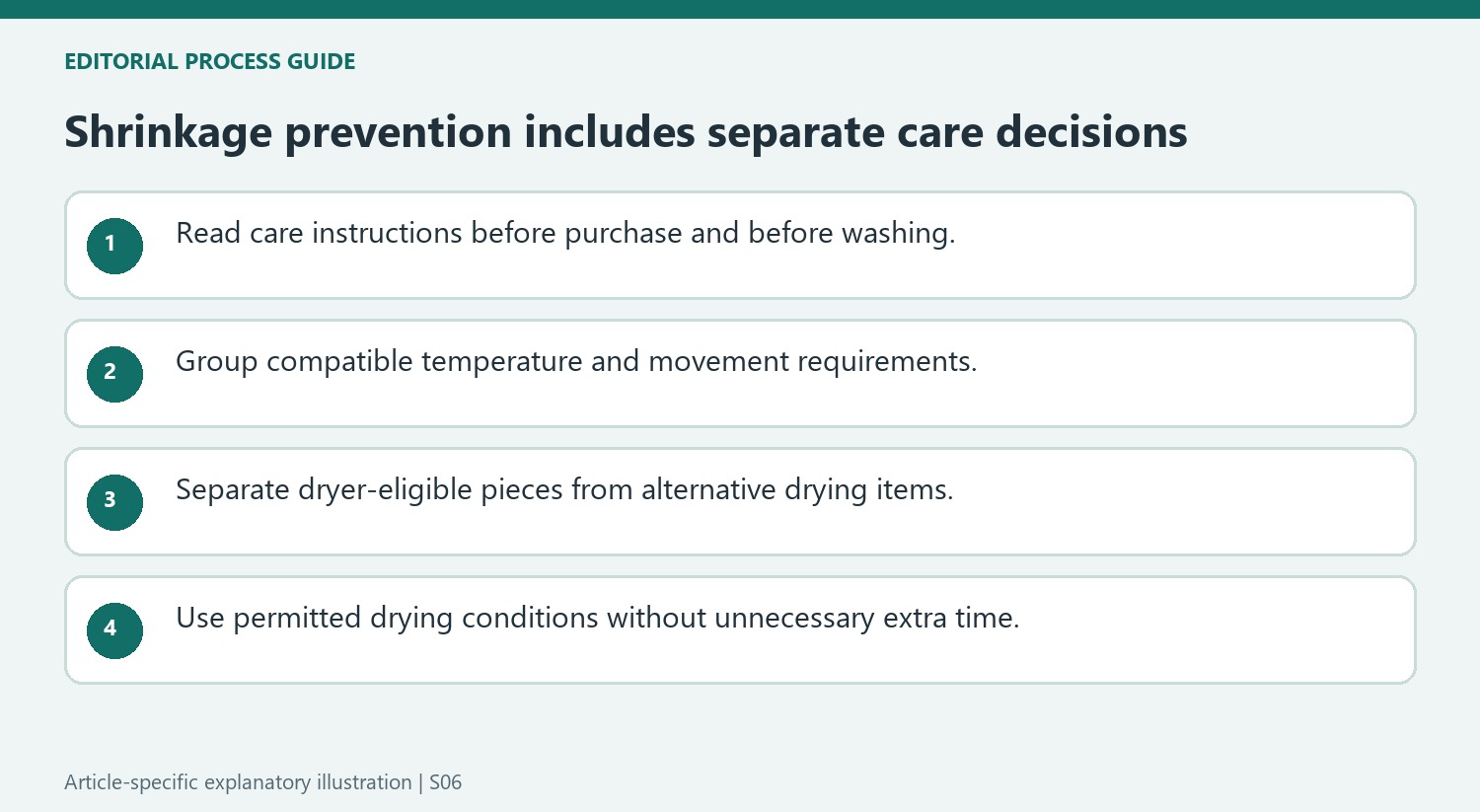
Drying deserves its own check instead of becoming an automatic continuation of washing. Follow the garment's tumble drying symbol or written instruction and select the permitted heat level. Avoid leaving suitable items in a heated cycle longer than necessary, and use the specified alternative when tumble drying is prohibited. Clothes requiring reshaping or flat drying need space prepared in advance. This planning is especially helpful on a busy laundry day, when a full drying rack can otherwise encourage unsuitable shortcuts. Shrink prevention is a sequence of compatible decisions from purchase through storage, rather than one protective setting that cancels out the rest.
Sort by compatible care rather than color alone
The source links shrinkage prevention to several stages of care, which means a color-sorted load can still contain incompatible garments. Two dark pieces may have different limits for water temperature, cycle action, and drying. Read the instructions together before grouping new purchases with familiar clothes. An item marked for specialist cleaning should not join a machine-washable batch simply because its color matches. Likewise, a piece that can be washed with the load may still need to be removed before tumble drying. Keep that distinction visible when transferring wet laundry. Planning the groups before washing helps avoid discovering the exceptional garment at the bottom of a basket after the dryer has already been started.
Think about time as well as temperature
A permitted low-temperature setting is only one part of the drying decision. Whirlpool also advises against overdrying, drawing attention to how long clothing remains exposed once it no longer needs the cycle. Compare the actual load with the selected program and check how the appliance is intended to determine dryness. Thick and thin pieces can require different attention, so avoid extending treatment for every item solely because one heavy section is still damp. Where the label requires an alternative method, prepare that support in advance. A rack or flat surface has to be ready when the washer finishes; otherwise a correct washing choice can be undermined by an unsuitable drying shortcut made when space is scarce.
Keep preshrunk claims in their proper context
A preshrunk label offers information about the garment but does not erase its remaining care requirements. The source encourages checking both fabric composition and instructions before purchase, helping the buyer judge whether the item fits the household routine. That is particularly useful when a piece needs flat drying or a method outside the usual wash-and-dry sequence. Review the first cleaning instructions while the label is easy to find, and make a deliberate plan for the whole process. If a garment has already changed dimensions, do not assume a household stretching trick will reliably restore the original fit. Prevention advice is more useful when it keeps heat, movement, drying duration, and the actual item's limits connected from the beginning.