GarmentCare Guide

Stop when the soleplate starts marking fabric
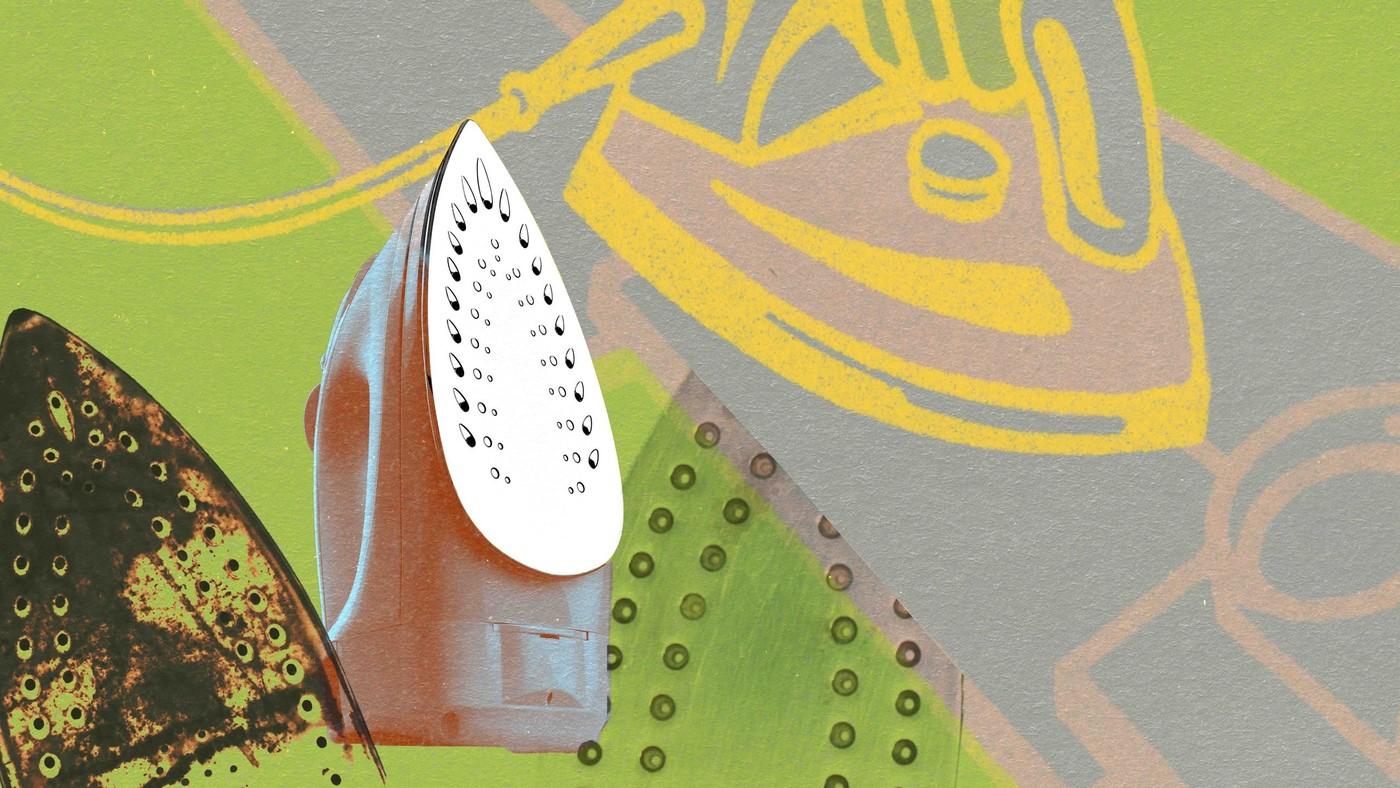
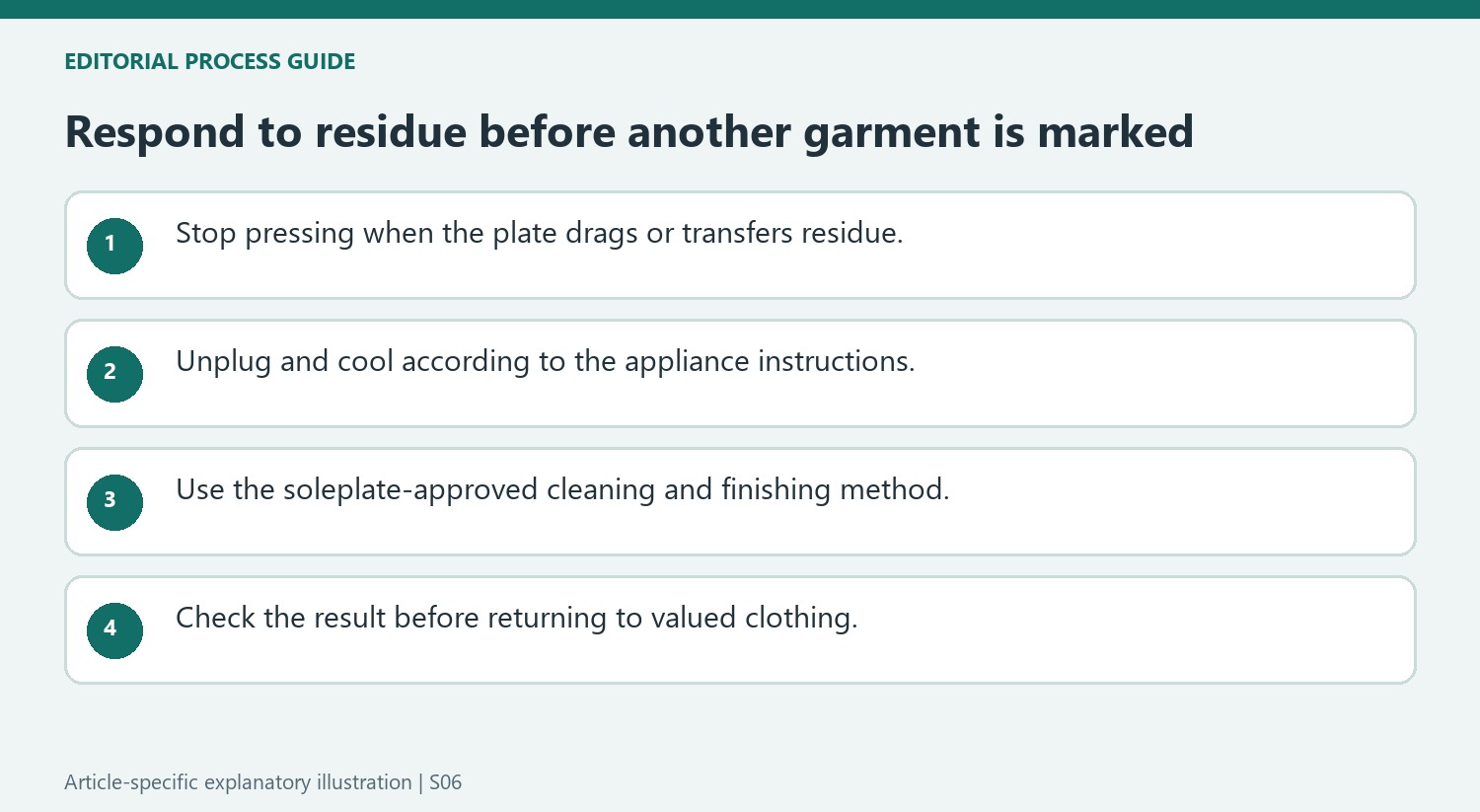
Dark residue on an iron can drag across a clean garment and leave marks behind. Ideal Home's guide to burnt irons describes this as a reason to pause rather than continue through the laundry pile. Disconnect the appliance and allow it to cool before inspecting or cleaning it. Emptying the water reservoir may also be required by the cleaning instructions. An iron that feels rough or leaves residue deserves attention even when it still heats normally. Continuing to press additional clothes risks spreading the problem and makes it harder to judge whether the original material has been fully removed.
Use the cleaning method specified for the surface
The article discusses household cleaning approaches, but soleplates and coatings differ. Check the manufacturer's care instructions before applying a cleaning substance or using an abrasive tool. A method described for one surface is not universal permission for another. Steam openings also need to remain clear; cleaning material left in them can become a new source of residue. Finish by removing the cleaning product as instructed, rather than leaving a film that might transfer to clothing. If the surface is damaged or residue persists, consult the manufacturer's guidance instead of repeatedly increasing rubbing pressure or trying progressively stronger mixtures.
Arrange laundry from cooler to hotter settings
A useful prevention step in the source is to iron garments requiring lower temperatures before moving to items that permit higher settings. This reduces the temptation to use a hot soleplate on a more sensitive fabric while it is still cooling. Read each care label rather than treating the whole basket alike. Printed areas and decorative finishes need particular attention because the main fabric's setting may not suit them. Avoid pressing directly over a print unless the garment's instructions allow it. Regular inspection and suitable cleaning are easier to fit into a routine than repairing damage after a scorched plate touches a favorite shirt.
Separate a dirty soleplate from a damaged surface
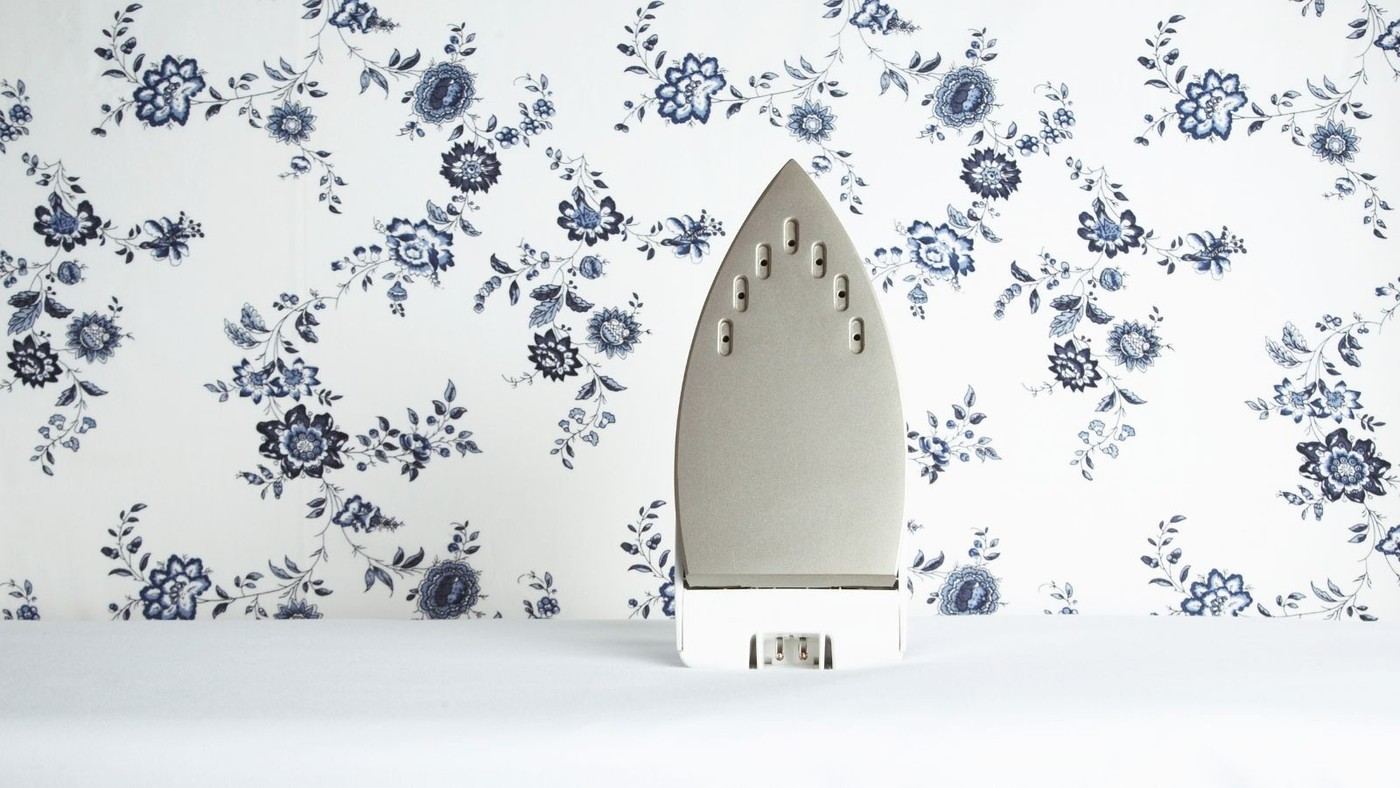
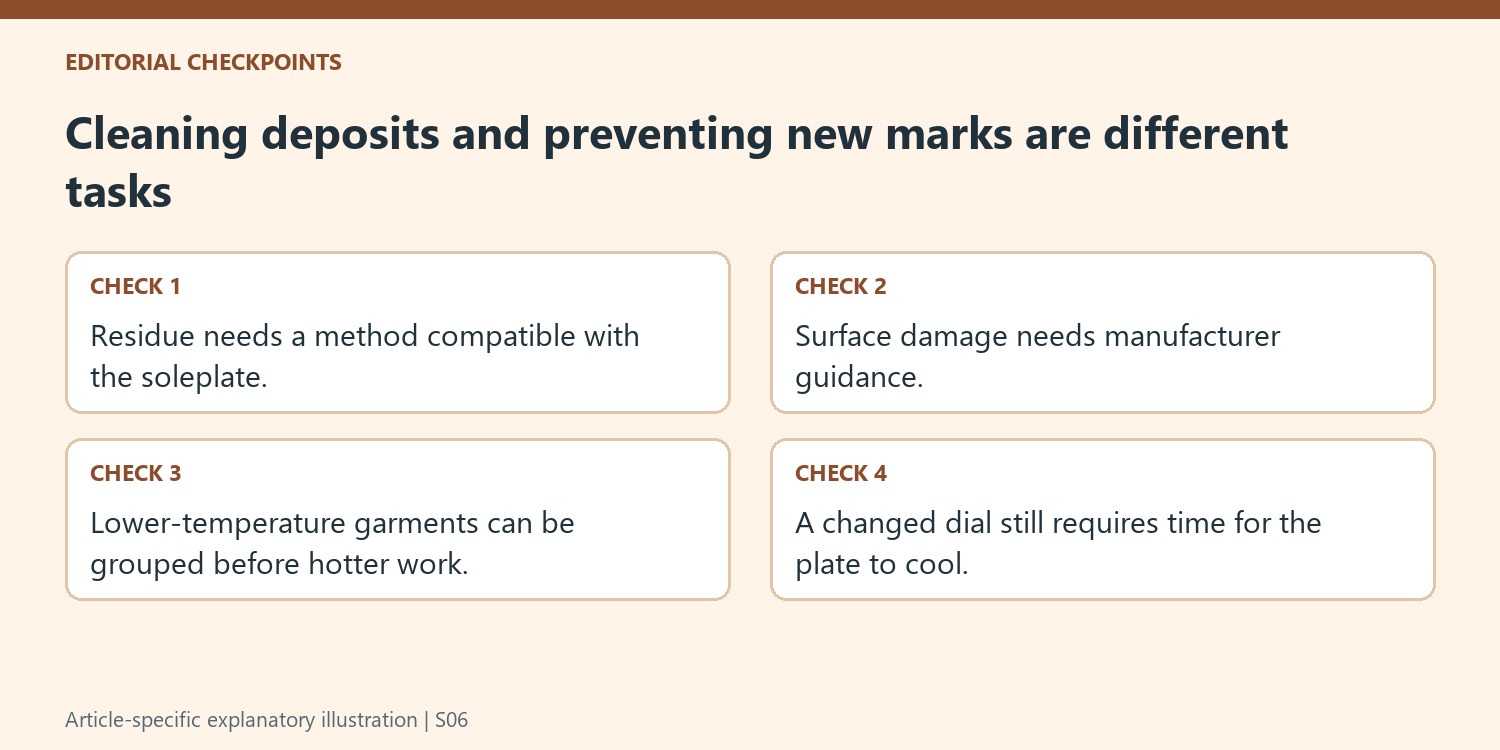
Residue and damage can both make an iron drag, but they call for different responses. The source discusses deposits that can catch on fabric or transfer marks during pressing. Stop when that happens and inspect the cooled appliance before another garment is exposed. A removable film should be addressed only with a cleaning method approved for the particular soleplate and coating. Scratches, peeling, or persistent roughness are reasons to consult the manufacturer rather than escalating the abrasive force. The point of cleaning is to restore an appropriate working surface, not to polish through its protective finish. Keep the appliance unplugged and follow its cooling, emptying, and moisture precautions before handling the plate, tank, or steam openings during the cleaning process.
Finish cleaning before testing another garment
Cleaning is incomplete if a film of product or loosened debris remains where the iron will touch cloth. Follow the approved method through its finishing steps, paying attention to the soleplate and accessible steam openings without pushing unsuitable tools into them. The source's collection of household cleaning tricks should not be treated as permission to use any mixture on any coated iron. The current appliance instructions are the better guide to compatible materials and whether a particular cleaning cycle is required. Once those steps are complete, follow the manufacturer's recommended checking procedure before returning to valued garments. If marks recur, pause again and investigate the remaining cause. Repeated transfers are evidence that the problem has not been resolved by the first cleaning attempt.
Arrange pressing to reduce preventable overheating
The source's prevention advice includes working from clothing that needs lower heat toward items permitted a higher setting. That order can reduce repeated waiting for a hot soleplate to cool, but it never replaces reading each garment's label. Group suitable items before starting and identify prints, coatings, or trims that restrict direct contact. If the order changes, allow cooling before touching a fabric that requires less heat; moving the dial does not instantly lower the soleplate temperature. Check the plate as part of ordinary use so a new deposit is noticed before it reaches the next piece. There is no single cleaning interval suitable for every household. Actual buildup, the appliance instructions, and the condition of the pressing surface should determine when attention is needed.
References
- How to clean a burnt iron - the easy method experts suggest | Ideal Home. Ideal Home; Lauren Bradbury.