GarmentCare Guide
Remove suitable amounts of water first
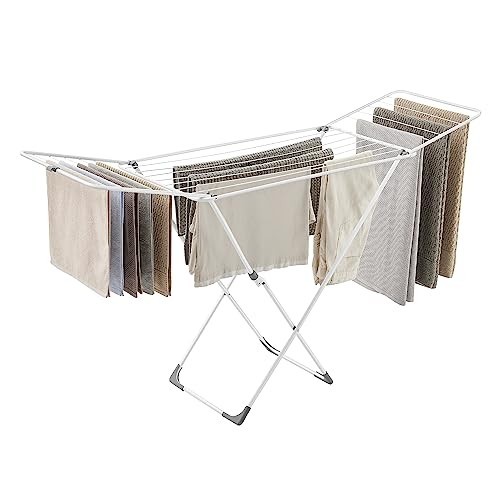
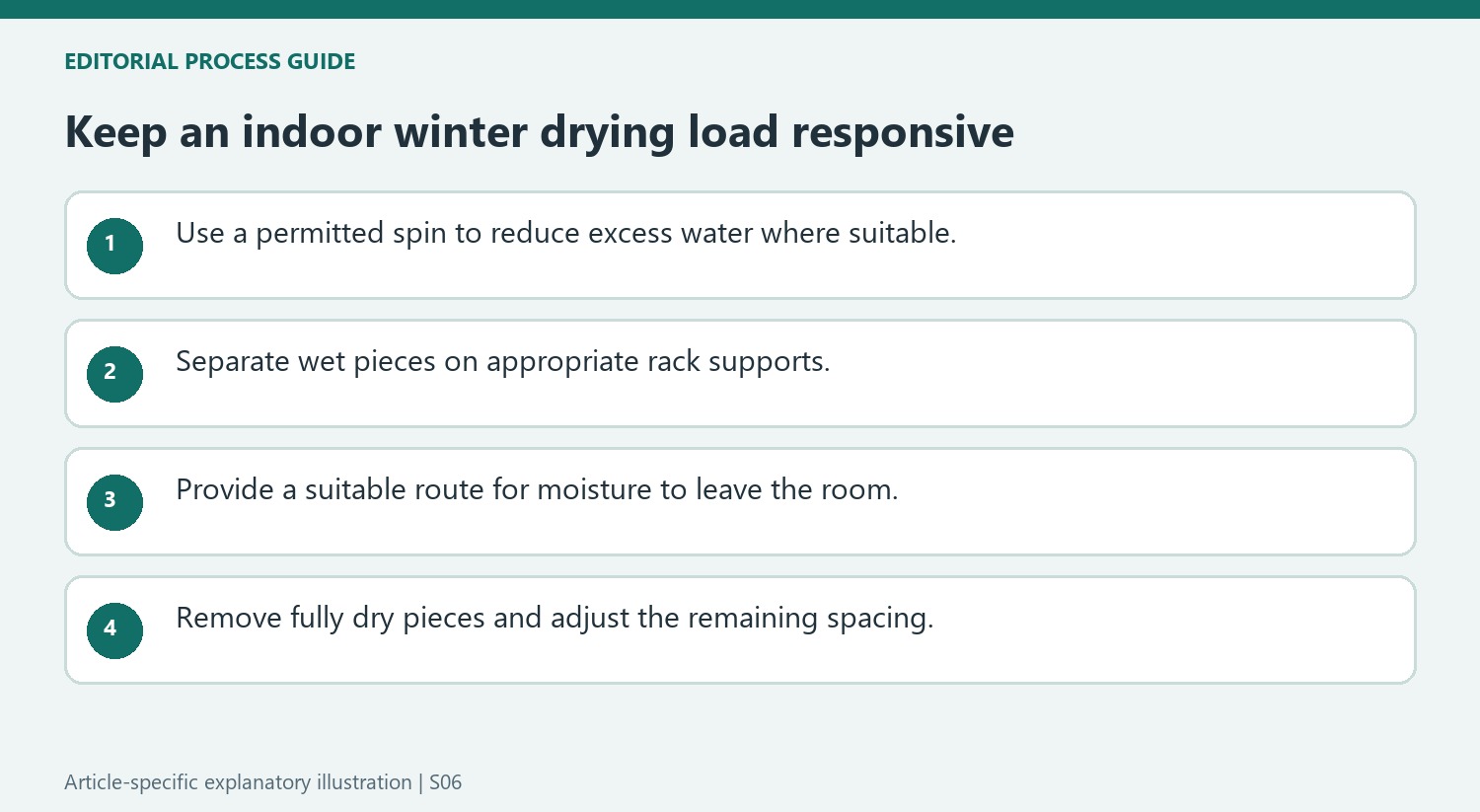
In a Homes and Gardens account of winter laundry drying, a rack and a dehumidifier form the core setup. Before hanging garments, the author uses a spin and drain cycle to remove more water. That can reduce the amount left to evaporate, but an extra spin is appropriate only when the clothing's care instructions and the machine settings permit it. Delicate pieces needing reduced mechanical action should not automatically receive the same treatment as durable household laundry. Plan the rack space before starting a large load, so wet items do not emerge from the washer with nowhere suitable to dry.
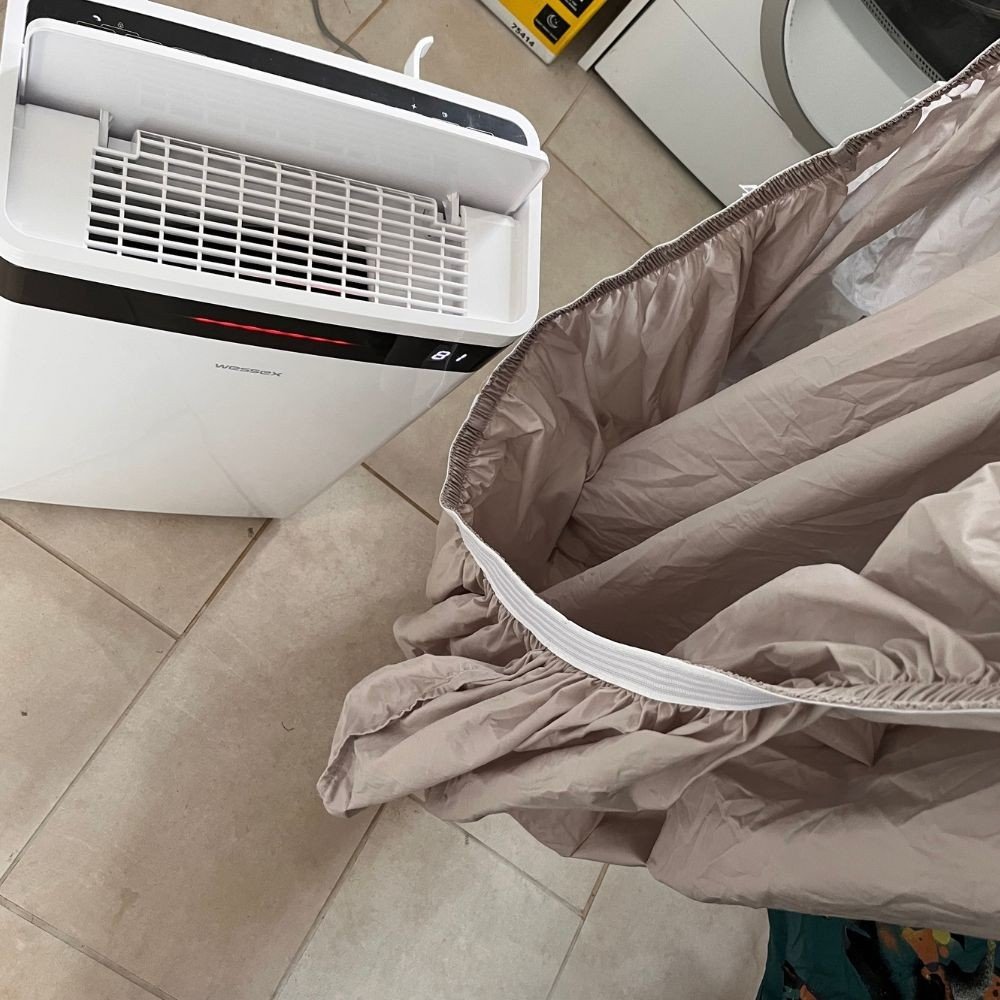
Give moisture a route away from the rack
The article describes using a dehumidifier to manage moisture released into the room. Follow the appliance's placement and clearance requirements when arranging it near laundry, keeping wet garments from dripping onto electrical equipment. The room arrangement should allow air to circulate through the clothing instead of trapping dampness between closely packed layers. Warmth can help the process, but a crowded rack still restricts exposure to air. Where a dehumidifier is unavailable, ventilation becomes especially relevant. The source's personal setup is a useful example, rather than a guarantee that one location or arrangement will suit every home.
Adjust the load as pieces finish
Leave gaps between garments and avoid folding several wet layers over the same rail. The writer alternates thicker and thinner pieces to limit contact, and sometimes washes a smaller load so the rack is not overloaded. Removing fully dry items creates more space for heavier pieces that are still damp. Check the actual fabric rather than assuming everything will finish at the same time. Cuffs, seams and thicker sections may need longer than a lightweight body panel. Once each item is thoroughly dry, fold or hang it for storage; putting damp clothing away undermines the work of drying it carefully.
Plan a drying load around the space available
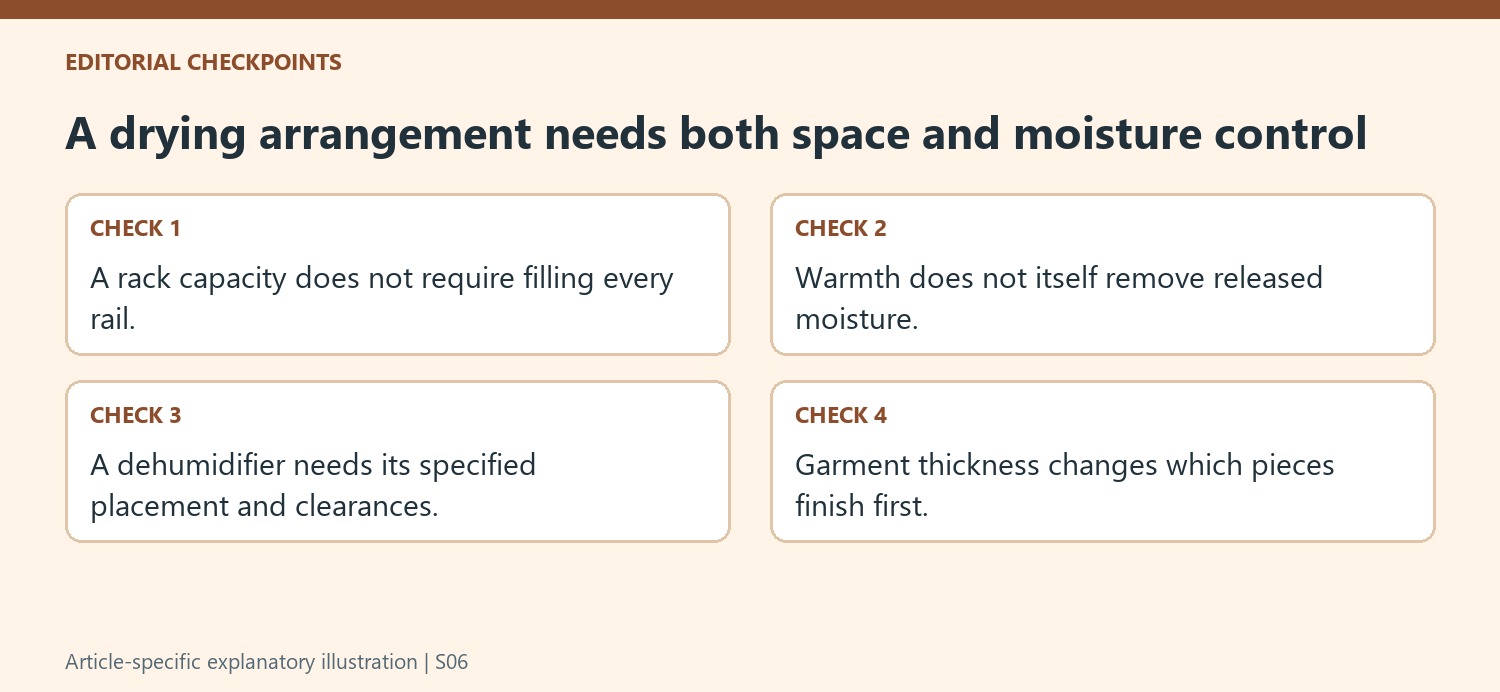
A rack's advertised capacity does not mean every rail should be filled when wet items would overlap. The source account favors smaller, spaced loads that give moisture room to leave the fabric. Before washing, consider where the wet pieces will hang and whether bulky items will crowd lighter clothing. An additional spin can reduce the water reaching the rack only when the garment and machine instructions allow it; it is not a universal step for delicate pieces. Open items out and distribute their weight across appropriate supports. If the planned load would form a dense wall of wet fabric, dividing it into manageable groups may make the room easier to use and the remaining drying progress easier to inspect.
Position equipment without creating a crowded corner
The author's indoor routine uses a rack and a dehumidifier in a room that can be kept out of the way. Treat that as one household arrangement, not a guaranteed result for every home. A dehumidifier needs the position, clearance, and operating conditions stated in its own manual, including protection from dripping garments where required. Keep a rack clear of radiator surfaces and preserve ordinary access through the room. Warmth alone does not remove the water released by drying laundry; moisture still needs a suitable route away through the chosen ventilation or dehumidification approach. Check the room as a working space, including doors, furniture, and the spread of the loaded rack, before settling on a position for repeated winter loads.
Rearrange the rack as individual pieces finish
Different fabrics and thicknesses rarely finish together, so an indoor load benefits from attention after it is first arranged. The source recommends taking dry items off the rack, leaving more space around those still holding moisture. Check thicker folds, waistbands, and overlapping areas rather than relying only on an exposed outer surface. Once a piece is fully dry, remove and store it appropriately instead of letting it occupy a useful gap. Reposition the remaining garments where their care and support needs allow. This approach does not promise a fixed drying time or a particular energy saving; it makes the drying arrangement responsive to the actual load. If dampness remains concentrated in one area, review spacing and room moisture management before adding more wet laundry.