GarmentCare Guide
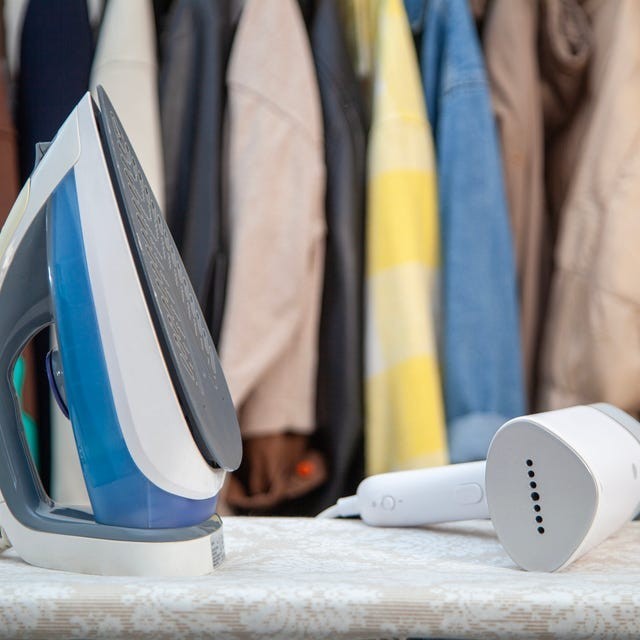
Choose steam for a softer finish
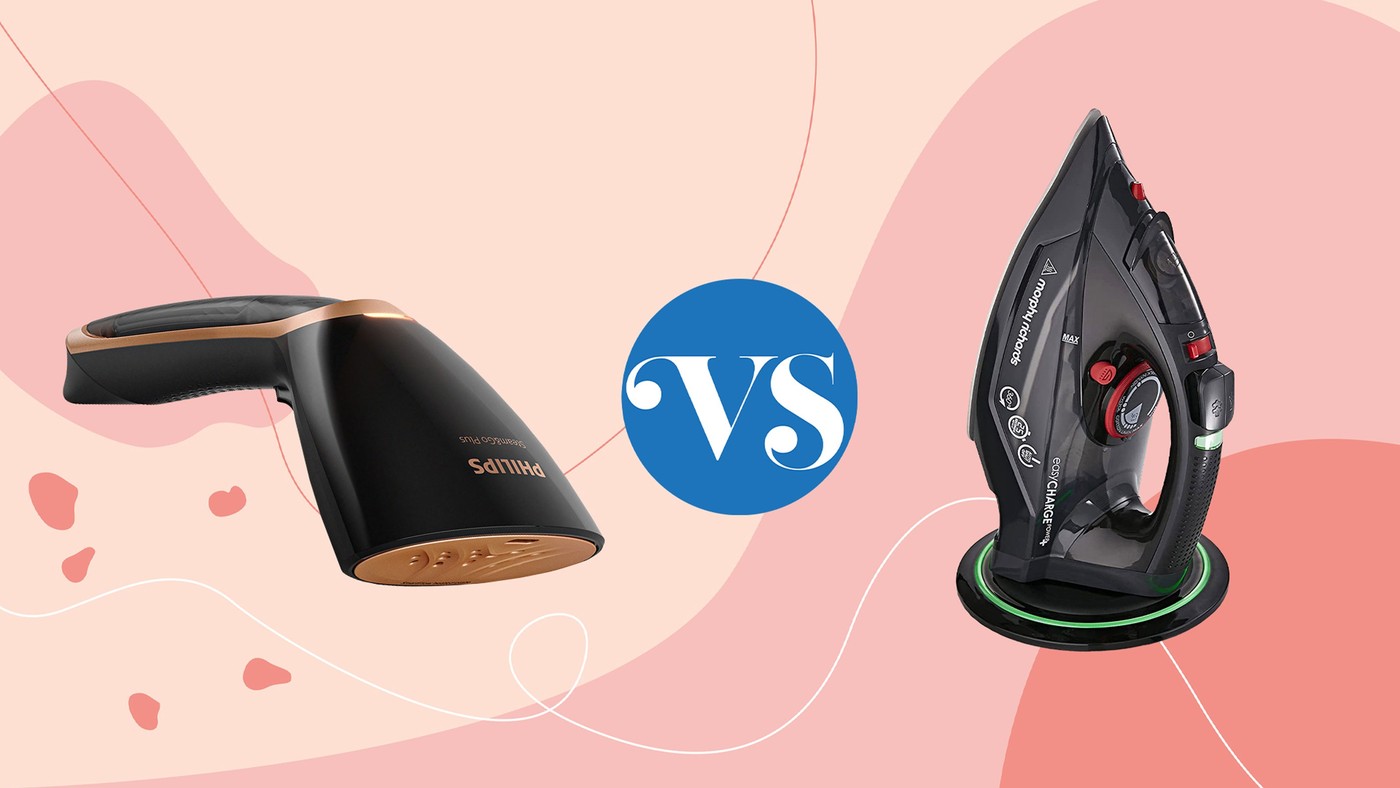
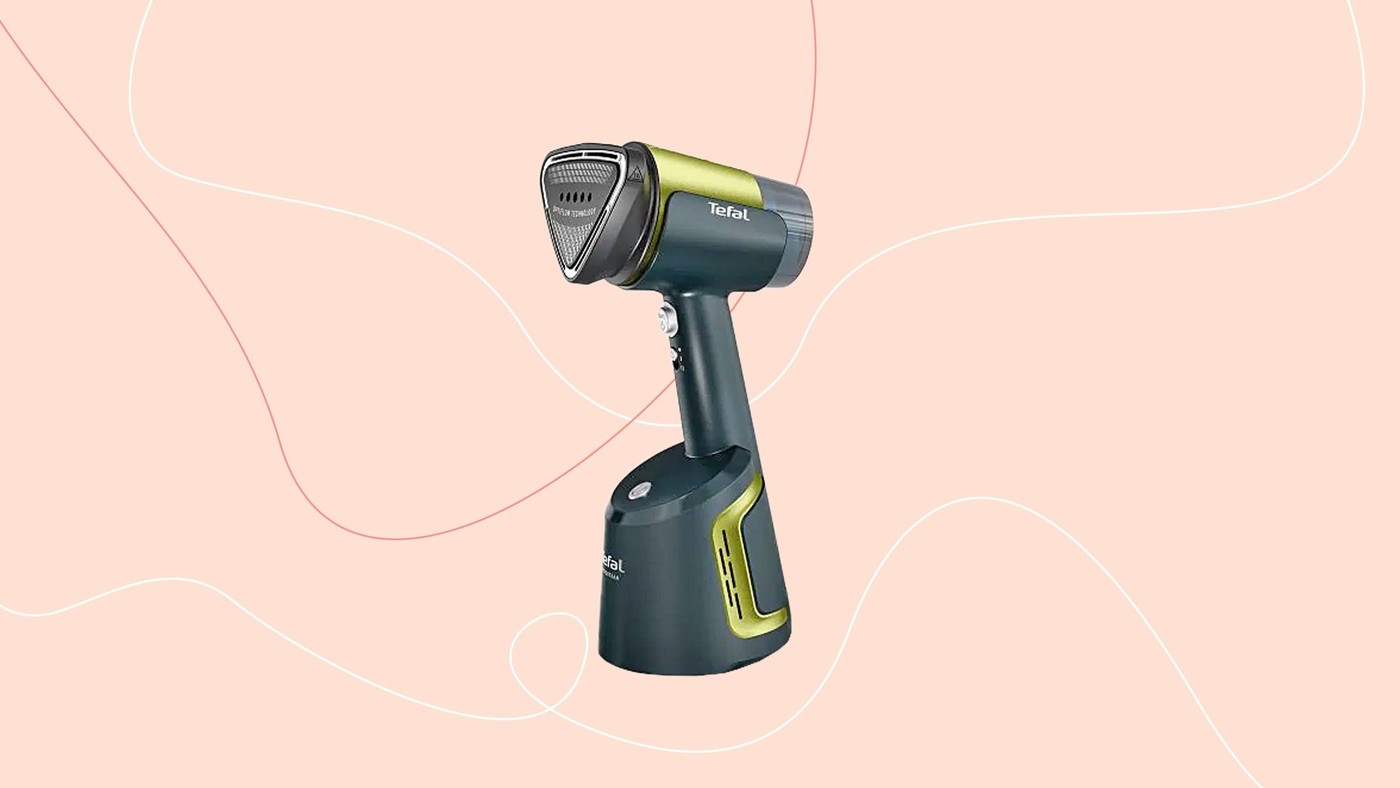
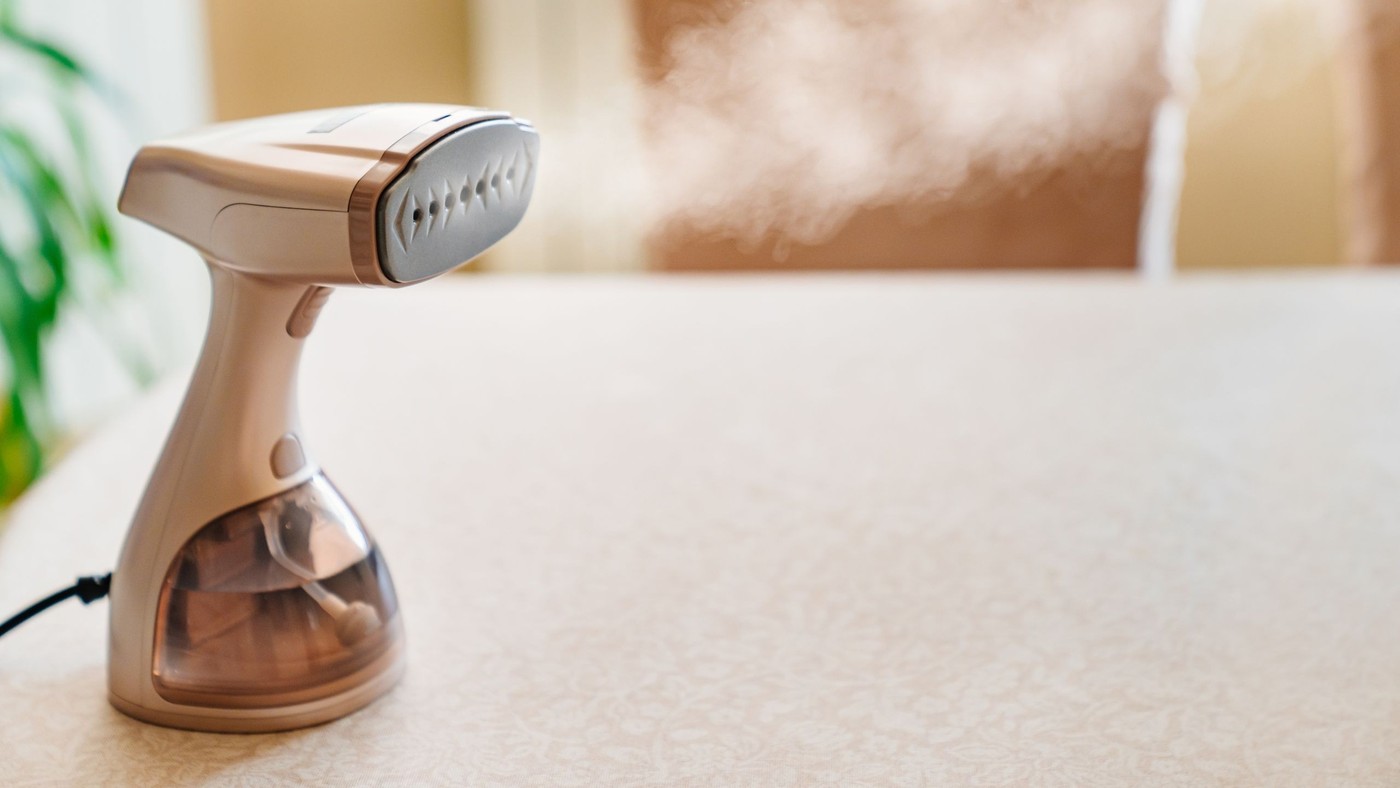
A garment steamer is often convenient when one hanging item needs attention before leaving home. Good Housekeeping describes steamers as particularly useful for clothing with a relaxed, unstructured appearance. They can reach shapes that are awkward to arrange on an ironing board, while avoiding the flattening pressure of a soleplate. Tank size and operating angle still affect convenience: a small reservoir requires more refilling, and some models need to stay vertical. Check the garment's instructions before steaming, especially when finishes, plastic trims or embellishments introduce different care requirements from the main fabric.
Use an iron for deliberate shaping
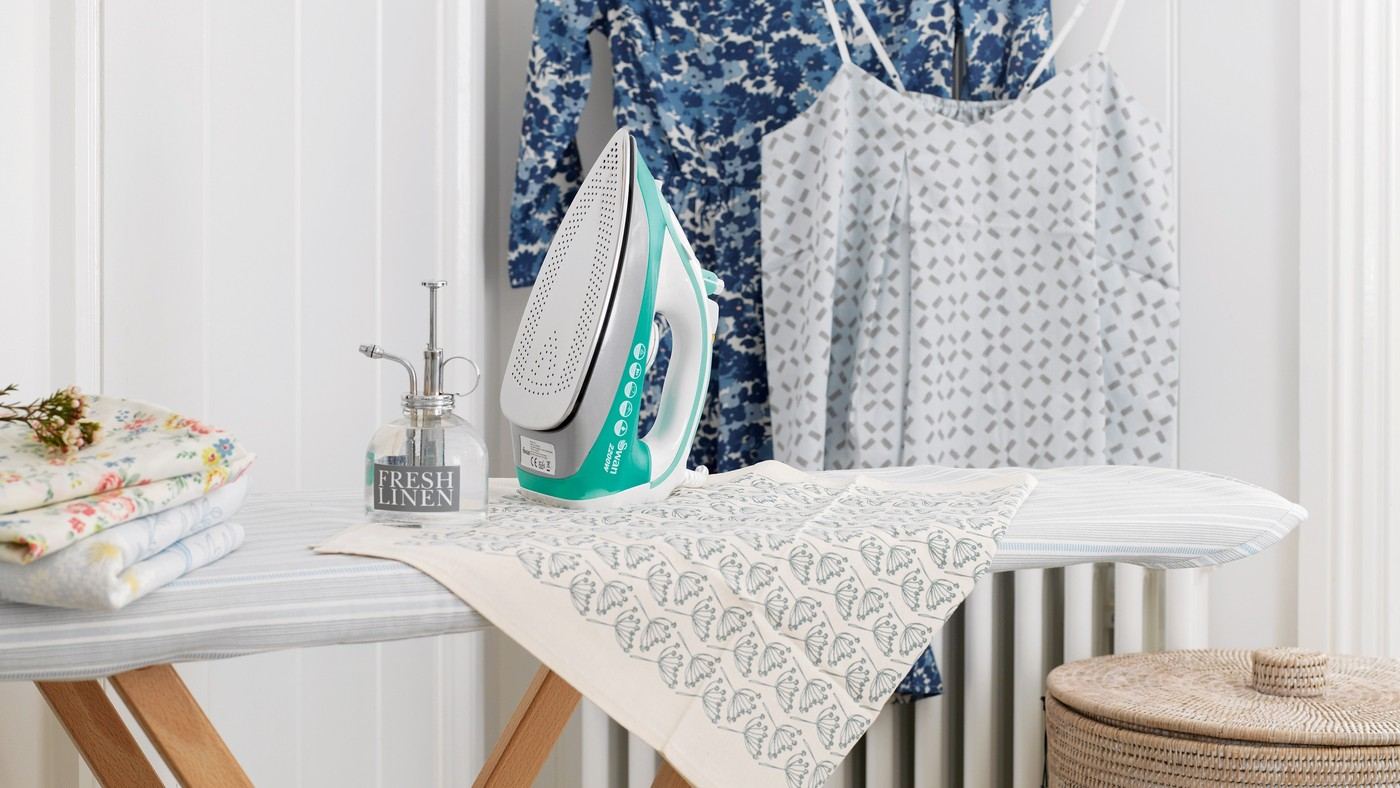
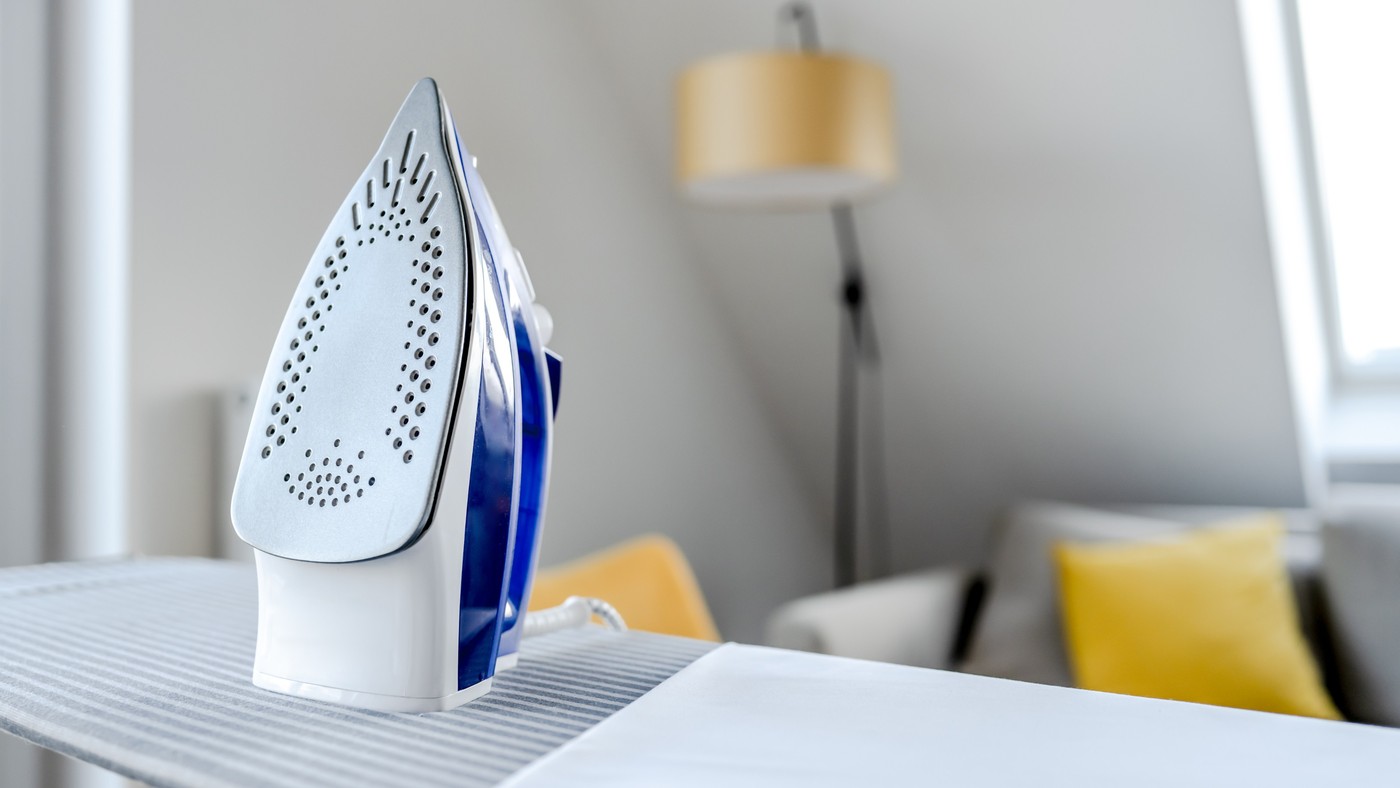
An iron combines heat, weight and a supported pressing surface, making it better suited to a crisp shirt front or an intentional trouser crease. It is also useful for sewing and quilting work that requires flattening seams during construction. The tradeoff is the need for a board or another suitable flat surface. Collars, cuffs and shoulders can take more positioning than a loosely hanging garment. Temperature changes require attention too: an iron used on a hotter setting needs time to cool before it touches clothing requiring less heat. The setting must follow the particular garment rather than a general fabric assumption.
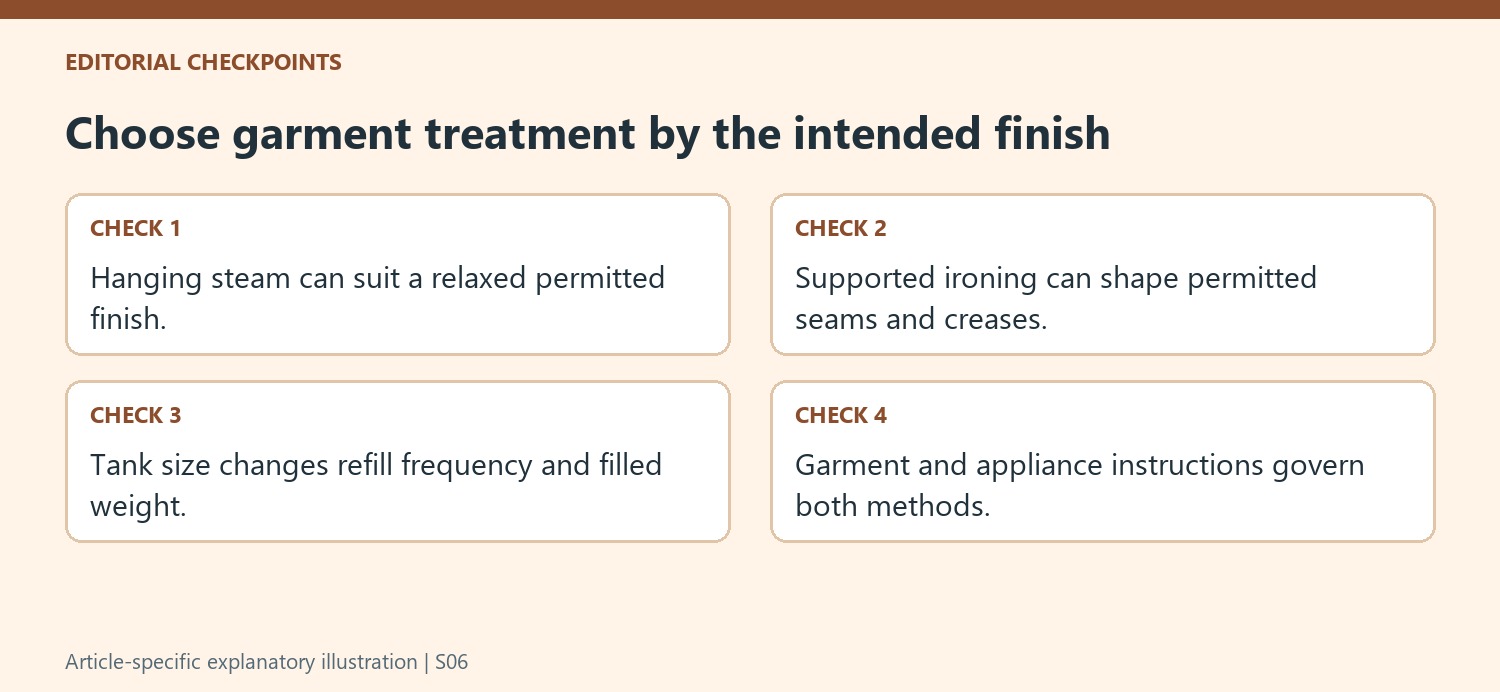
Evaluate the routine as well as the appliance
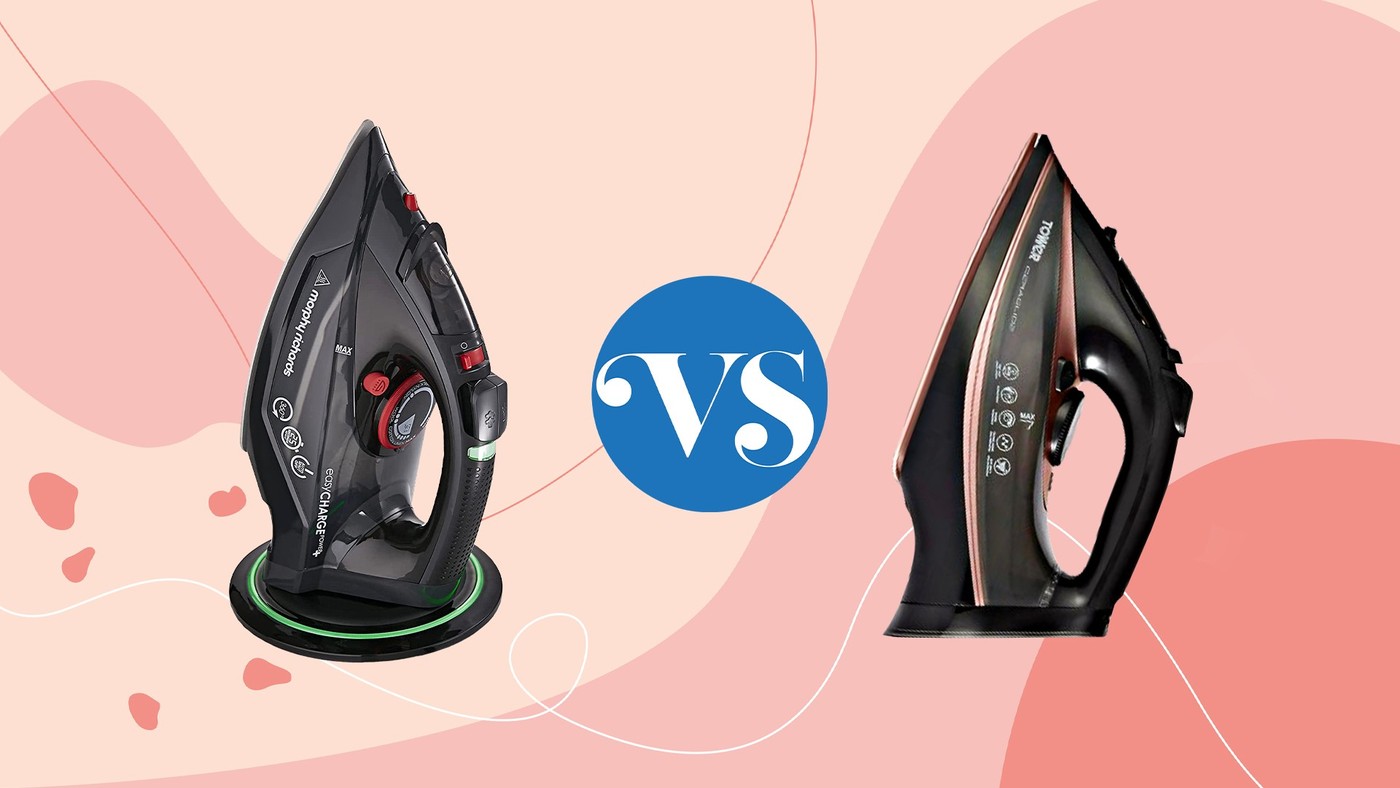
Good Housekeeping tests both types using wrinkled textiles, steam measurements, handling assessments and checks for dripping or spotting. That approach highlights why the strongest specification does not settle every purchase. Consider how often you handle a single outfit compared with a whole basket, where the appliance will be stored and whether its filled weight feels manageable. A steamer can suit quick softening, while an iron suits controlled pressing. Owning both provides flexibility, but a single well chosen tool may cover a wardrobe's usual needs when its limitations are understood and the care labels are followed.
Start with the finish the clothing needs
Choosing between an iron and a steamer is easier when the desired finish comes first. The source distinguishes relaxed wrinkle removal on hanging clothing from the supported shaping used for collars, seams, and deliberate creases. A steamer may fit the morning task of refreshing one soft garment, while an iron and board offer a firm surface for more structured work where care instructions permit it. Neither description makes every delicate item suitable for steam or heat. Check finishes, trims, and the garment label before selecting the tool. Consider how the wardrobe is actually worn, too: an intentionally relaxed blouse and a sharply pressed shirt may need different treatment even when both have developed wrinkles during storage.
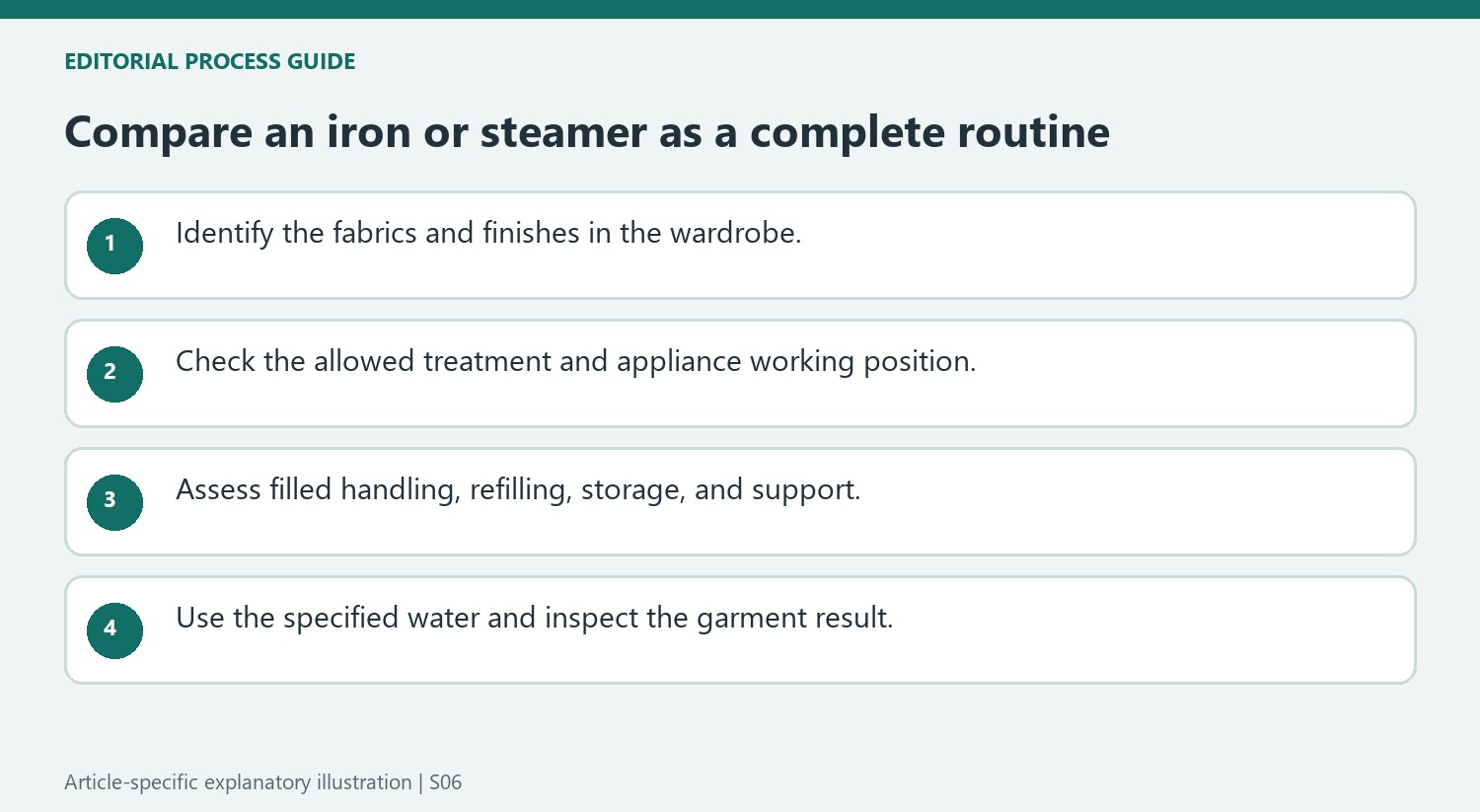
Compare filled weight, refilling, and working position
The practical comparison extends beyond advertised tank capacity. A larger tank can lengthen a session, yet the water contributes to the weight held during use. Look for a visible water level, accessible filling opening, and a tank that can be removed conveniently when that design is offered. The source also notes that some handheld steamers must remain upright to avoid leaking, making the required working position part of the purchase decision. Compare a continuous-steam setting with a trigger or button according to hand comfort and control. A travel model, a household handheld unit, and a standing system occupy different amounts of storage space. Allow for the garment, support, appliance, and safe cooling area as a complete routine rather than judging the handpiece alone.
Use test observations and the correct water directions
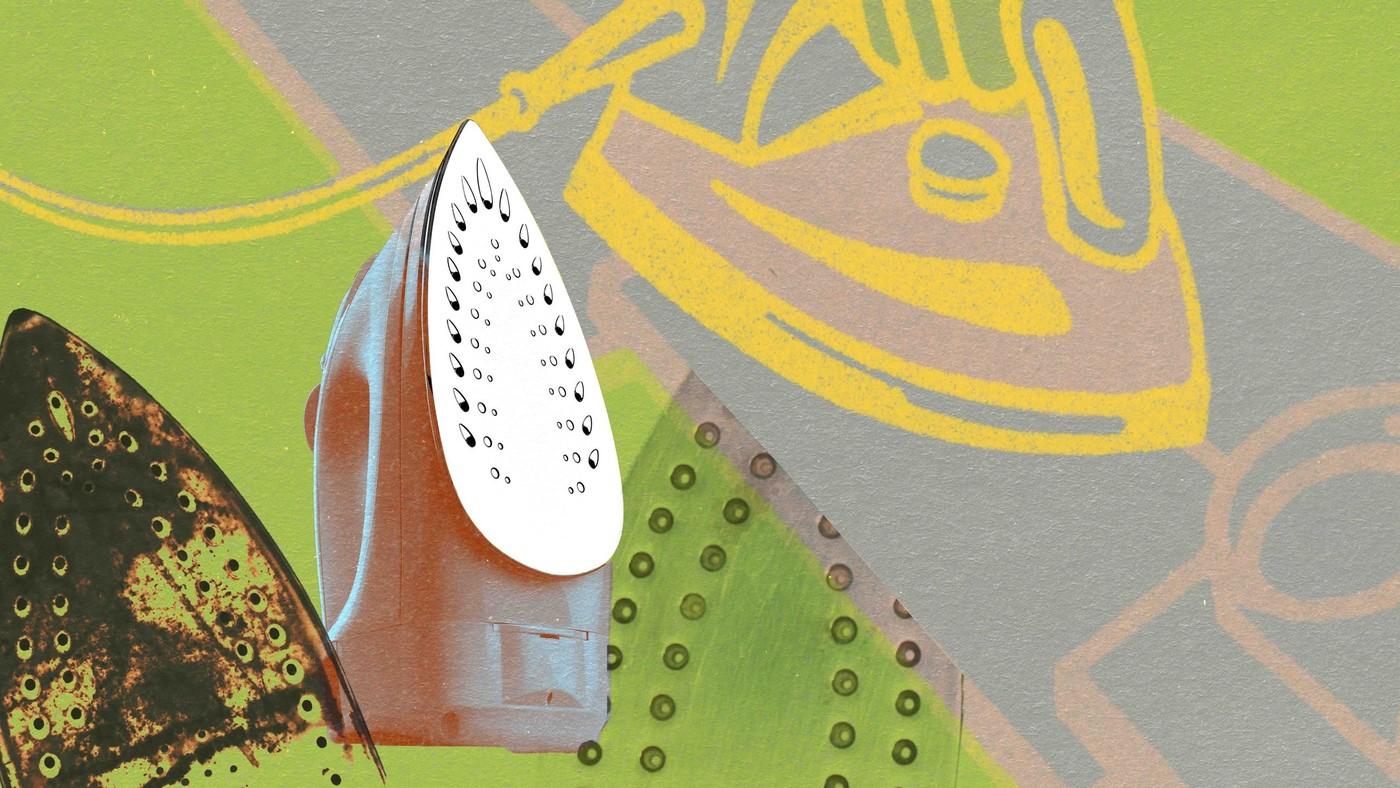
The source describes testing wrinkle removal across different fabrics while also checking steam rate, temperature consistency, controls, and unwanted dripping or spotting. These are useful questions to bring to a comparison because a strong-looking specification does not guarantee an even finish. More holes in an iron's soleplate, for example, are not proof of better steam delivery. Water instructions must also come from the particular appliance manual: requirements differ, so a general recommendation for every iron or steamer is unreliable. After choosing an appliance, begin with the garment's permitted treatment and a controlled working method. If changing from a hotter ironing setting to a cooler one, allow the soleplate to cool before contact with the next fabric.
References
- Iron vs Steamer: Expert Guide to How to Unwrinkle Your Clothes. Good Housekeeping.