GarmentCare Guide
Understand the role of the charging base
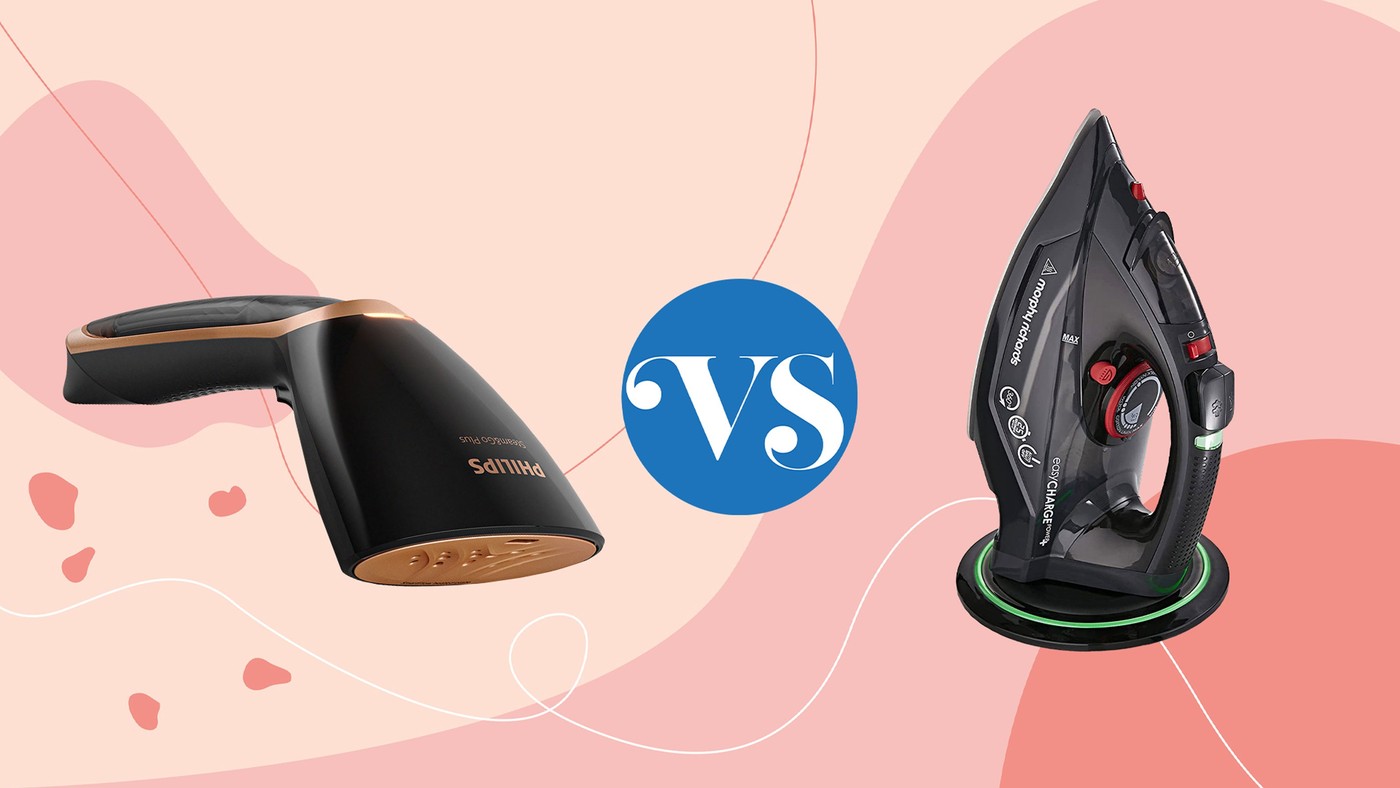
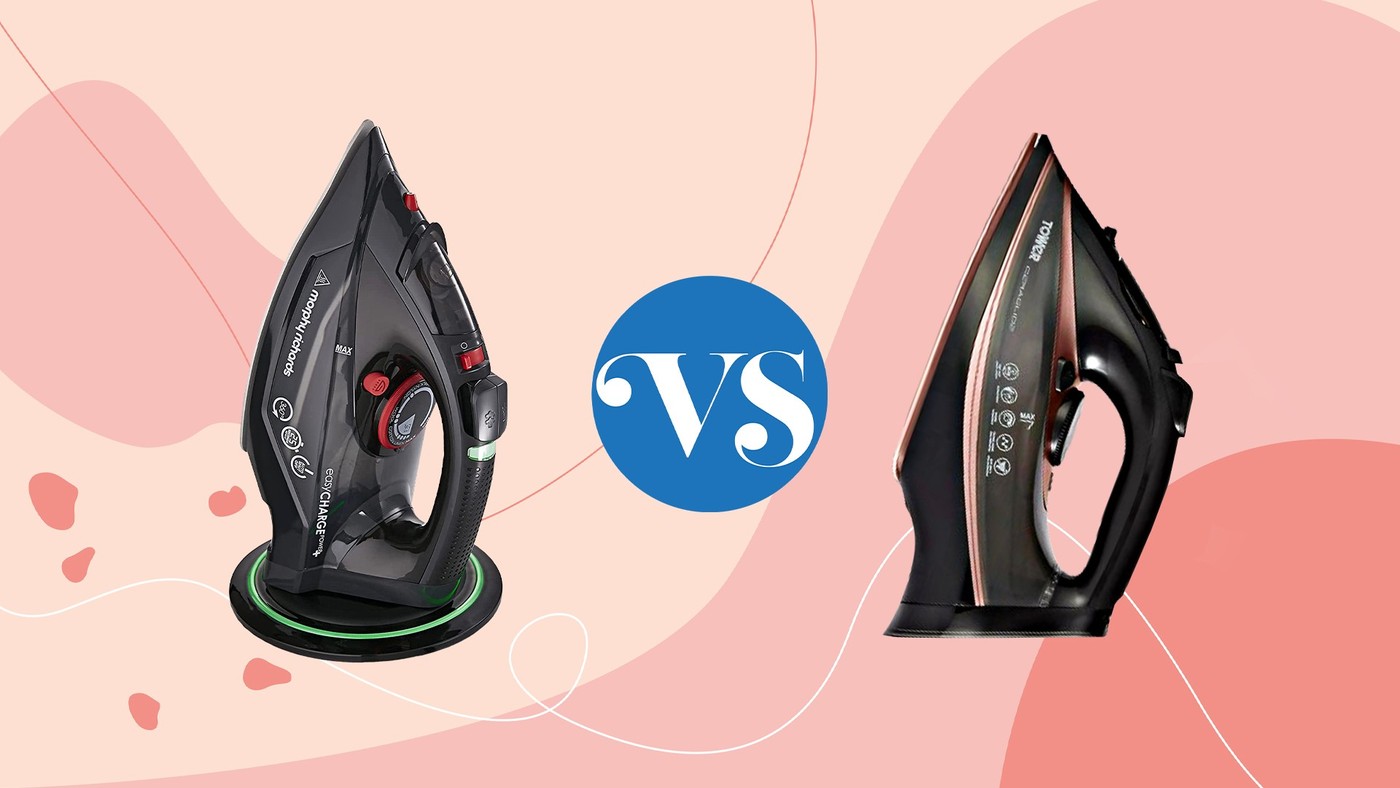
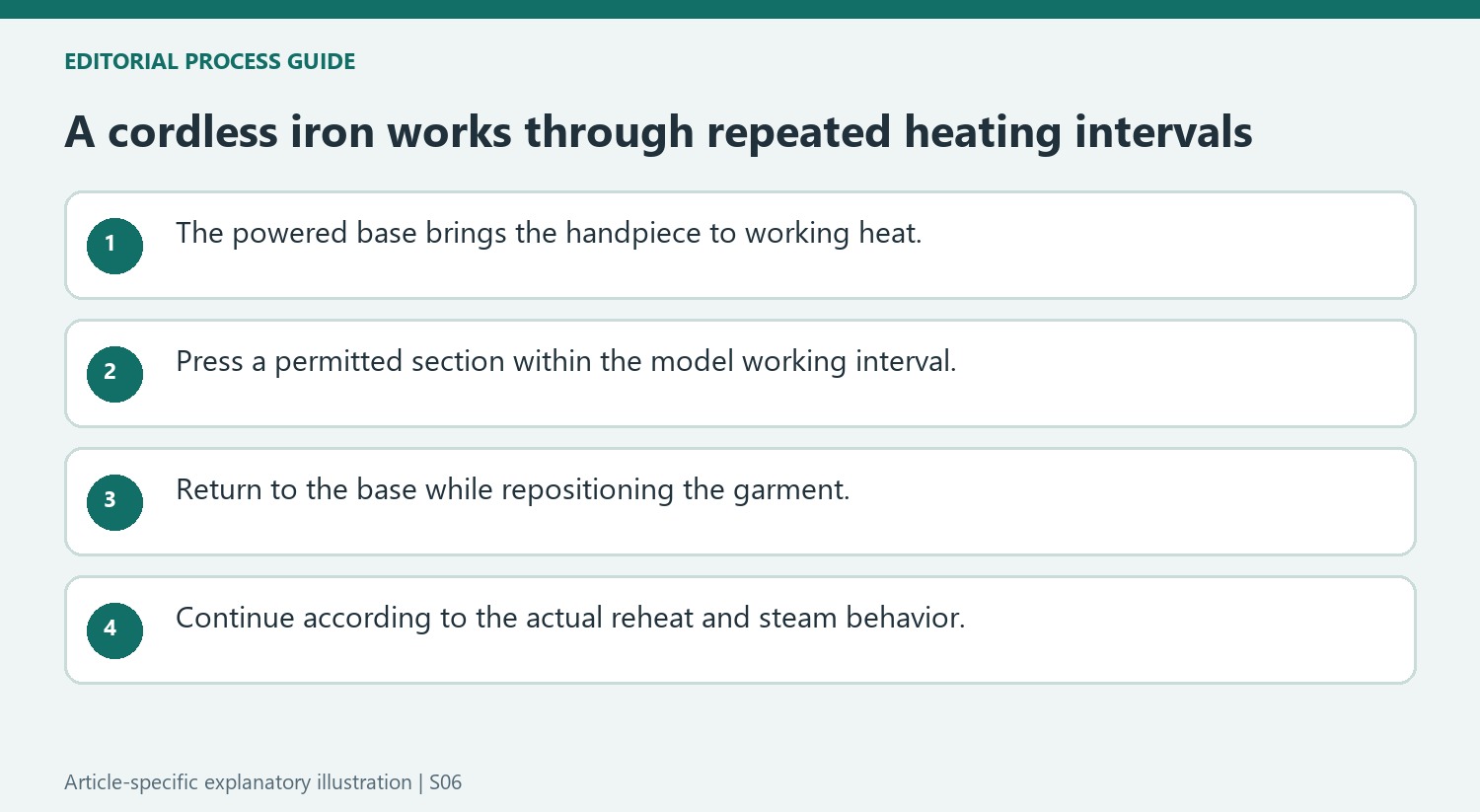
A cordless iron removes the trailing cord from the part held in the hand, making movement around a garment less restricted. In Good Housekeeping's comparison, these irons still use a powered base to restore heat between passes. They should not be treated as tools that provide unlimited heat away from that base. Returning the iron while repositioning a shirt can make reheating part of the normal rhythm. Someone who prefers long uninterrupted strokes should consider how that pattern will feel before choosing a cordless design solely for its freedom of movement.
Compare handling and water capacity
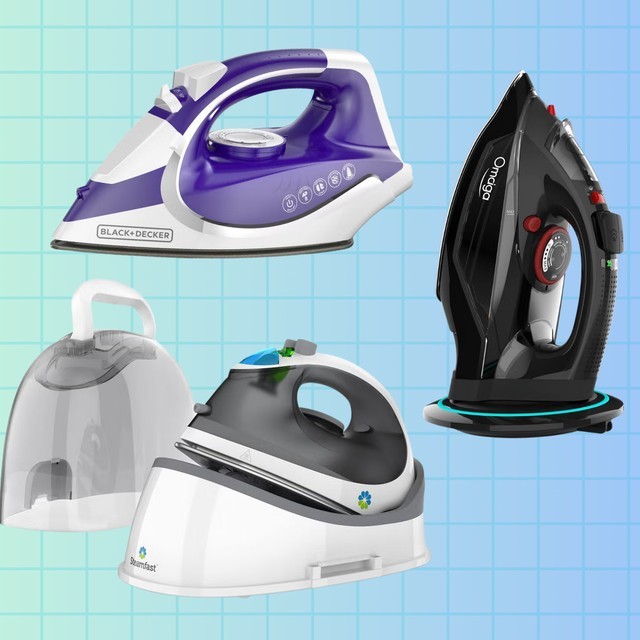
The magazine's tested models differ in weight, soleplate size, tank capacity and reheating behavior. A lighter iron with a smaller plate can be convenient for occasional touchups or detailed areas, while a larger plate covers more fabric during a batch of laundry. Double tipped soleplates on some Panasonic models are designed to move in different directions. Removable water tanks may simplify refilling, although the practical benefit depends on access and visibility. A larger tank can reduce interruptions but also adds to the amount being handled. These details matter alongside the headline power rating when evaluating everyday comfort.
Allow room for the whole setup
The base occupies space even when the handheld iron appears compact. Check where it will sit beside the pressing surface and whether returning the iron repeatedly will be comfortable. Automatic shutoff periods also vary, which can affect sewing or quilting sessions involving pauses between pressing. Good Housekeeping assesses factors including wrinkle removal, steam performance, temperature behavior and ease of use, making its testing broader than a list of specifications. Choose features around the garments and sessions you actually handle, and retain the normal care label limits on heat and steam regardless of the iron's convenience.
Match the reheating rhythm to real garments
A cordless iron remains part of a powered system: the handpiece stores heat while its base supplies the next burst. That distinction matters when comparing a quick shirt touch-up with a long, uninterrupted pass across bedding. The source review describes returning the iron to its base while repositioning fabric, making ordinary pauses part of the routine. Before buying, imagine the actual sequence at the board: press a section, move the garment, reheat, and continue. A user who naturally pauses between small sections may find that rhythm comfortable. Someone who expects constant steam over a broad area should examine the model's documented operating and reheating behavior rather than assuming cordless means an unlimited working interval.
Judge the complete setup, including the base
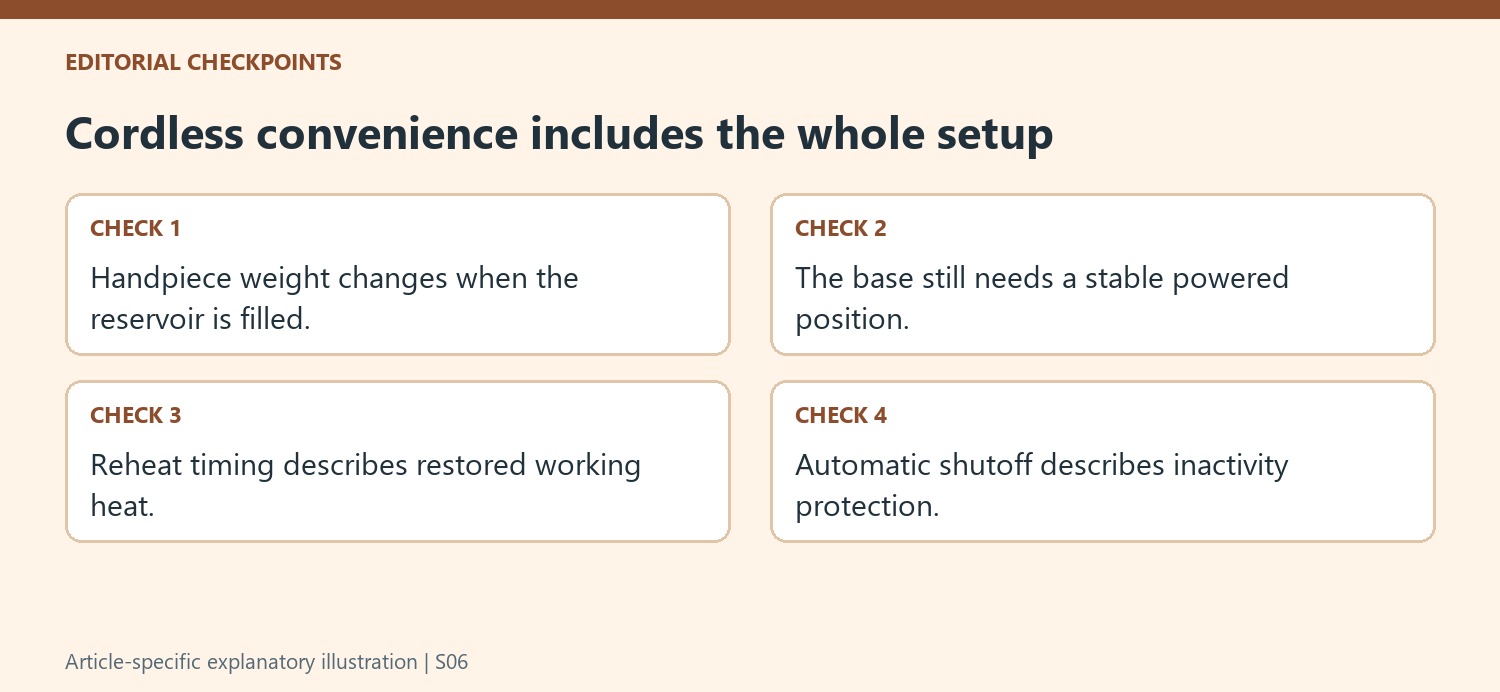
Removing the cord from the handpiece does not remove the base cord, storage footprint, or need for a stable powered position. The reviewed irons vary in tank design, soleplate shape, and base size, so handling should be judged with the whole arrangement in mind. A detachable water tank can simplify refilling, while a larger reservoir may add weight once filled. A pointed or double-ended soleplate can help around seams and buttons, but that feature does not answer whether the base fits safely beside the board. Check the available surface, cable reach, and return movement together. The iron should settle into its specified position without forcing an awkward reach across clothing or a busy walkway during normal garment changes.
Read performance evidence beyond the feature list
The laboratory approach in the source compares wrinkle removal on several fabrics, steam output, temperature behavior, controls, filling, and stability. Those observations explain more about everyday pressing than a wattage number alone. Reheat time and automatic shutoff also describe different functions: one concerns restoring working heat, while the other concerns what happens after inactivity. Their quoted durations vary among the reviewed products and should remain attached to the particular model. Compare results for the fabrics you actually press, especially if heavier wrinkles are common. Then check the current manual for water requirements, temperature selection, and storage. A convenient cordless design still needs the same care-label discipline as another iron, including cooling before a lower-temperature fabric.
References
- 5 Best Cordless Irons of 2026, Tested by Cleaning Experts. Good Housekeeping.