GarmentCare Guide
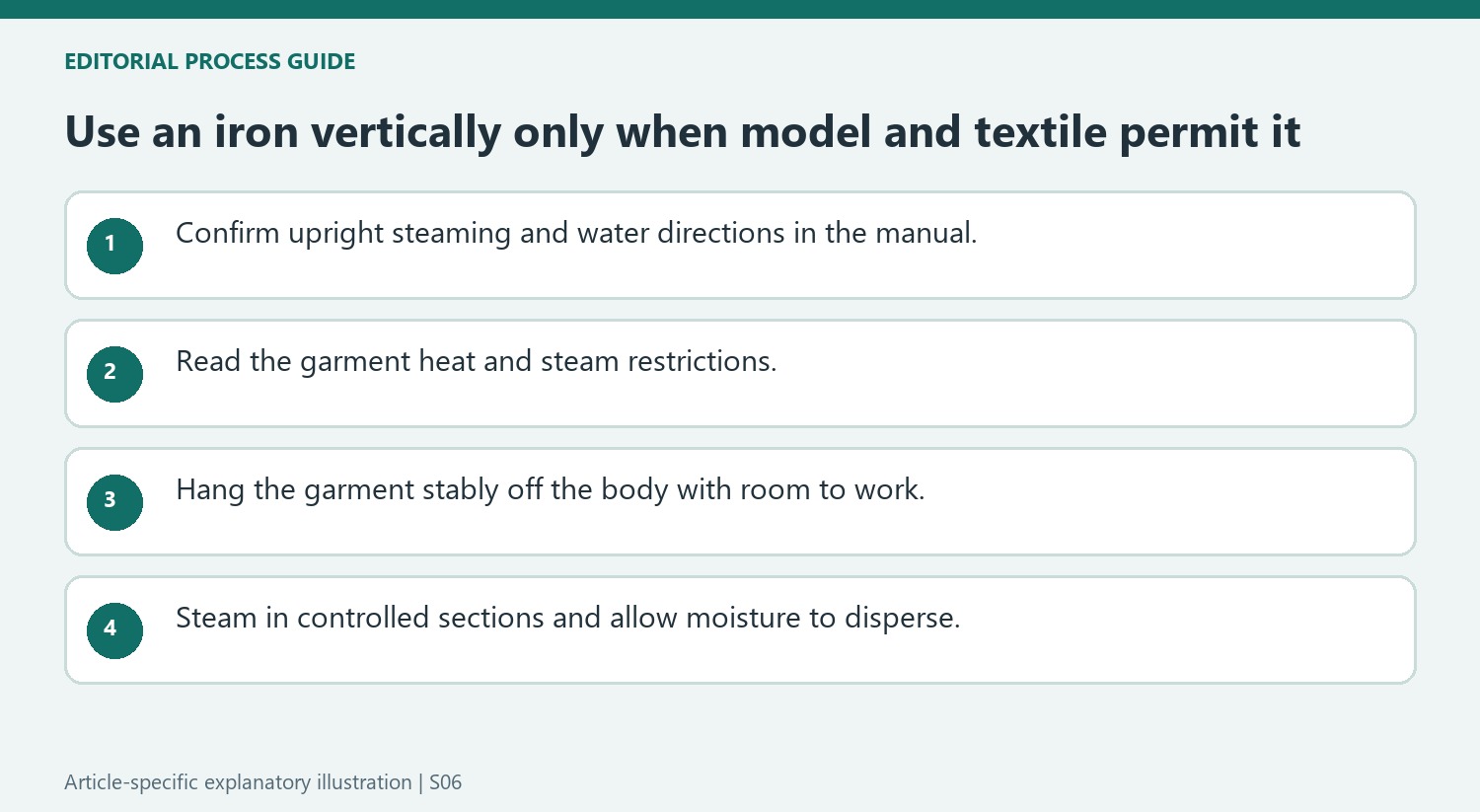
Confirm that vertical steaming is supported
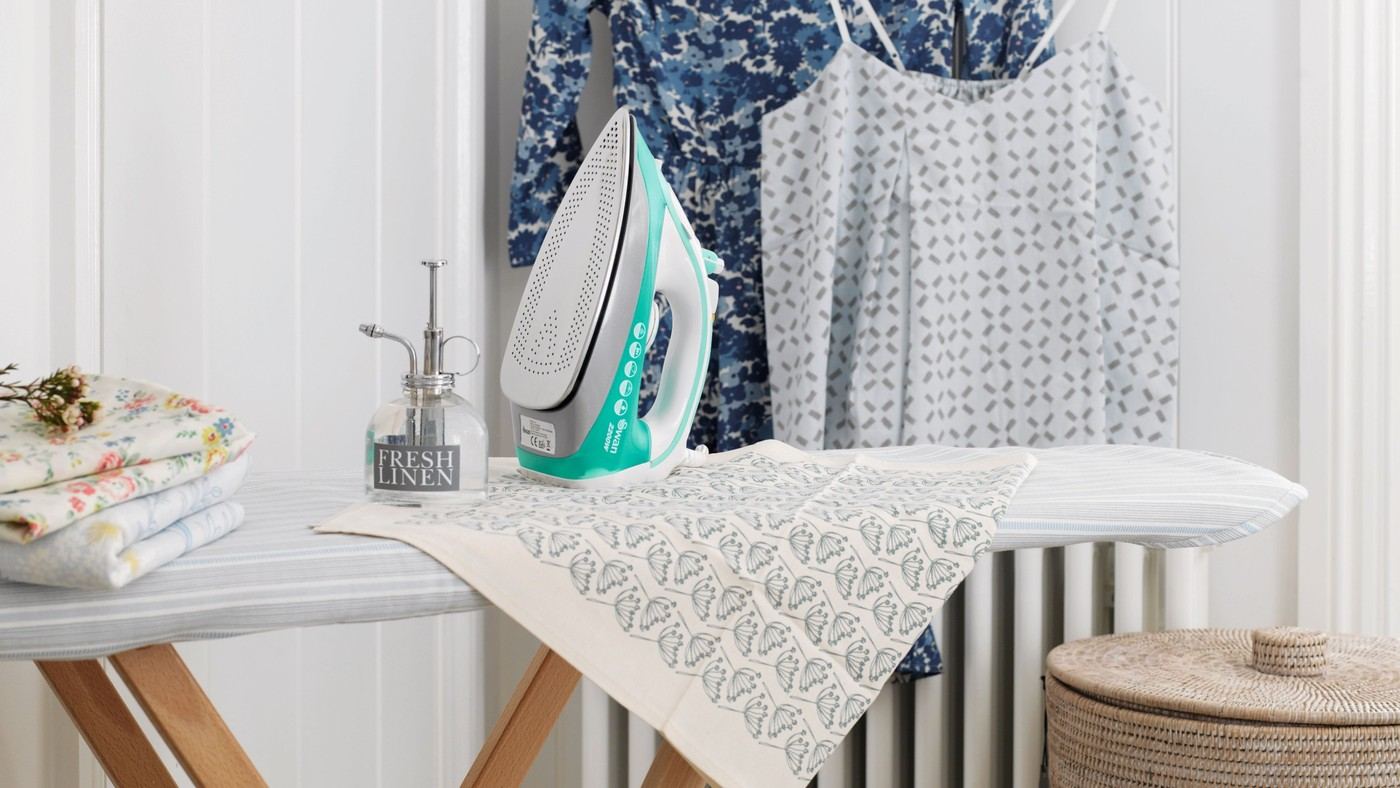
Some steam irons can release steam while held upright, allowing wrinkles to be treated on hanging clothing. Ideal Home describes this as a useful alternative when a separate garment steamer is unavailable. The feature is model dependent, so start with the iron's instructions rather than assuming every steam iron works this way. Check the clothing label too: permission to iron at one setting does not automatically authorize every steam treatment. Fill the tank with the water type specified by the manufacturer and allow the appliance to reach the appropriate operating condition before approaching the garment.
Give the garment a stable hanging position
Place the clothing on a suitable hanger in a stable location with space around it. Steaming should be done with the garment off the body, keeping hands away from the steam path. Hold the iron upright as its manual directs, with the soleplate facing the fabric at the recommended distance. The aim is to let steam reach the wrinkles without pressing the hot plate against the hanging material. Working gradually down the garment makes the treatment easier to control than sweeping randomly across its entire surface. Follow the model's requirements for angle and steam bursts to reduce unwanted drips.
Decide when pressing would work better
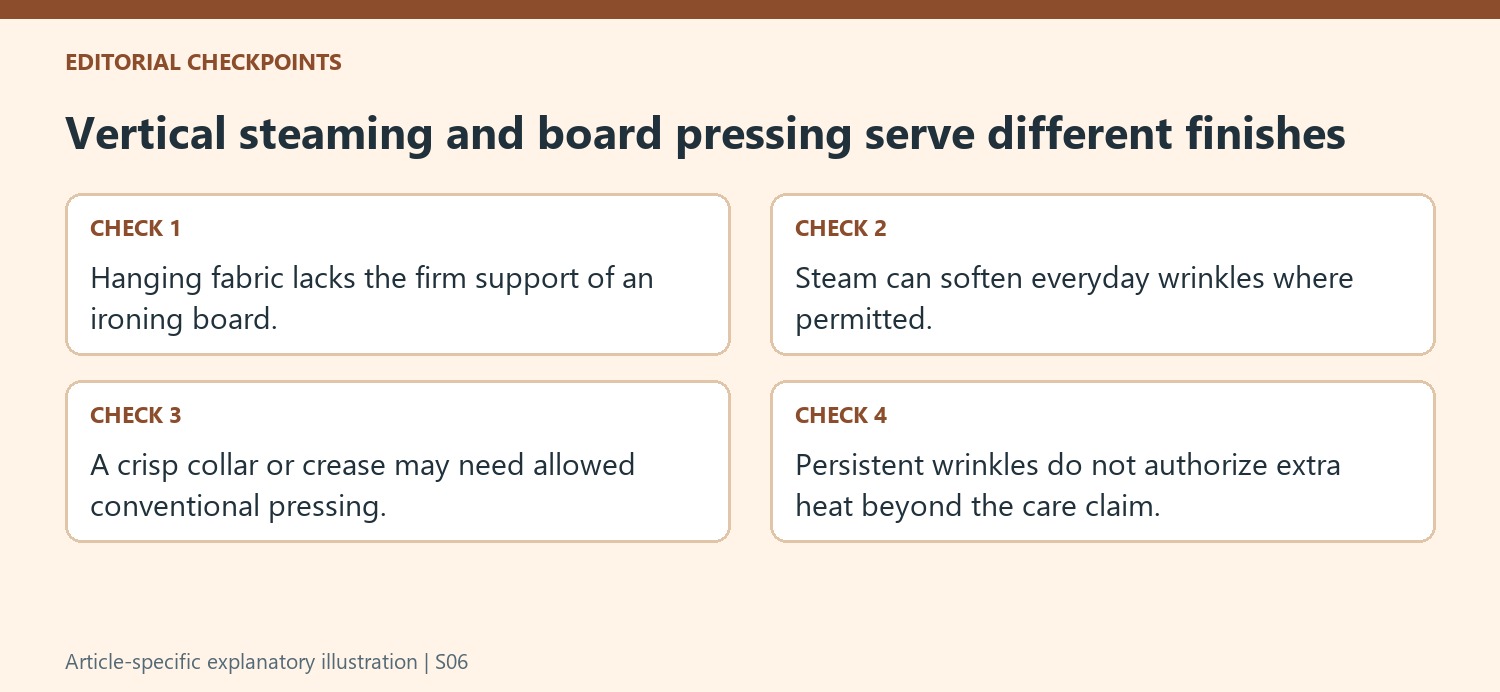
Vertical steaming is useful for softening everyday wrinkles, but a hanging garment does not provide the firm support of an ironing board. A sharply pressed collar, crisp crease or stubborn fold may still need conventional ironing where the care label permits it. Avoid increasing heat simply because a wrinkle remains after one pass. Reassess the fabric setting and the tool's suitability instead. Once the garment is treated, let moisture disperse before wearing or storing it. Emptying and storing the iron should follow its own care instructions, including the required cooling period.
The iron manual needs to establish the feature before the garment is hung
Ideal Home describes vertical steaming with suitable steam irons, but the relevant capability belongs to the actual model. Read its manual for upright use, water type, heating, and steam controls before planning the treatment. A steam button alone does not prove that every iron can deliver appropriate vertical operation. Then read the garment's own instructions, including any no-steam restriction. These are two independent checks: what the appliance is designed to do and what the textile permits. A convenient alternative to buying another tool is useful only when both agree. Fill and prepare the iron according to its directions rather than transferring a tank or setting habit from a different model.
A stable hanging setup changes how the work is controlled
The source recommends enough room to move around the clothing and an appropriate hanging location. Set the garment up off the body with stable support, then use the model's specified upright position and distance. Keep hands clear of the steam path rather than holding a fold directly in front of the hot output. Work in controlled sections down the garment, reassessing the surface as you go. The hanging arrangement does not provide the same firm backing as an ironing board, which helps explain why the technique and result differ from ordinary pressing. Stable support is therefore part of the method, not just a convenient place to put the hanger while the iron operates.
Choose the finishing method for the result actually needed
Vertical steam can soften everyday wrinkles, while a sharply defined crease or collar may require permitted board-supported pressing. Decide which result the garment needs rather than repeatedly increasing steam or heat when a hanging method does not produce a crisp line. Recheck the textile setting and the appliance instructions if the result is uncertain or droplets appear. A further pass should remain inside the same limits, not become an uncontrolled escalation. After treatment, allow remaining moisture to disperse before wearing or storage. Finish the appliance routine according to its manual, including cooling and any tank-care instructions. This keeps wrinkle treatment and equipment handling connected through the end of the task instead of stopping the process when the visible crease first softens.