GarmentCare Guide
Use walls and doors efficiently
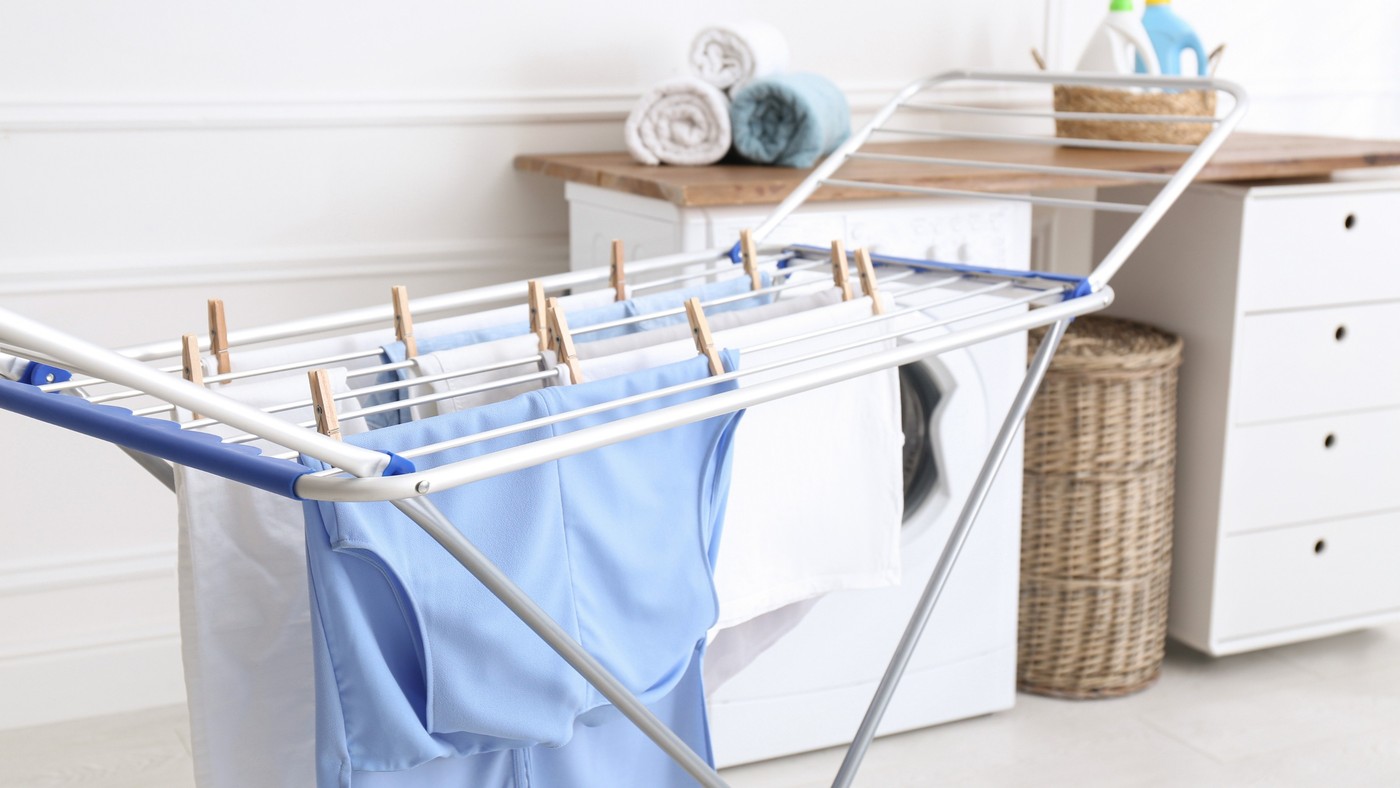
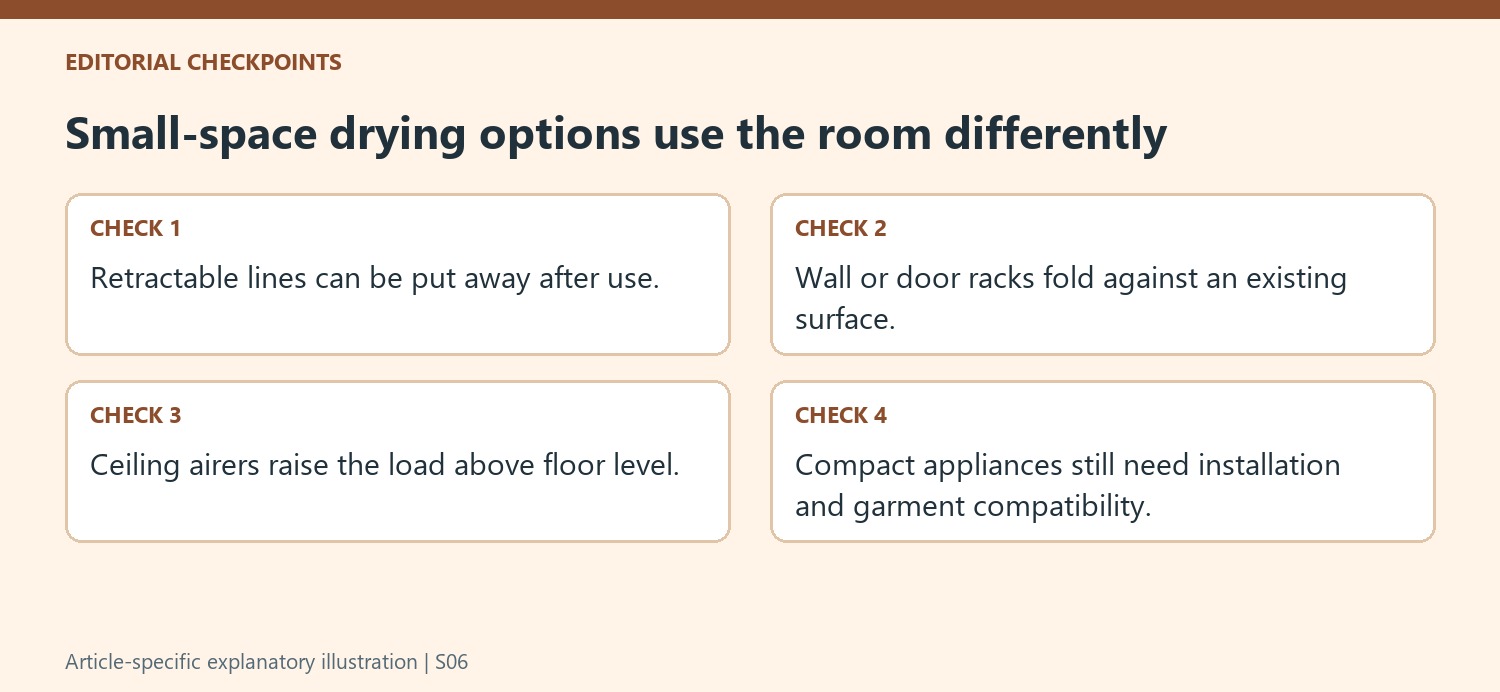
A drying rack can occupy much of a small room, especially when its wings are fully extended. Real Homes suggests looking beyond a conventional freestanding airer when floor space is limited. A retractable clothesline can stretch across an available area during drying and disappear afterwards. A folding wall rack provides a similar advantage, while an overdoor design uses an existing surface. Consider the space the wet clothing needs as well as the dimensions of the empty rack. Sleeves, trouser legs and hanging shirts should have room to separate rather than press against surrounding furniture or walls.
Consider an airer above floor level
A ceiling airer offers another way to keep the floor available. Its suspended rails can carry laundry above the main walking area, with a pulley arrangement lowering them for loading. This can be useful where a large freestanding rack would interrupt daily movement. Installation suitability matters: check the manufacturer's requirements and obtain permission where a rented property requires it. A storage advantage only helps if the loaded airer can be reached and operated comfortably. Think through loading and unloading before choosing a position, rather than judging the product solely from its folded appearance.
Match the solution to the clothes
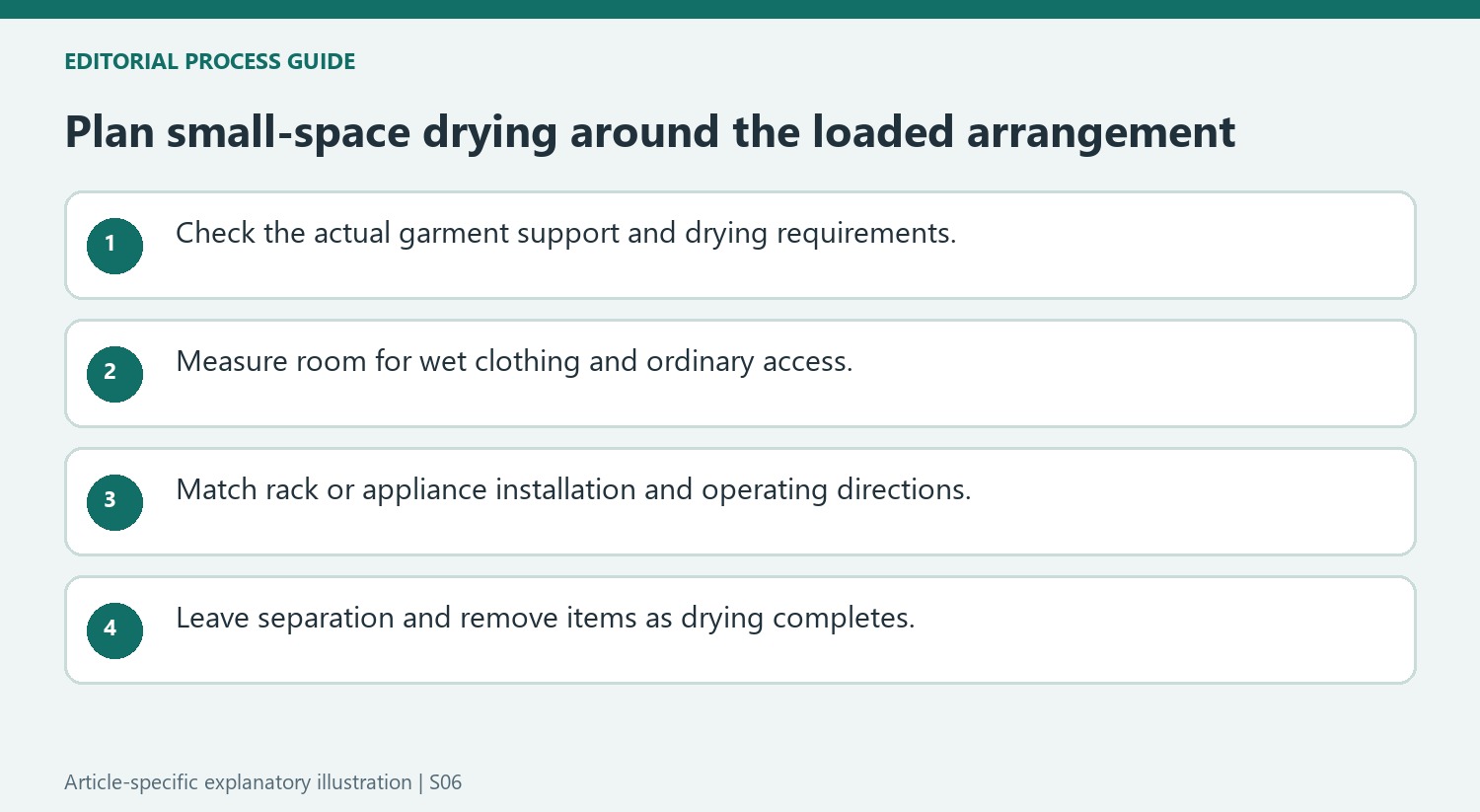
Compact tumble dryers and heated airers may also suit some homes, but their installation requirements and operating instructions need to fit the available space. Garment care labels still determine whether tumble drying or another method is permitted. A space saving appliance does not change a sweater's requirement to dry flat. When using any rack, leave enough separation for air to reach the fabric and remove pieces as they finish drying. Planning a smaller laundry load can be more effective than filling every rail with overlapping garments that remain damp together.
Measure the loaded drying arrangement rather than only the folded product
Real Homes suggests retractable lines and folding wall or door racks for small homes, but the compact stored size is only part of their practical footprint. Consider how much room wet sleeves, trouser legs, and hanging shirts need when the arrangement is in use. Check the product's load and mounting instructions and leave access for ordinary movement through the room. A rack that folds neatly can still be awkward if clothing presses against nearby furniture or blocks a route while drying. Plan loading and unloading as well as storage. This makes the space decision about the whole working routine rather than the appearance of an empty compact product on a shop page.
A ceiling airer moves the load instead of eliminating its requirements
The source describes suspended racks that can be lowered for loading and raised to keep floor space available. Check whether the location and structure suit the manufacturer's installation requirements, including any permission needed for mounting. Think through the loaded height, operating reach, and space the garments occupy when the rails are raised. The airer changes where drying happens, while the clothing still needs separation and its permitted support position. A sweater requiring flat drying should not be suspended just because a ceiling rail solves a floor-space problem. Choosing the right arrangement means matching household access and garment requirements together, not allowing the most compact storage option to determine how every textile is treated.
Drying speed should not override the clothing's mechanical limits
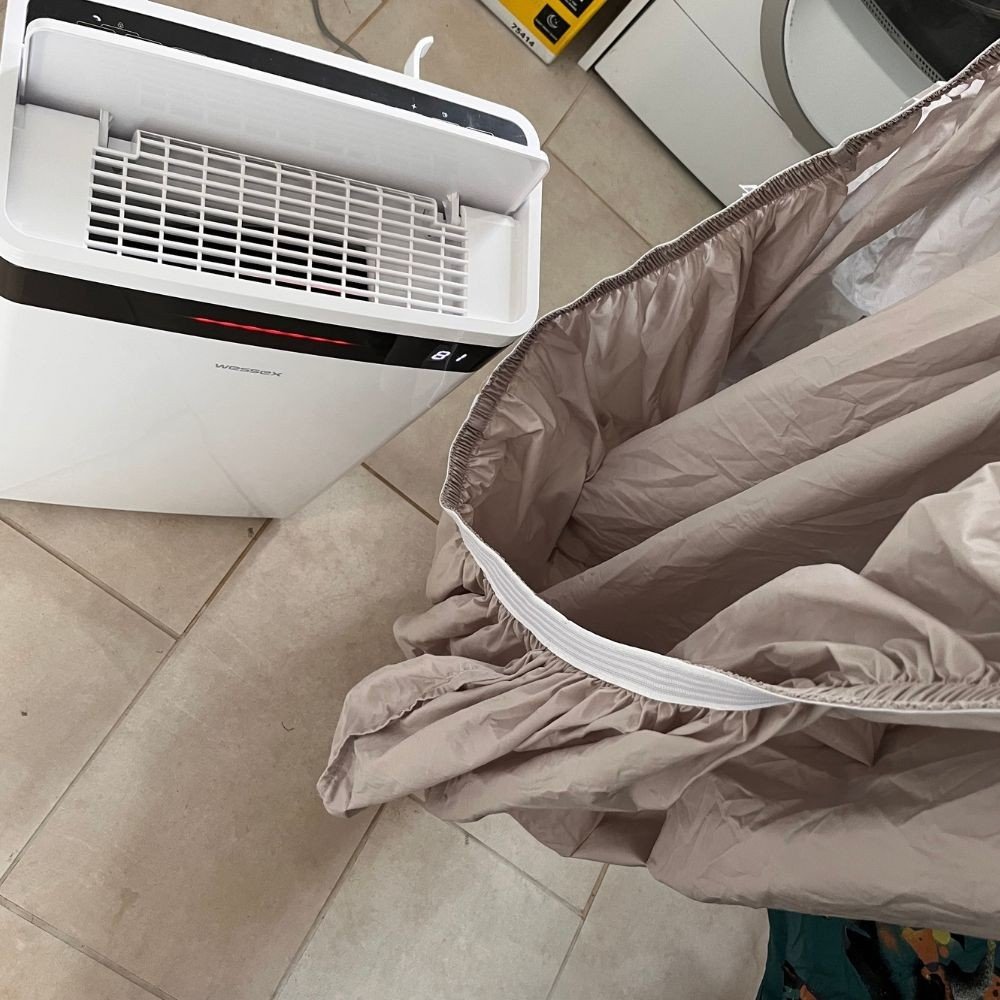
The article discusses removing more water through a suitable washer spin and using devices such as a dehumidifier or heated rack. Apply each option within the actual garment and appliance directions. A higher spin is not appropriate for every delicate, and a heated accessory does not remove a textile's heat or support restrictions. Check installation, positioning, and operating requirements for any device before use. Smaller compatible loads can also make better use of limited drying space by avoiding overlapping wet garments. The practical aim is a routine that fits both the room and the clothes, with sufficient separation and appropriate handling, rather than packing every rail or increasing every setting to compensate for an arrangement that is already overcrowded.
References
- How to dry clothes in a small space | Real Homes. Real Homes.